
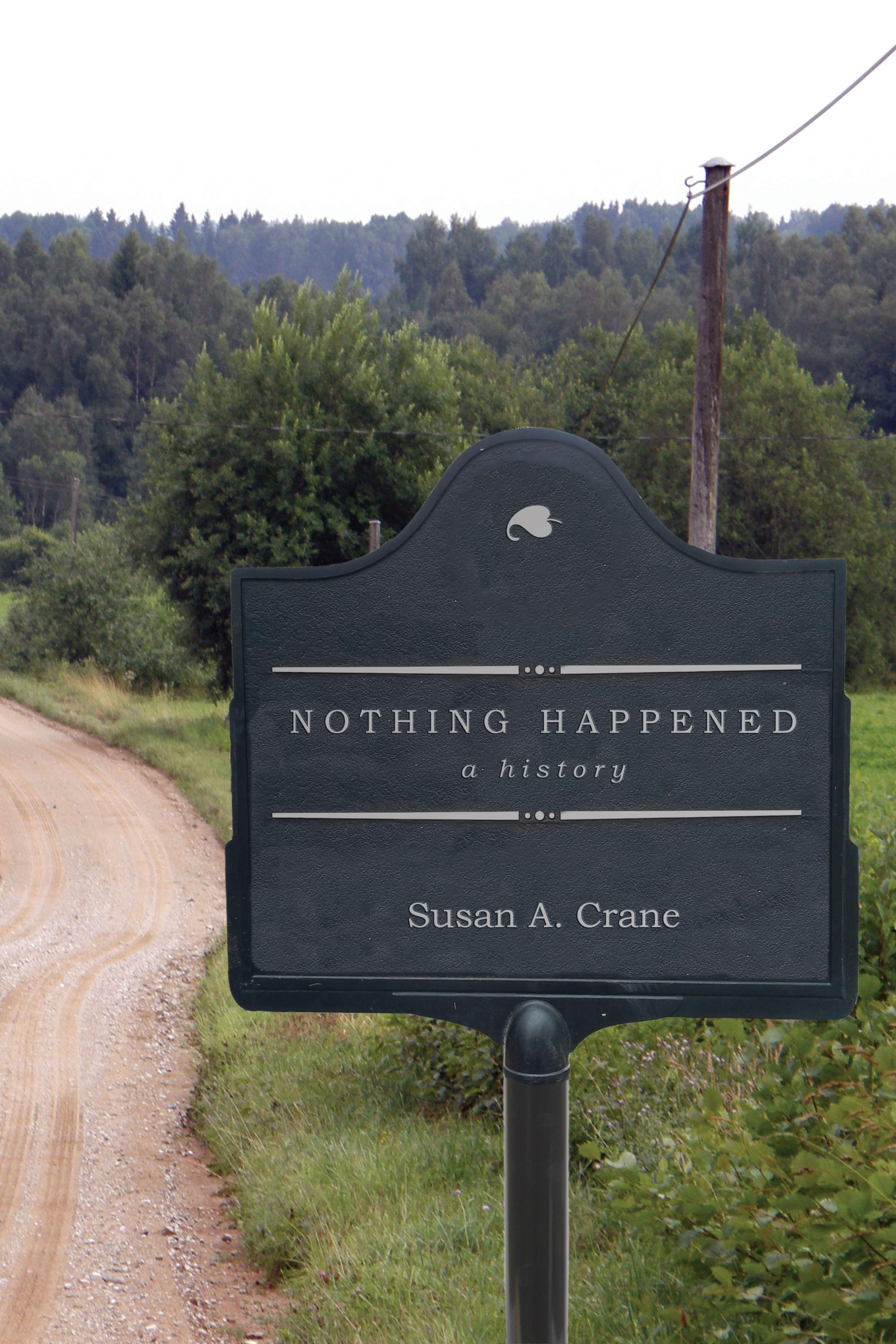
The past is what happened. History is what we remember and write about that past, the narratives we craft to make sense out of our memories and their sources. But what does it mean to look at the past and to remember that "nothing happened"? Why might we feel as if "nothing is the way it was"? This book transforms these utterly ordinary observations and redefines "Nothing" as something we have known and can remember.
"Nothing" has been a catch-all term for everything that is supposedly uninteresting or is just not there. It will take some—possibly considerable—mental adjustment before we can see Nothing as Susan A. Crane does here, with a capital "n." But Nothing has actually been happening all along. As Crane shows in her witty and provocative discussion, Nothing is nothing less than fascinating.
When Nothing has changed but we think that it should have, we might call that injustice; when Nothing has happened over a long, slow period of time, we might call that boring. Justice and boredom have histories. So too does being relieved or disappointed when Nothing happens—for instance, when a forecasted end of the world does not occur, and millennial movements have to regroup. By paying attention to how we understand Nothing to be happening in the present, what it means to "know Nothing" or to "do Nothing," we can begin to ask how those experiences will be remembered.
Susan A. Crane moves effortlessly between different modes of seeing Nothing, drawing on visual analysis and cultural studies to suggest a new way of thinking about history. By remembering how Nothing happened, or how Nothing is the way it was, or how Nothing has changed, we can recover histories that were there all along.
Pay easily by card, Klarna, Apple Pay or Google Pay. Not happy? You always have a 14-day money-back guarantee. Read more in our terms. If you have any questions, email us at hello@memmo.org.
Memmo makes studying easier – wherever you are in the world. We bring your course books and smart study tools together in one place: summaries, quizzes, podcasts and flashcards. Plus Ted, your study buddy who answers anything you wonder. Over 50,000 students already study here – built to help you learn faster and stress less.