
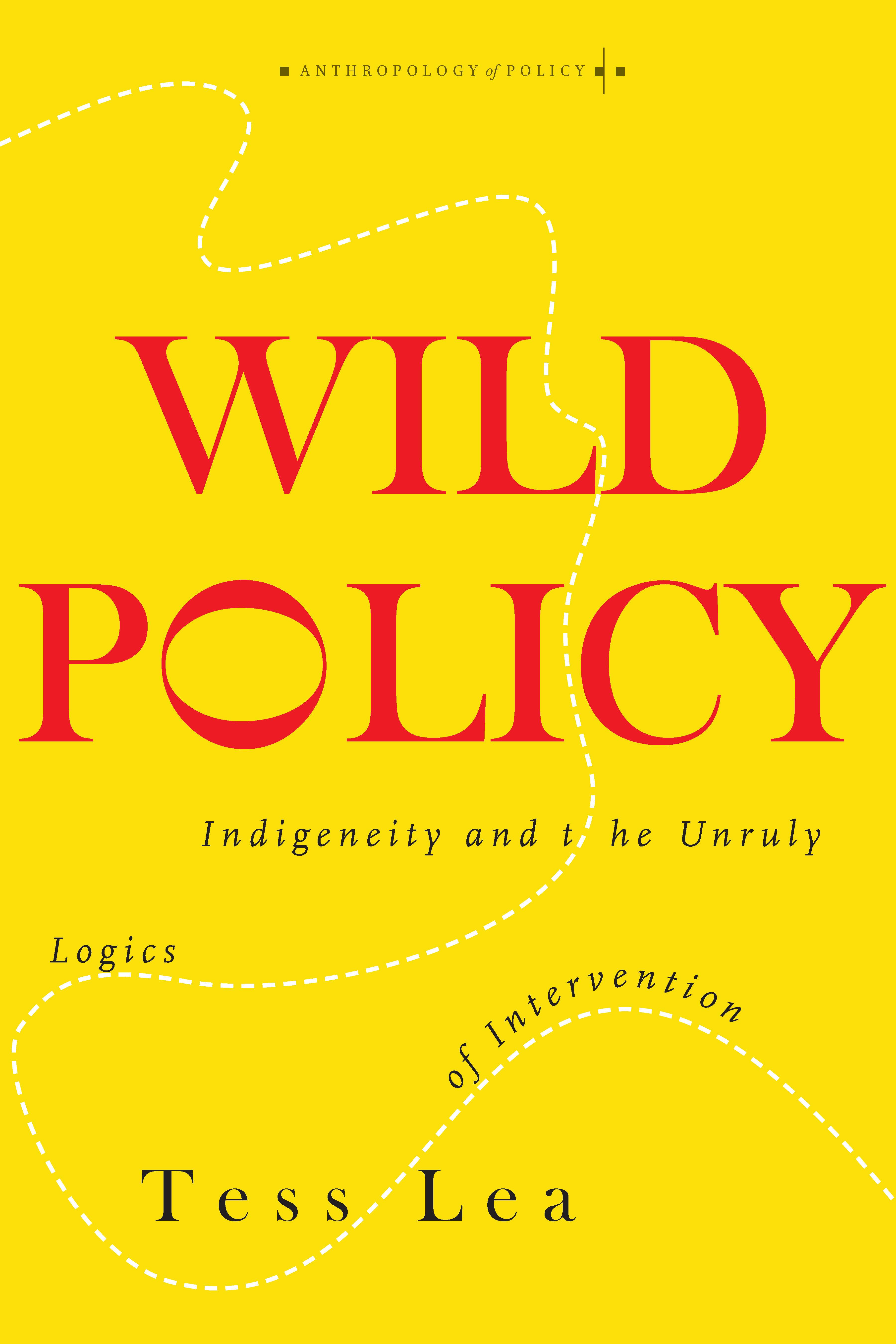
Can there be good social policy? This book describes what happens to Indigenous policy when it targets the supposedly 'wild people' of regional and remote Australia. Tess Lea explores naturalized policy: policy unplugged, gone live, ramifying in everyday life, to show that it is policies that are wild, not the people being targeted. Lea turns the notion of unruliness on its head to reveal a policy-driven world dominated by short term political interests and their erratic, irrational effects, and by the less obvious protection of long-term interests in resource extraction and the liberal settler lifestyles this sustains. Wild Policy argues policies are not about undoing the big causes of enduring inequality, and do not ameliorate harms terribly well either—without yielding all hope.
Drawing on efforts across housing and infrastructure, resistant media-making, health, governance and land tenure battles in regional and remote Australia, Wild Policy looks at how the logics of intervention are formulated and what this reveals in answer to the question: why is it all so hard? Lea offers readers a layered, multi-relational approach called policy ecology to probe the related question, 'what is to be done?' Lea's case material will resonate with analysts across the world who deal with infrastructures, policy, technologies, mining, militarization, enduring colonial legacies, and the Anthropocene.
Pay easily by card, Klarna, Apple Pay or Google Pay. Not happy? You always have a 14-day money-back guarantee. Read more in our terms. If you have any questions, email us at hello@memmo.org.
Memmo makes studying easier – wherever you are in the world. We bring your course books and smart study tools together in one place: summaries, quizzes, podcasts and flashcards. Plus Ted, your study buddy who answers anything you wonder. Over 50,000 students already study here – built to help you learn faster and stress less.