
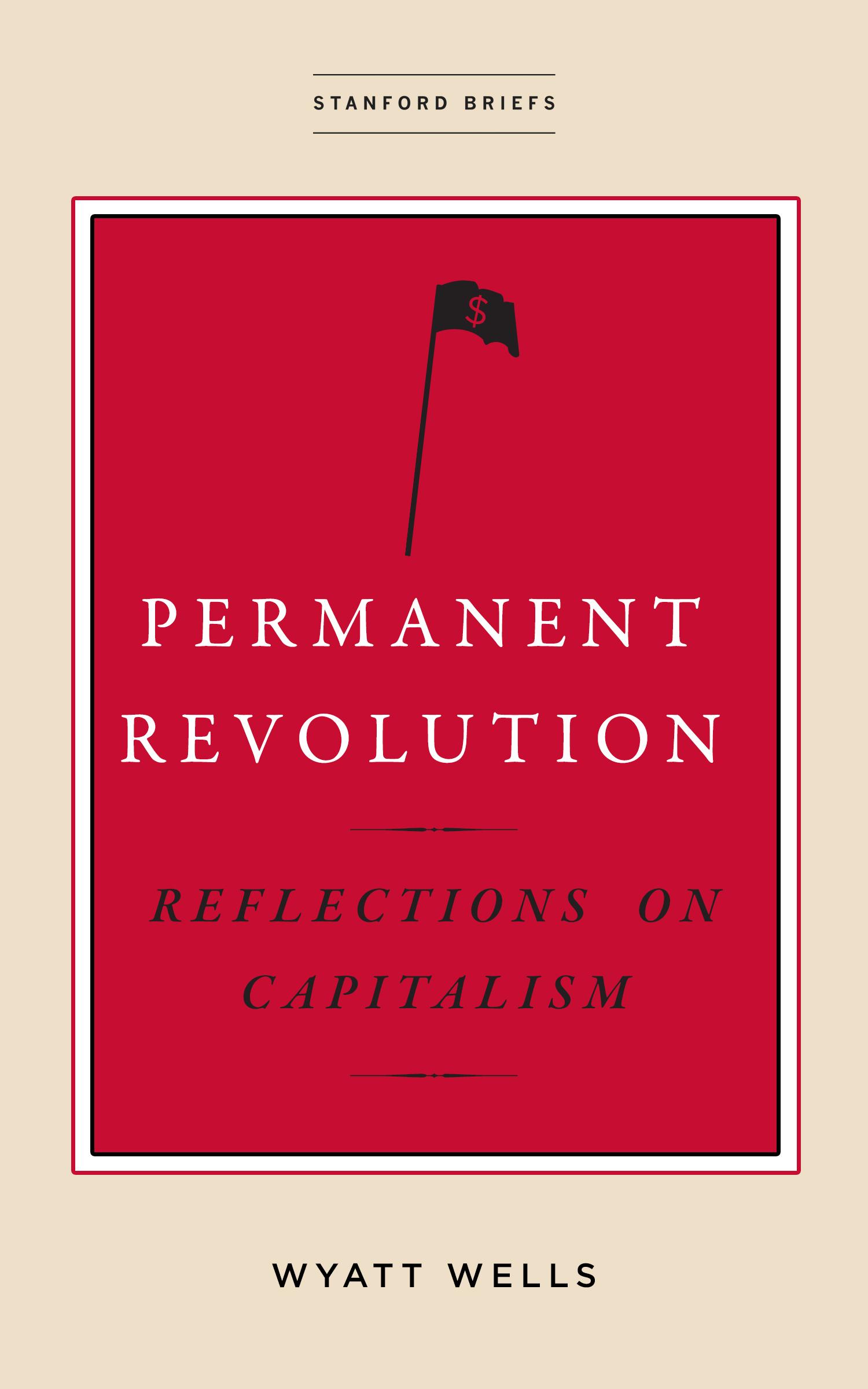
Permanent Revolution concisely describes the development and workings of capitalism and its influence on the broader society. In the developed world—Europe, North America, and parts of East Asia—capitalism is ubiquitous, and as such, often taken for granted. Discussion usually focuses on specific aspects of the system that individuals appreciate or dislike, ignoring the larger picture. The notion of millennials denouncing capitalism on Facebook and Twitter—products of capitalist development—is a caricature that is eerily close to reality.
In this book, Wyatt Wells examines the development of economic innovation, the role of financial markets, the business cycle, the ways markets operate, and the position of labor in capitalist economies, as well as the effects of capitalism on law, politics, religion, and even the arts. This discussion is grounded in history, though it does make use of economic theory. As a result, the book sometimes approaches topics from an unconventional direction. For instance, it notes that financial markets not only pool and allocate the resources of savers—the role ascribed to them in conventional economics textbooks—but they also discipline enterprises, punishing those unable to meet prescribed financial standards.
Permanent Revolution ranges broadly, delving into how capitalism reshapes the broader society. The system creates wealth in new and, often, unexpected places, and it constantly moves people physically and socially. The result revolutionizes society. Traditional structures based on deference and long experience gradually collapse because they no longer correspond to social reality. Capitalist societies must devise ways to accommodate perpetual change in politics, religion, and society. Much of the diversity, liberty, and flexibility we associate with modern society are the product of capitalist development.
Pay easily by card, Klarna, Apple Pay or Google Pay. Not happy? You always have a 14-day money-back guarantee. Read more in our terms. If you have any questions, email us at hello@memmo.org.
Memmo makes studying easier – wherever you are in the world. We bring your course books and smart study tools together in one place: summaries, quizzes, podcasts and flashcards. Plus Ted, your study buddy who answers anything you wonder. Over 50,000 students already study here – built to help you learn faster and stress less.