
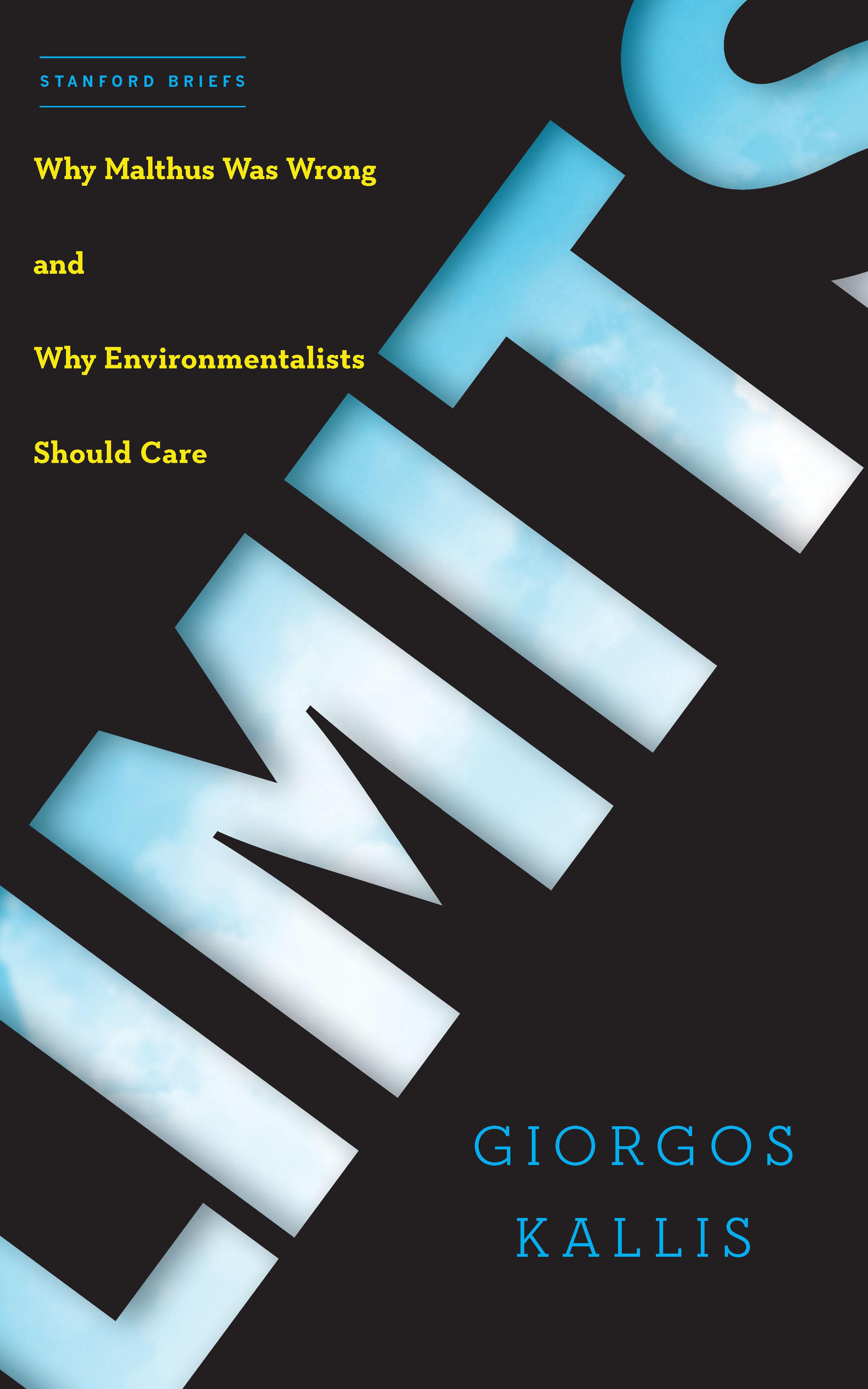
Western culture is infatuated with the dream of going beyond, even as it is increasingly haunted by the specter of apocalypse: drought, famine, nuclear winter. How did we come to think of the planet and its limits as we do? This book reclaims, redefines, and makes an impassioned plea for limits—a notion central to environmentalism—clearing them from their association with Malthusianism and the ideology and politics that go along with it. Giorgos Kallis rereads reverend-economist Thomas Robert Malthus and his legacy, separating limits and scarcity, two notions that have long been conflated in both environmental and economic thought. Limits are not something out there, a property of nature to be deciphered by scientists, but a choice that confronts us, one that, paradoxically, is part and parcel of the pursuit of freedom. Taking us from ancient Greece to Malthus, from hunter-gatherers to the Romantics, from anarchist feminists to 1970s radical environmentalists, Limits shows us how an institutionalized culture of sharing can make possible the collective self-limitation we so urgently need.
Pay easily by card, Klarna, Apple Pay or Google Pay. Not happy? You always have a 14-day money-back guarantee. Read more in our terms. If you have any questions, email us at hello@memmo.org.
Memmo makes studying easier – wherever you are in the world. We bring your course books and smart study tools together in one place: summaries, quizzes, podcasts and flashcards. Plus Ted, your study buddy who answers anything you wonder. Over 50,000 students already study here – built to help you learn faster and stress less.