
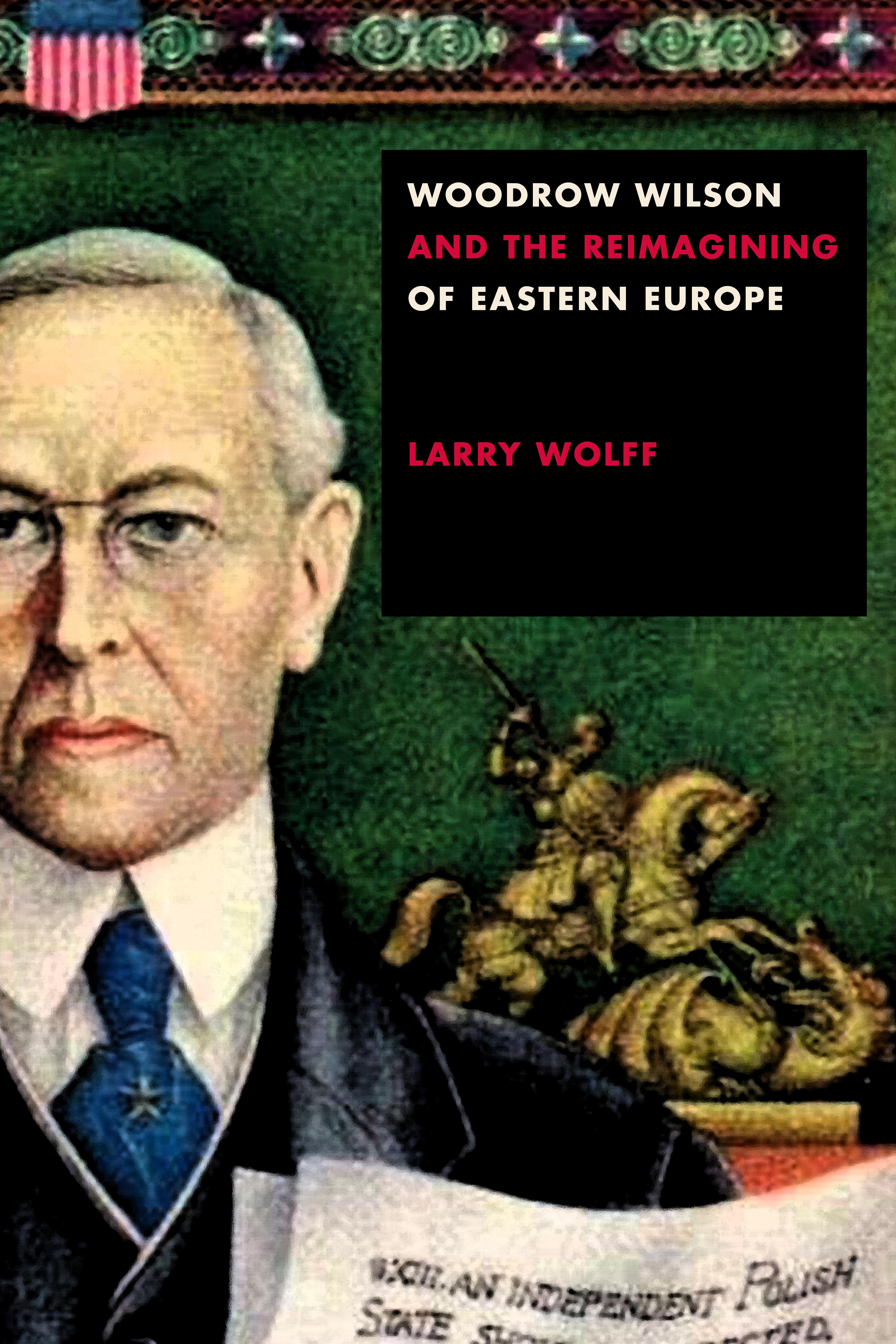
At the 1919 Paris Peace Conference, where the victorious Allied powers met to reenvision the map of Europe in the aftermath of World War I, President Woodrow Wilson's influence on the remapping of borders was profound. But it was his impact on the modern political structuring of Eastern Europe that would be perhaps his most enduring international legacy: neither Czechoslovakia nor Yugoslavia exist today, but their geopolitical presence persisted across the twentieth century from the end of World War I to the end of the Cold War. They were created in large part thanks to Wilson's advocacy, and in particular, his Fourteen Points speech of January 1918, which hinged in large part on the concept of national self-determination.
But despite his deep involvement in the region's geopolitical transformation, President Wilson never set eyes on Eastern Europe, and never traveled to a single one of the eastern lands whose political destiny he so decisively influenced. Eastern Europe, invented in the age of Enlightenment by the travelers and philosophies of Western Europe, was reinvented on the map of the early twentieth century with the crucial intervention of an American president who deeply invested his political and emotional energies in lands that he would never visit.
This book traces how Wilson's emerging definition of national self-determination and his practical application of the principle changed over time as negotiations at the Paris Peace Conference unfolded. Larry Wolff exposes the contradictions between Wilson's principles and their implementation in the peace settlement for Eastern Europe, and sheds light on how his decisions were influenced by both personal relationships and his growing awareness of the history of the Ottoman and Habsburg empires.
Pay easily by card, Klarna, Apple Pay or Google Pay. Not happy? You always have a 14-day money-back guarantee. Read more in our terms. If you have any questions, email us at hello@memmo.org.
Memmo makes studying easier – wherever you are in the world. We bring your course books and smart study tools together in one place: summaries, quizzes, podcasts and flashcards. Plus Ted, your study buddy who answers anything you wonder. Over 50,000 students already study here – built to help you learn faster and stress less.