
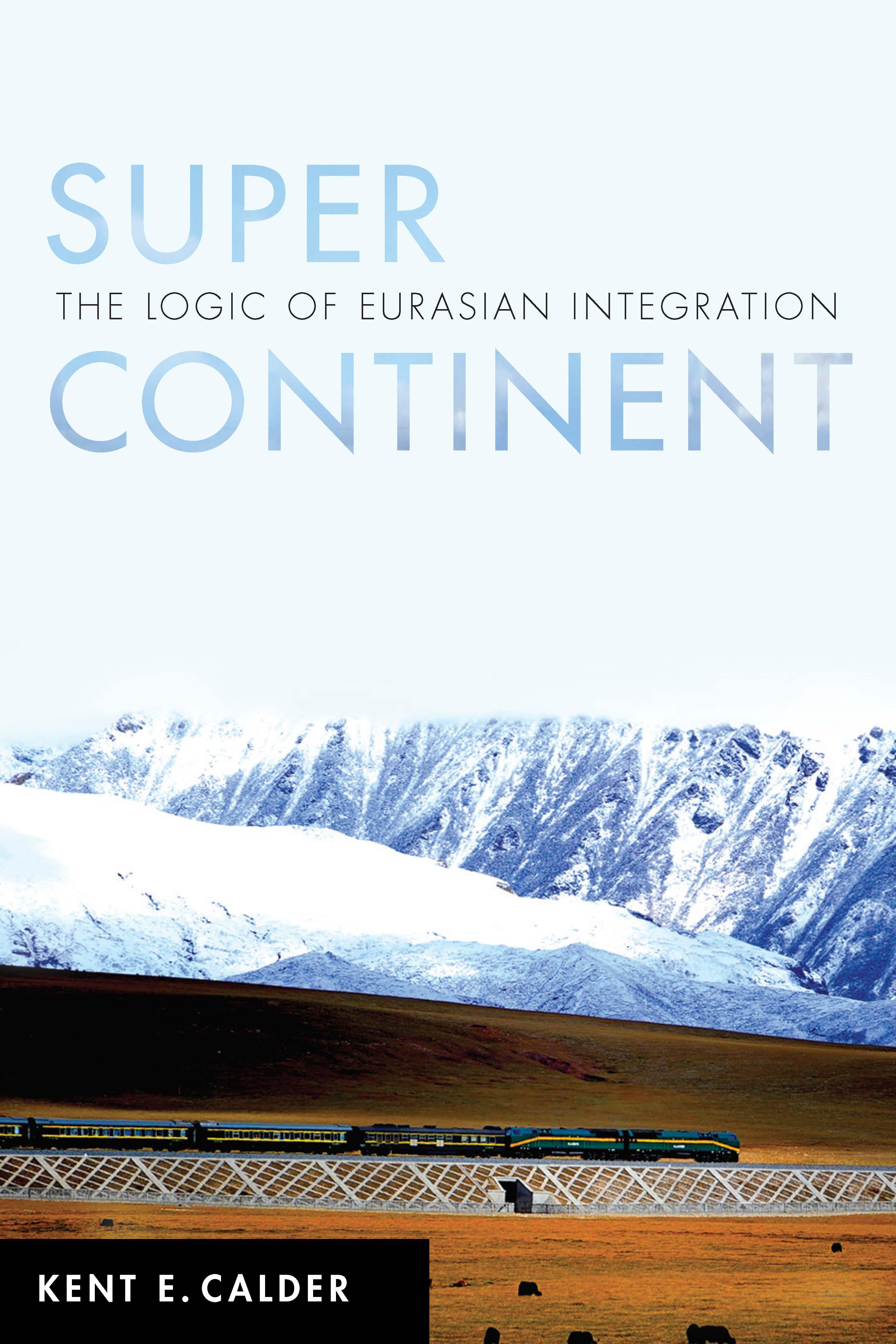
A Eurasian transformation is underway, and it flows from China. With a geopolitically central location, the country's domestic and international policies are poised to change the face of global affairs. The Belt and Road Initiative has called attention to a deepening Eurasian continentalism that has, argues Kent Calder, much more significant implications than have yet been recognized. In Super Continent, Calder presents a theoretically guided and empirically grounded explanation for these changes. He shows that key inflection points, beginning with the Four Modernizations and the collapse of the Soviet Union; and culminating in China's response to the Global Financial Crisis and Crimea's annexation, are triggering tectonic shifts. Furthermore, understanding China's emerging regional and global roles involves comprehending two ongoing transformations—within China and across Eurasia as a whole—and that the two are profoundly interrelated. Calder underlines that the geo-economic logic that prevailed across Eurasia before Columbus, and that made the Silk Road a central thoroughfare of world affairs for close to two millennia, is reasserting itself once again.
Pay easily by card, Klarna, Apple Pay or Google Pay. Not happy? You always have a 14-day money-back guarantee. Read more in our terms. If you have any questions, email us at hello@memmo.org.
Memmo makes studying easier – wherever you are in the world. We bring your course books and smart study tools together in one place: summaries, quizzes, podcasts and flashcards. Plus Ted, your study buddy who answers anything you wonder. Over 50,000 students already study here – built to help you learn faster and stress less.