
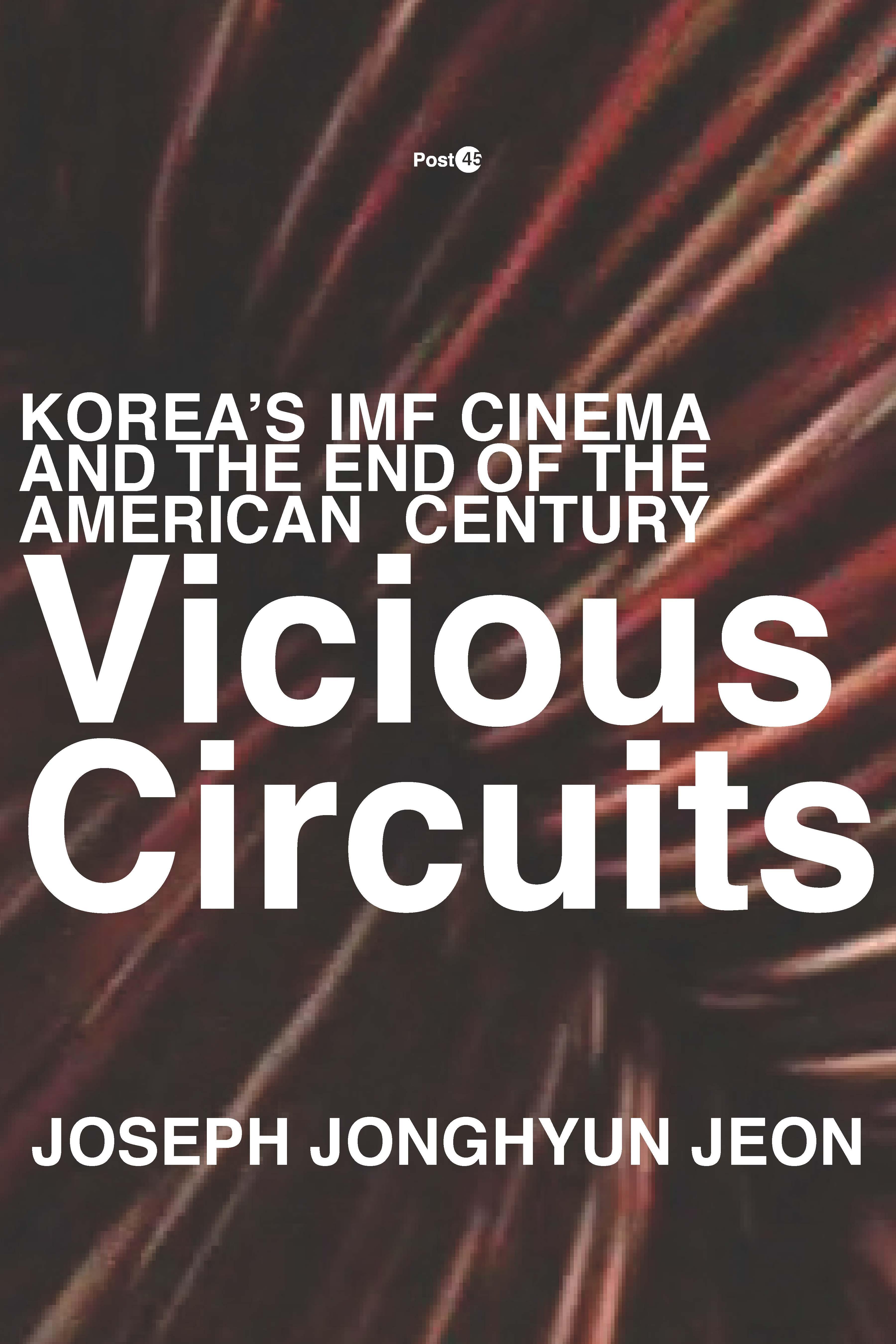
In December of 1997, the International Monetary Fund announced the largest bailout package in its history, aimed at stabilizing the South Korean economy in response to a credit and currency crisis of the same year. Vicious Circuits examines what it terms "Korea's IMF Cinema," the decade of cinema following that crisis, in order to think through the transformations of global political economy at the end of the American century. It argues that one of the most dominant traits of the cinema that emerged after the worst economic crisis in the history of South Korea was its preoccupation with economic phenomena. As the quintessentially corporate art form—made as much in the boardroom as in the studio—film in this context became an ideal site for thinking through the global political economy in the transitional moment of American decline and Chinese ascension. With an explicit focus of state economic policy, IMF cinema did not just depict the economy; it also was this economy's material embodiment. That is, it both represented economic developments and was itself an important sector in which the same pressures and changes affecting the economy at large were at work. Joseph Jonghyun Jeon's window on Korea provides a peripheral but crucial perspective on the operations of late US hegemony and the contradictions that ultimately corrode it.
Pay easily by card, Klarna, Apple Pay or Google Pay. Not happy? You always have a 14-day money-back guarantee. Read more in our terms. If you have any questions, email us at hello@memmo.org.
Memmo makes studying easier – wherever you are in the world. We bring your course books and smart study tools together in one place: summaries, quizzes, podcasts and flashcards. Plus Ted, your study buddy who answers anything you wonder. Over 50,000 students already study here – built to help you learn faster and stress less.