
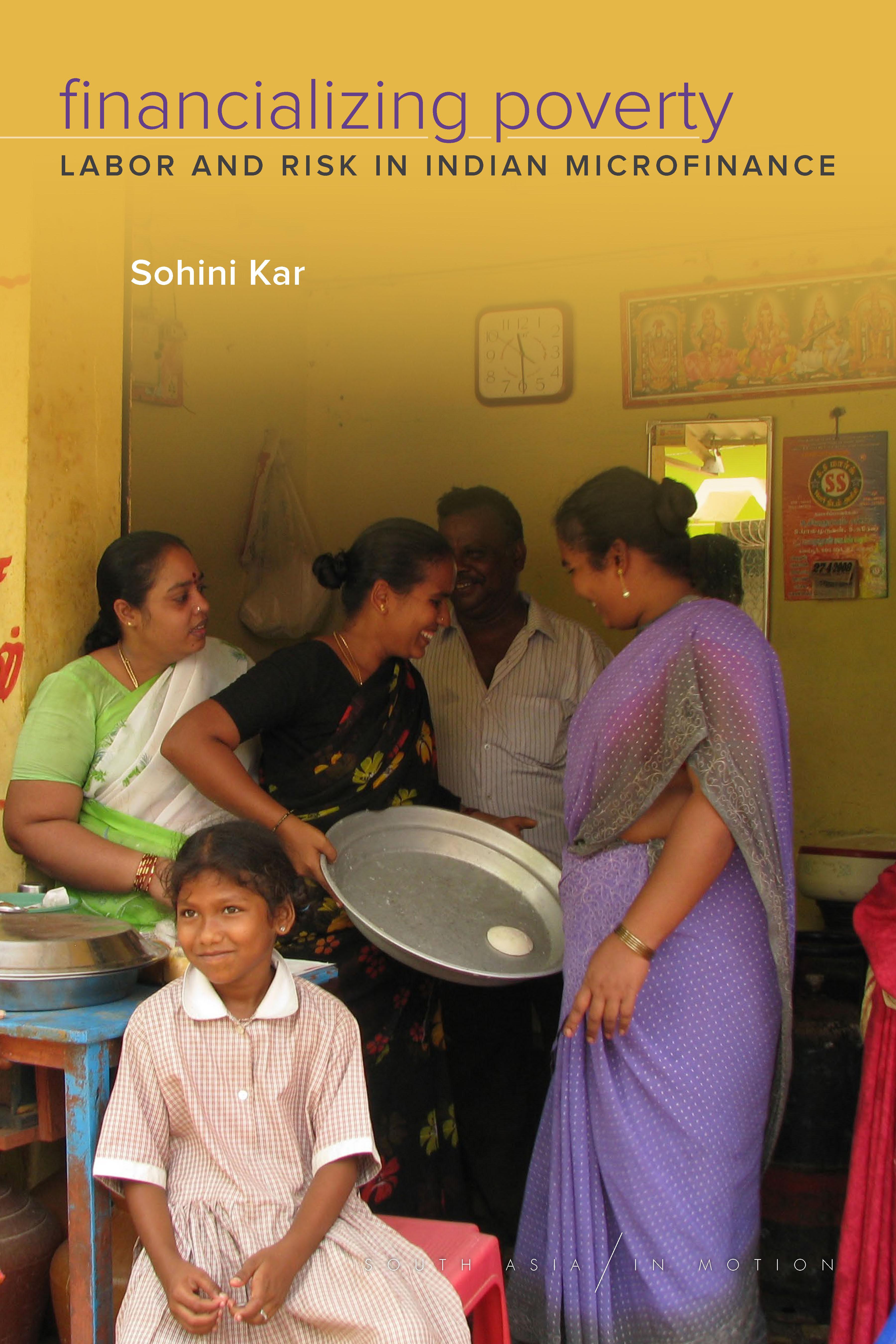
Microfinance is the business of giving small, collateral-free loans to poor borrowers that are paid back in frequent intervals with interest. While these for-profit microfinance institutions (MFIs) promise social and economic empowerment, they have mainly succeeded at enfolding the poor—especially women—into the vast circuits of global finance. Financializing Poverty ethnographically examines how the emergence of MFIs has allowed financial institutions in the city of Kolkata, India, to capitalize on the poverty of its residents.
This book reveals how MFIs have restructured debt relationships in new ways. On the one hand, they have opened access to new streams of credit. However, as the network of finance increasingly incorporates the poor, the "inclusive" dimensions of microfinance are continuously met with rigid forms of credit risk management that reproduce the very inequality the loans are meant to alleviate. Moreover, despite being collateral-free loans, the use of life insurance to manage the high mortality rates of poor borrowers has led to the collateralization of life itself. Thus the newfound ability of the poor to use MFI loans has entrapped them in a system dependent not only on their circulation of capital, but on the poverty that threatens their lives.
Pay easily by card, Klarna, Apple Pay or Google Pay. Not happy? You always have a 14-day money-back guarantee. Read more in our terms. If you have any questions, email us at hello@memmo.org.
Memmo makes studying easier – wherever you are in the world. We bring your course books and smart study tools together in one place: summaries, quizzes, podcasts and flashcards. Plus Ted, your study buddy who answers anything you wonder. Over 50,000 students already study here – built to help you learn faster and stress less.