
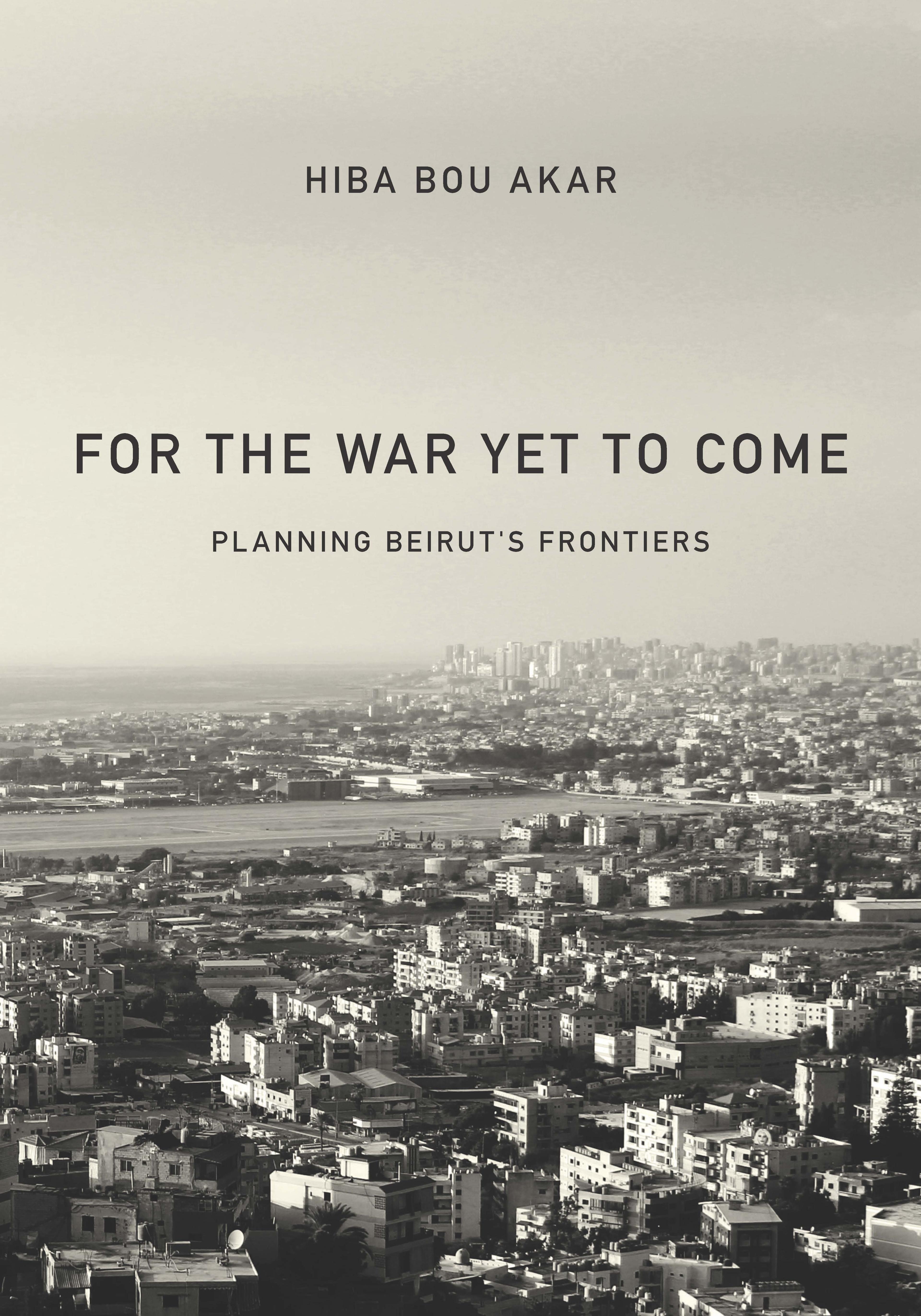
Beirut is a city divided. Following the Green Line of the civil war, dividing the Christian east and the Muslim west, today hundreds of such lines dissect the city. For the residents of Beirut, urban planning could hold promise: a new spatial order could bring a peaceful future. But with unclear state structures and outsourced public processes, urban planning has instead become a contest between religious-political organizations and profit-seeking developers. Neighborhoods reproduce poverty, displacement, and urban violence.
For the War Yet to Come examines urban planning in three neighborhoods of Beirut's southeastern peripheries, revealing how these areas have been developed into frontiers of a continuing sectarian order. Hiba Bou Akar argues these neighborhoods are arranged, not in the expectation of a bright future, but according to the logic of "the war yet to come": urban planning plays on fears and differences, rumors of war, and paramilitary strategies to organize everyday life. As she shows, war in times of peace is not fought with tanks, artillery, and rifles, but involves a more mundane territorial contest for land and apartment sales, zoning and planning regulations, and infrastructure projects.
Pay easily by card, Klarna, Apple Pay or Google Pay. Not happy? You always have a 14-day money-back guarantee. Read more in our terms. If you have any questions, email us at hello@memmo.org.
Memmo makes studying easier – wherever you are in the world. We bring your course books and smart study tools together in one place: summaries, quizzes, podcasts and flashcards. Plus Ted, your study buddy who answers anything you wonder. Over 50,000 students already study here – built to help you learn faster and stress less.