
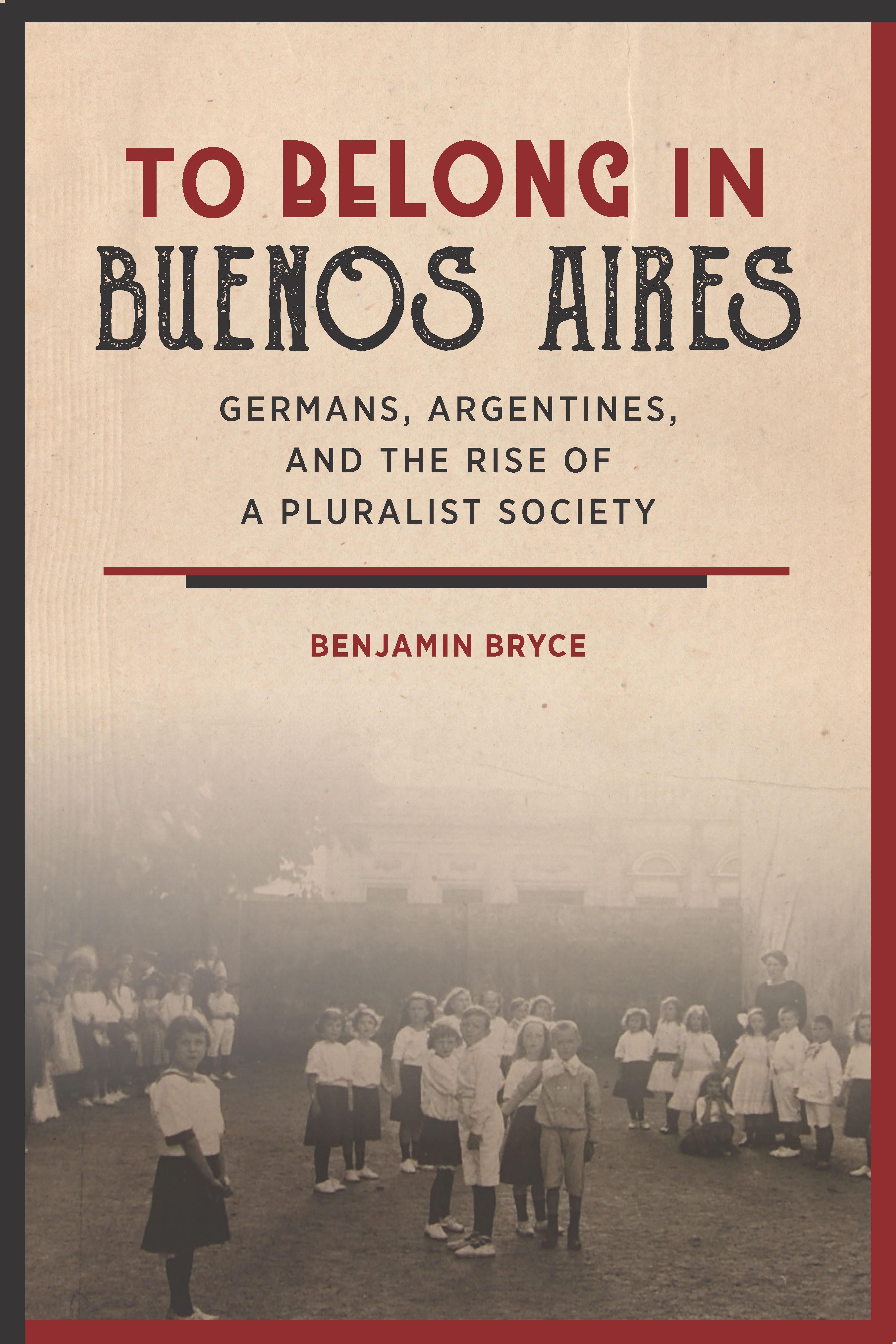
In the late nineteenth and early twentieth centuries, a massive wave of immigration transformed the cultural landscape of Argentina. Alongside other immigrants to Buenos Aires, German speakers strove to carve out a place for themselves as Argentines without fully relinquishing their German language and identity. Their story sheds light on how pluralistic societies take shape and how immigrants negotiate the terms of citizenship and belonging.
Focusing on social welfare, education, religion, language, and the importance of children, Benjamin Bryce examines the formation of a distinct German-Argentine identity. Through a combination of cultural adaptation and a commitment to Protestant and Catholic religious affiliations, German speakers became stalwart Argentine citizens while maintaining connections to German culture. Even as Argentine nationalism intensified and the state called for a more culturally homogeneous citizenry, the leaders of Buenos Aires's German community advocated for a new, more pluralistic vision of Argentine citizenship by insisting that it was possible both to retain one's ethnic identity and be a good Argentine. Drawing parallels to other immigrant groups while closely analyzing the experiences of Argentines of German heritage, Bryce contributes new perspectives on the history of migration to Latin America—and on the complex interconnections between cultural pluralism and the emergence of national cultures.
Pay easily by card, Klarna, Apple Pay or Google Pay. Not happy? You always have a 14-day money-back guarantee. Read more in our terms. If you have any questions, email us at hello@memmo.org.
Memmo makes studying easier – wherever you are in the world. We bring your course books and smart study tools together in one place: summaries, quizzes, podcasts and flashcards. Plus Ted, your study buddy who answers anything you wonder. Over 50,000 students already study here – built to help you learn faster and stress less.