
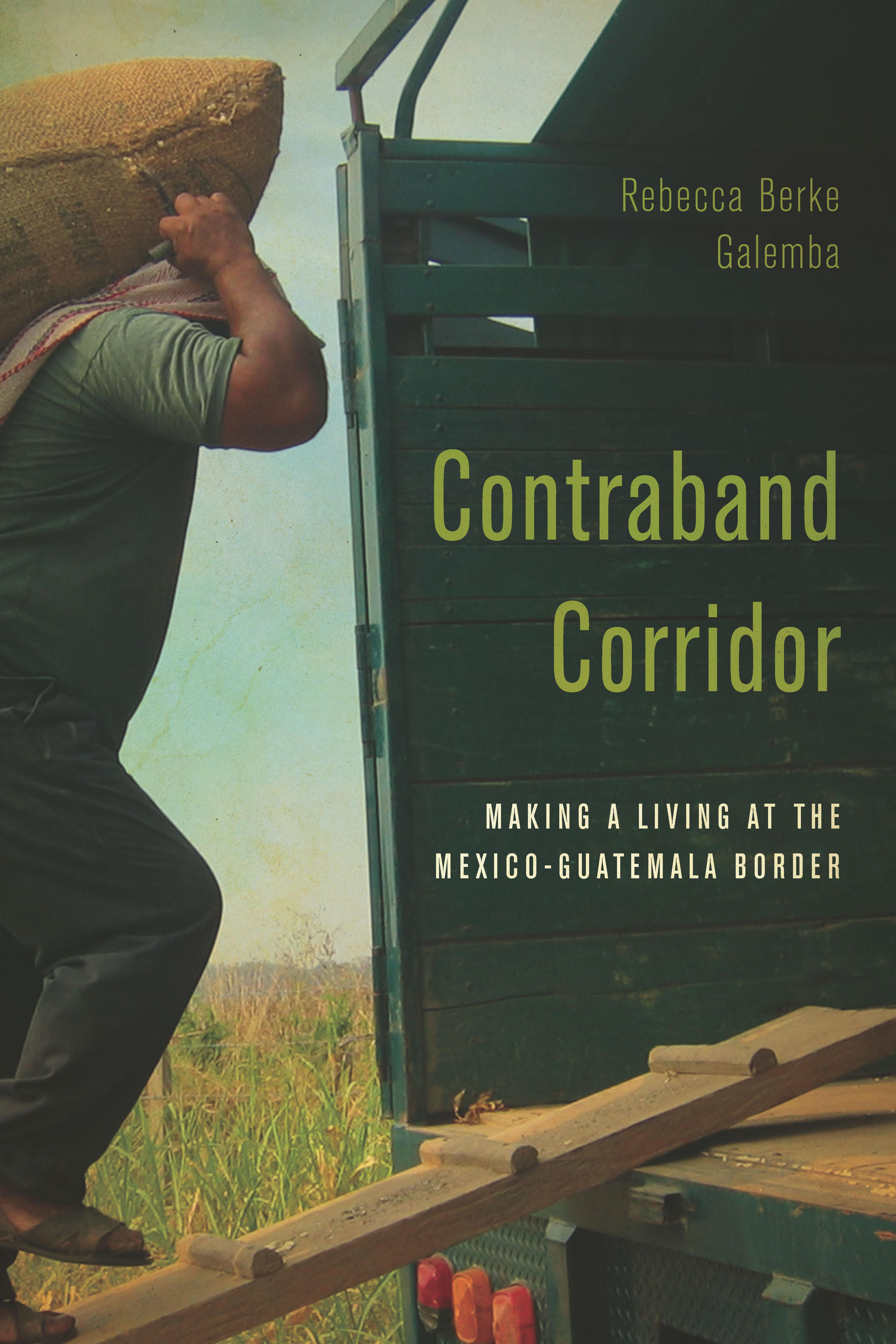
The Mexico–Guatemala border has emerged as a geopolitical hotspot of illicit flows of both goods and people. Contraband Corridor seeks to understand the border from the perspective of its long-term inhabitants, including petty smugglers of corn, clothing, and coffee. Challenging assumptions regarding security, trade, and illegality, Rebecca Berke Galemba details how these residents engage in and justify extralegal practices in the context of heightened border security, restricted economic opportunities, and exclusionary trade policies. Rather than assuming that extralegal activities necessarily threaten the state and formal economy, Galemba's ethnography illustrates the complex ways that the formal, informal, legal, and illegal economies intertwine. Smuggling basic commodities across the border provides a means for borderland peasants to make a living while neoliberal economic policies decimate agricultural livelihoods. Yet smuggling also exacerbates prevailing inequalities, obstructs the possibility of more substantive political and economic change, and provides low-risk economic benefits to businesses, state agents, and other illicit actors, often at the expense of border residents.
Galemba argues that securitized neoliberalism values certain economic activities and actors while excluding and criminalizing others, even when the informal and illicit economy is increasingly one of the poor's only remaining options. Contraband Corridor contends that security, neoliberalism, and illegality are interdependent in complex ways, yet how they unfold depends on negotiations between diverse border actors.
Pay easily by card, Klarna, Apple Pay or Google Pay. Not happy? You always have a 14-day money-back guarantee. Read more in our terms. If you have any questions, email us at hello@memmo.org.
Memmo makes studying easier – wherever you are in the world. We bring your course books and smart study tools together in one place: summaries, quizzes, podcasts and flashcards. Plus Ted, your study buddy who answers anything you wonder. Over 50,000 students already study here – built to help you learn faster and stress less.