
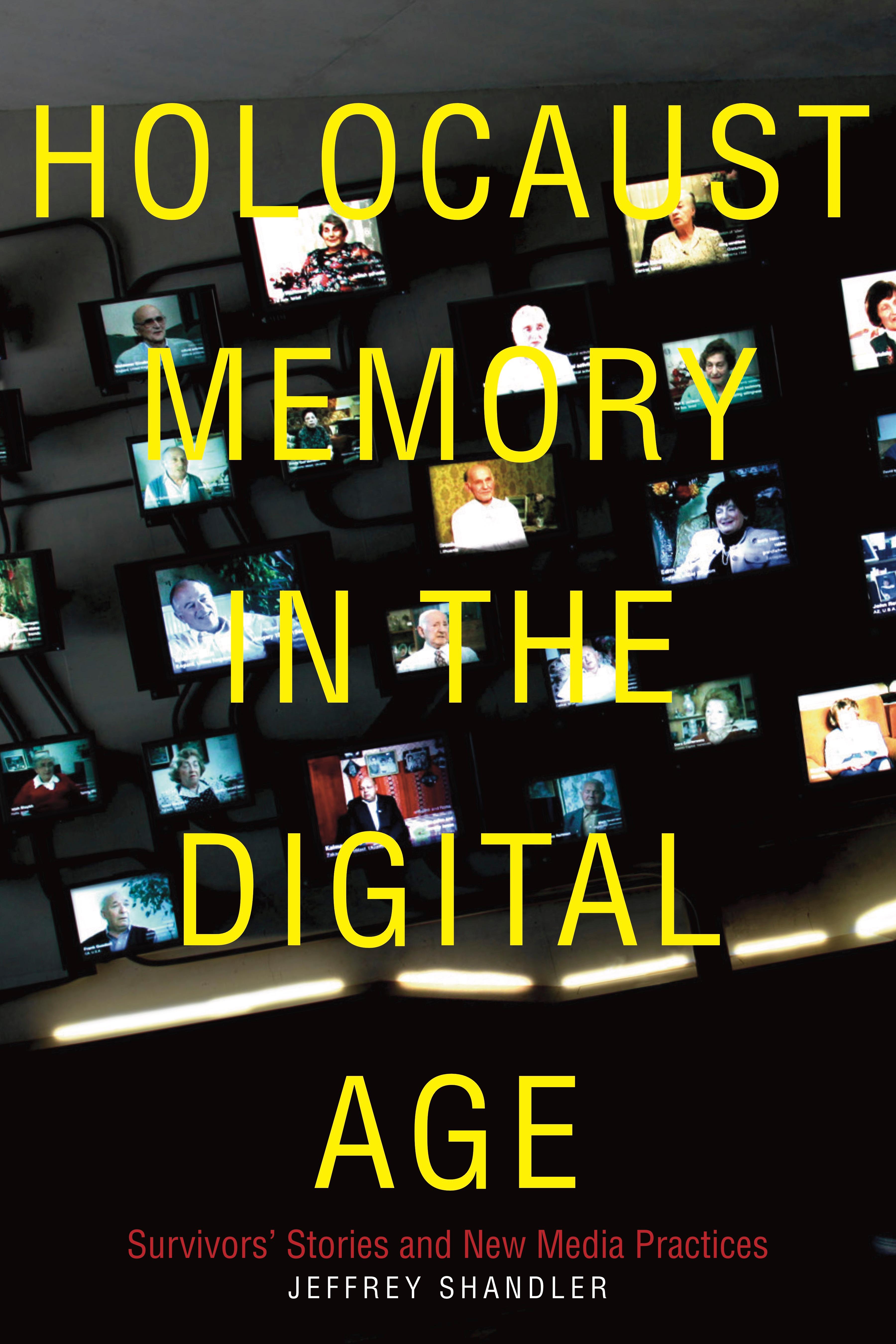
Holocaust Memory in the Digital Age explores the nexus of new media and memory practices, raising questions about how advances in digital technologies continue to influence the nature of Holocaust memorialization. Through an in-depth study of the largest and most widely available collection of videotaped interviews with survivors and other witnesses to the Holocaust, the University of Southern California Shoah Foundation's Visual History Archive, Jeffrey Shandler weighs the possibilities and challenges brought about by digital forms of public memory.
The Visual History Archive's holdings are extensive—over 100,000 hours of video, including interviews with over 50,000 individuals—and came about at a time of heightened anxiety about the imminent passing of the generation of Holocaust survivors and other eyewitnesses. Now, the Shoah Foundation's investment in new digital media is instrumental to its commitment to remembering the Holocaust both as a subject of historical importance in its own right and as a paradigmatic moral exhortation against intolerance. Shandler not only considers the Archive as a whole, but also looks closely at individual survivors' stories, focusing on narrative, language, and spectacle to understand how Holocaust remembrance is mediated.
Pay easily by card, Klarna, Apple Pay or Google Pay. Not happy? You always have a 14-day money-back guarantee. Read more in our terms. If you have any questions, email us at hello@memmo.org.
Memmo makes studying easier – wherever you are in the world. We bring your course books and smart study tools together in one place: summaries, quizzes, podcasts and flashcards. Plus Ted, your study buddy who answers anything you wonder. Over 50,000 students already study here – built to help you learn faster and stress less.