
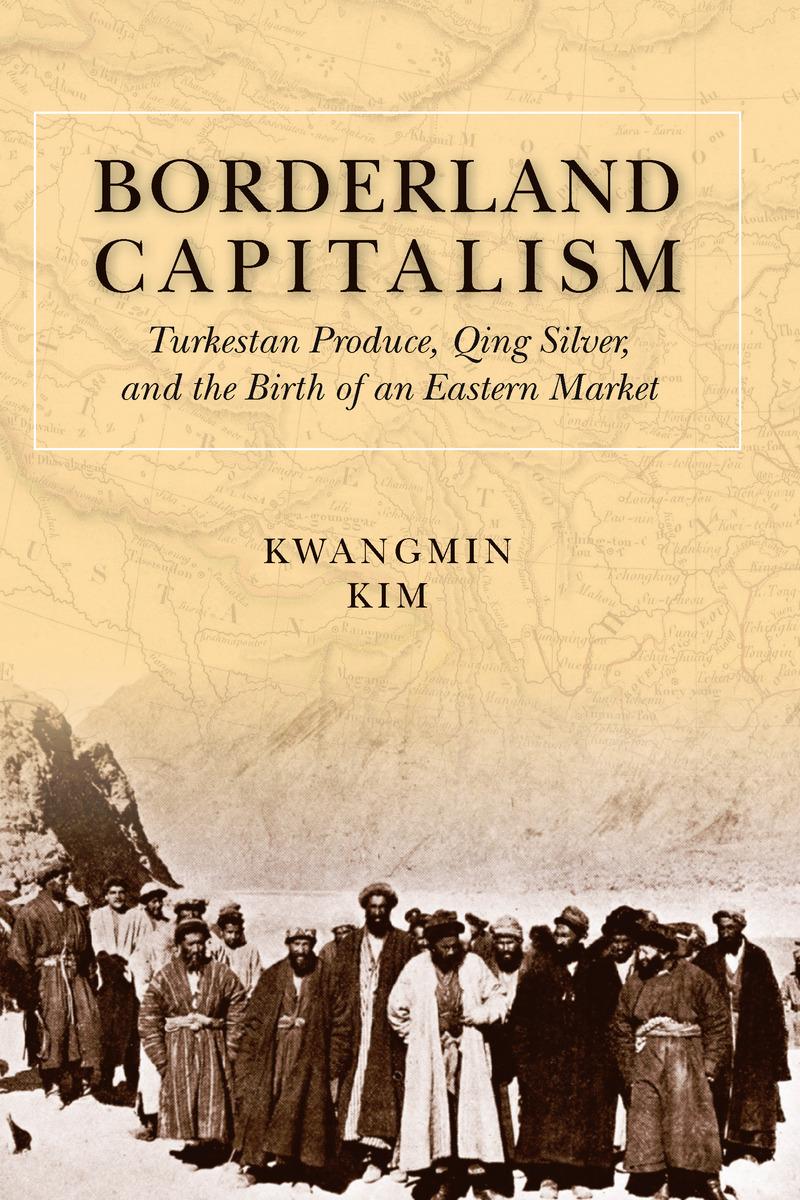
Scholars have long been puzzled by why Muslim landowners in Central Asia, called begs, stayed loyal to the Qing empire when its political legitimacy and military power were routinely challenged. Borderland Capitalism argues that converging interests held them together: the local Qing administration needed the Turkic begs to develop resources and raise military revenue while the begs needed access to the Chinese market.
Drawing upon multilingual sources and archival material, Kwangmin Kim shows how the begs aligned themselves with the Qing to strengthen their own plantation-like economic system. As controllers of food supplies, commercial goods, and human resources, the begs had the political power to dictate the fortunes of governments in the region. Their political choice to cooperate with the Qing promoted an expansion of the Qing's emerging international trade at the same time that Europe was developing global capitalism and imperialism. Borderland Capitalism shows the Qing empire as a quintessentially early modern empire and points the way toward a new understanding of the rise of a global economy.
Pay easily by card, Klarna, Apple Pay or Google Pay. Not happy? You always have a 14-day money-back guarantee. Read more in our terms. If you have any questions, email us at hello@memmo.org.
Memmo makes studying easier – wherever you are in the world. We bring your course books and smart study tools together in one place: summaries, quizzes, podcasts and flashcards. Plus Ted, your study buddy who answers anything you wonder. Over 50,000 students already study here – built to help you learn faster and stress less.