
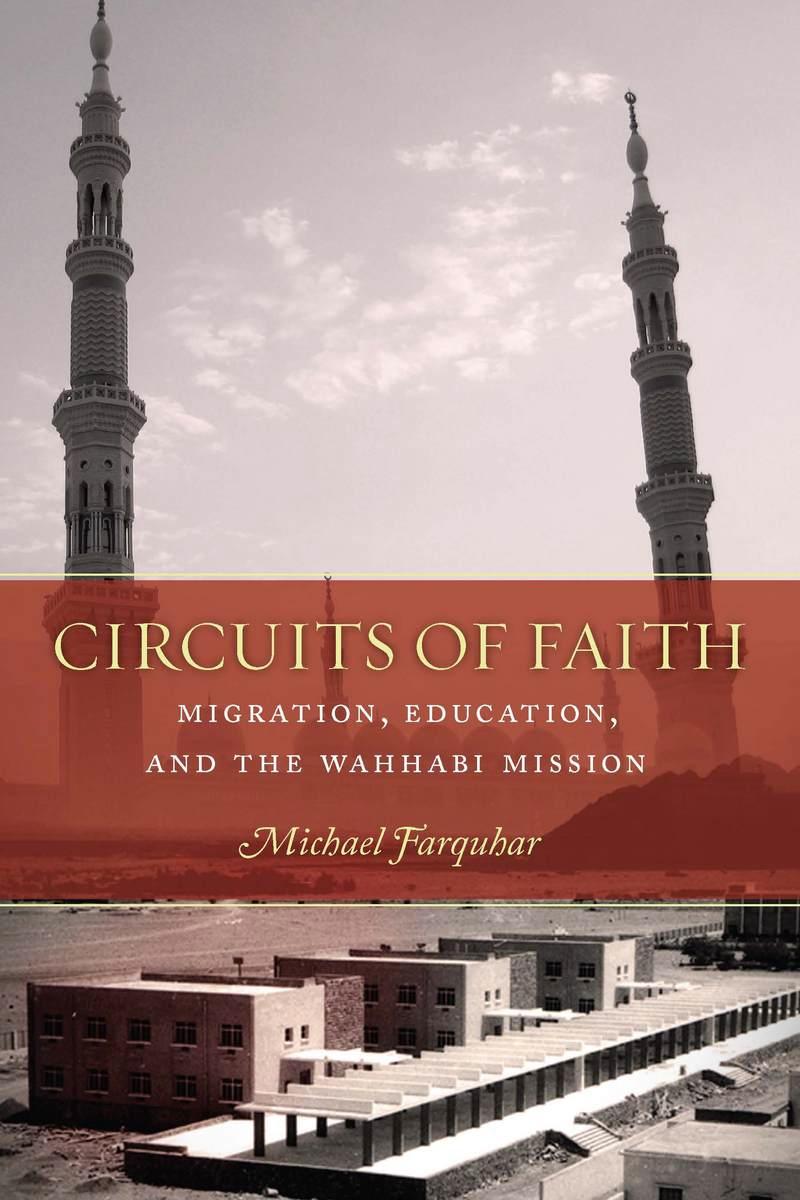
The Islamic University of Medina was established by the Saudi state in 1961 to provide religious instruction primarily to foreign students. Students would come to Medina for religious education and were then expected to act as missionaries, promoting an understanding of Islam in line with the core tenets of Wahhabism. By the early 2000s, more than 11,000 young men from across the globe had graduated from the Islamic University.
Circuits of Faith offers the first examination of the Islamic University and considers the efforts undertaken by Saudi actors and institutions to exert religious influence far beyond the kingdom's borders. Michael Farquhar draws on Arabic sources, including biographical materials, memoirs, syllabi, and back issues of the Islamic University journal, as well as interviews with former staff and students, to explore the institution's history and faculty, the content and style of instruction, and the trajectories and experiences of its students. Countering typical assumptions, Farquhar argues that the project undertaken through the Islamic University amounts to something more complex than just the one-way "export" of Wahhabism. Through transnational networks of students and faculty, this Saudi state-funded religious mission also relies upon, and has in turn been influenced by, far-reaching circulations of persons and ideas.
Pay easily by card, Klarna, Apple Pay or Google Pay. Not happy? You always have a 14-day money-back guarantee. Read more in our terms. If you have any questions, email us at hello@memmo.org.
Memmo makes studying easier – wherever you are in the world. We bring your course books and smart study tools together in one place: summaries, quizzes, podcasts and flashcards. Plus Ted, your study buddy who answers anything you wonder. Over 50,000 students already study here – built to help you learn faster and stress less.