
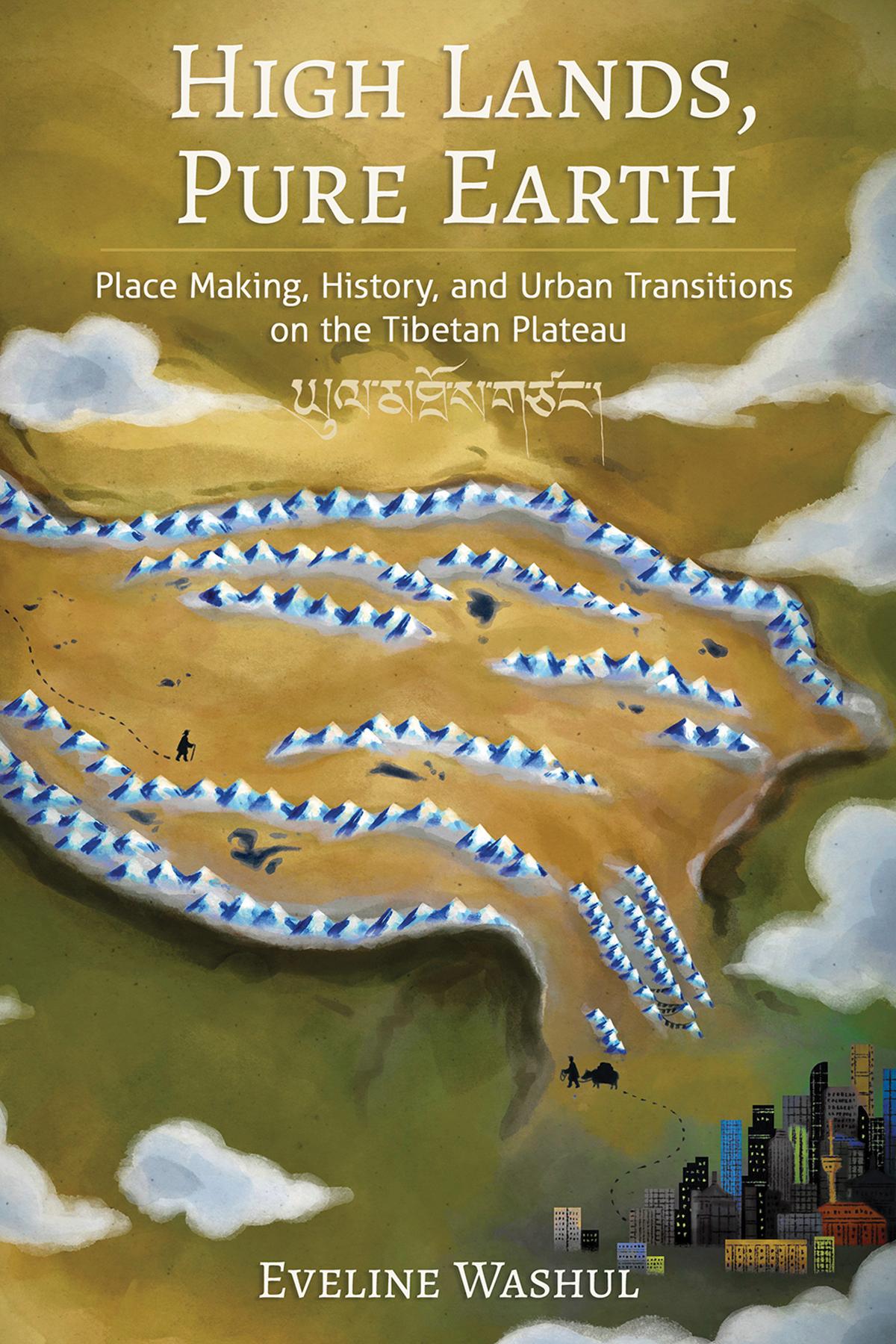
High Lands, Pure Earth foregrounds Tibetan experiences of urban transitions in China's late-reform period. In the twenty-first century, China's accelerated urbanization has transformed the Tibetan Plateau. Yet Tibetan urban experiences continue to be profoundly shaped by senses of being in the world that long predate Tibet's subjugation into the modern Chinese nation-state.
Eveline Washul adopts Indigenous studies frameworks to explore how Tibetans actively engage history, peoplehood, and place to build belonging and community even in urban spaces characterized by intense state-led development and assimilation. Novel analysis of Tibetan textual sources shows how the geobody of Tibet's empire (seventh to ninth centuries) remained the basis for Tibetan perceptual regions and spatial imaginaries through the centuries, even as those regions changed. Ethnographic research highlights circuits of mobility Tibetans travel between homelands and China's cities—and the new social landscapes these mobilities produce. Urban Tibetans, instead of dissolving ties to home, expand their social networks and mobilities into urban spaces. High Lands, Pure Earth documents the enduring strength of Indigenous resilience despite the hegemony of nation-state power.
Pay easily by card, Klarna, Apple Pay or Google Pay. Not happy? You always have a 14-day money-back guarantee. Read more in our terms. If you have any questions, email us at hello@memmo.org.
Memmo makes studying easier – wherever you are in the world. We bring your course books and smart study tools together in one place: summaries, quizzes, podcasts and flashcards. Plus Ted, your study buddy who answers anything you wonder. Over 50,000 students already study here – built to help you learn faster and stress less.