
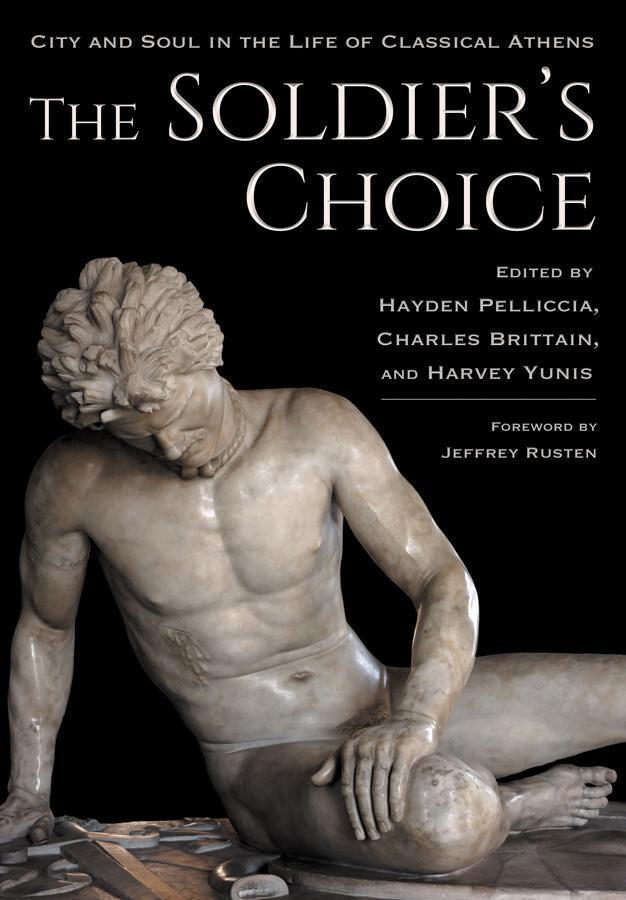
In the pitch of battle, according to Pericles, the Athenian citizen-soldier chooses to die rather than leave undefended the democratic principles that Athens embodies: this defines The Soldier's Choice. The great war between Sparta and Athens dominated the Greek world for twenty-seven years (431–404 BCE) and shaped much of the culture it bequeathed to posterity.
The Sparta of that era did not produce writers, but Athens did: Thucydides, an unsuccessful general in the war, became its first historian; Aristophanes, Greece's greatest comic poet, devoted the first quarter century of his career to plays about the war; the foundational figure of Western philosophy, Plato, grew up in its shadow and populated his works with men of the war generation.
Because their writings belong to different genres, these three seminal figures have rarely been treated together, an oversight The Soldier's Choice decisively corrects. As prominent members of a small intellectual community, each of the three wrote in profound engagement with the currents represented by the others. The contributors to this volume, experts in the relevant genres, reveal and explore these long-neglected interactions.
Contributors: Sara Forsdyke, Edith Foster, Terence Irwin, Richard Kraut, Mary Margaret McCabe, Heinz-Günther Nesselrath, Hunter R. Rawlings III, Ralph M. Rosen, Jeffrey Rusten, Victoria Wohl, Nancy Worman, Harvey Yunis
Pay easily by card, Klarna, Apple Pay or Google Pay. Not happy? You always have a 14-day money-back guarantee. Read more in our terms. If you have any questions, email us at hello@memmo.org.
Memmo makes studying easier – wherever you are in the world. We bring your course books and smart study tools together in one place: summaries, quizzes, podcasts and flashcards. Plus Ted, your study buddy who answers anything you wonder. Over 75,000 students already study here – built to help you learn faster and stress less.