
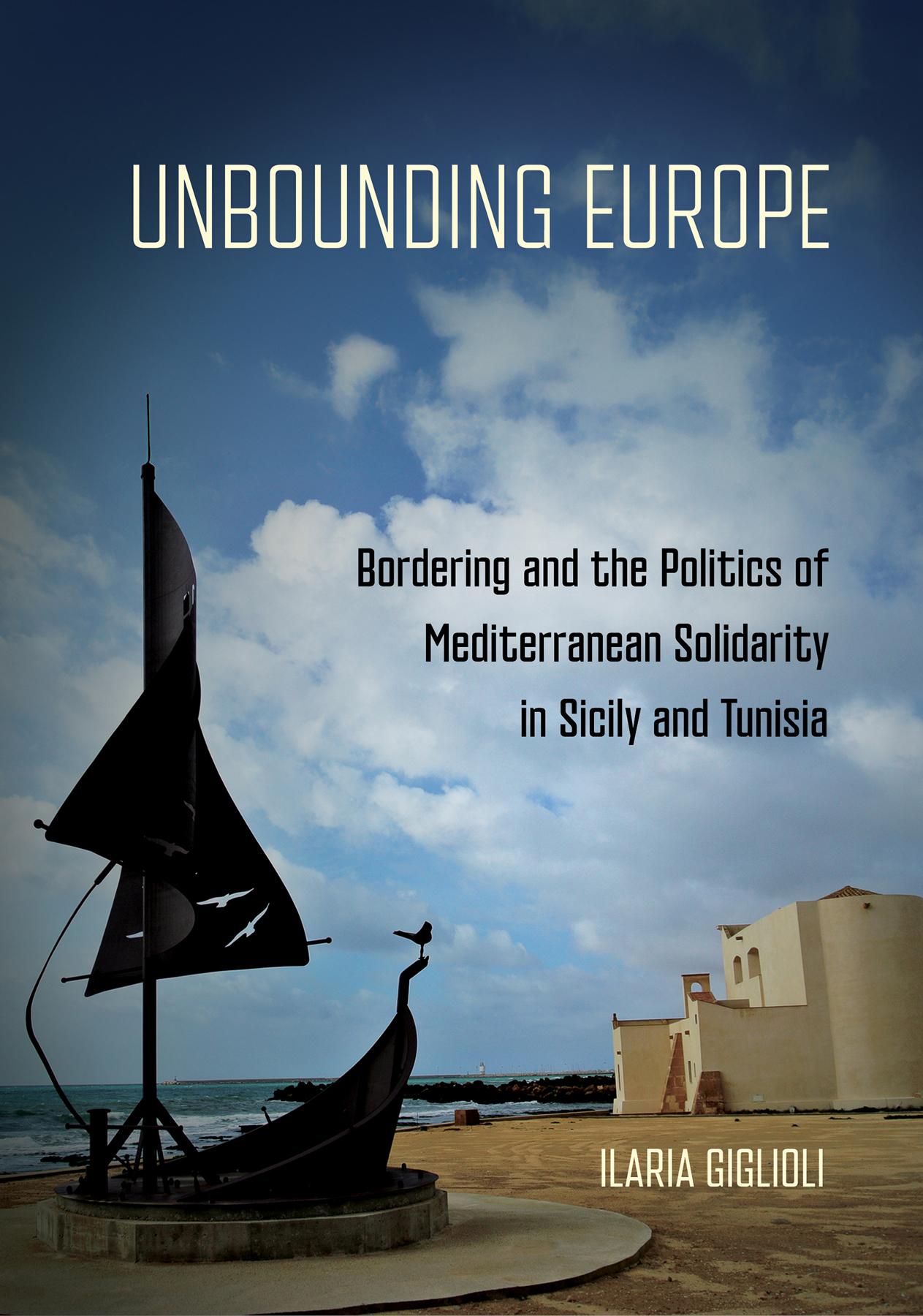
At a time of global border fortification and rising nationalisms, Unbounding Europe analyzes the potential of Mediterranean borderlands to offer alternative models of belonging. Drawing on ethnographic and archival research, Ilaria Giglioli writes about relations between Sicilians and Tunisians and how they negotiate relationships of proximity and difference in multiple arenas of life. She argues that histories of marginalization within the nation-state do not automatically make borderlands inclusive for migrants. Understanding the interplay of different degrees of marginality is key to identify how solidarity movements can emerge and be effective.
Giglioli argues that depoliticized celebrations of cross-Mediterranean coexistence ignore longstanding inequalities and reinforce symbolic hierarchies between Sicilians and Tunisians. She stresses that recognizing and addressing these inequalities is key to developing a transformative politics of solidarity. Rather than idealize intermediate border spaces or subjects, Unbounding Europe asserts that it is more effective to reconstruct histories of material and symbolic boundary drawing to demonstrate the contingency and mutability of borders.
Pay easily by card, Klarna, Apple Pay or Google Pay. Not happy? You always have a 14-day money-back guarantee. Read more in our terms. If you have any questions, email us at hello@memmo.org.
Memmo makes studying easier – wherever you are in the world. We bring your course books and smart study tools together in one place: summaries, quizzes, podcasts and flashcards. Plus Ted, your study buddy who answers anything you wonder. Over 50,000 students already study here – built to help you learn faster and stress less.