
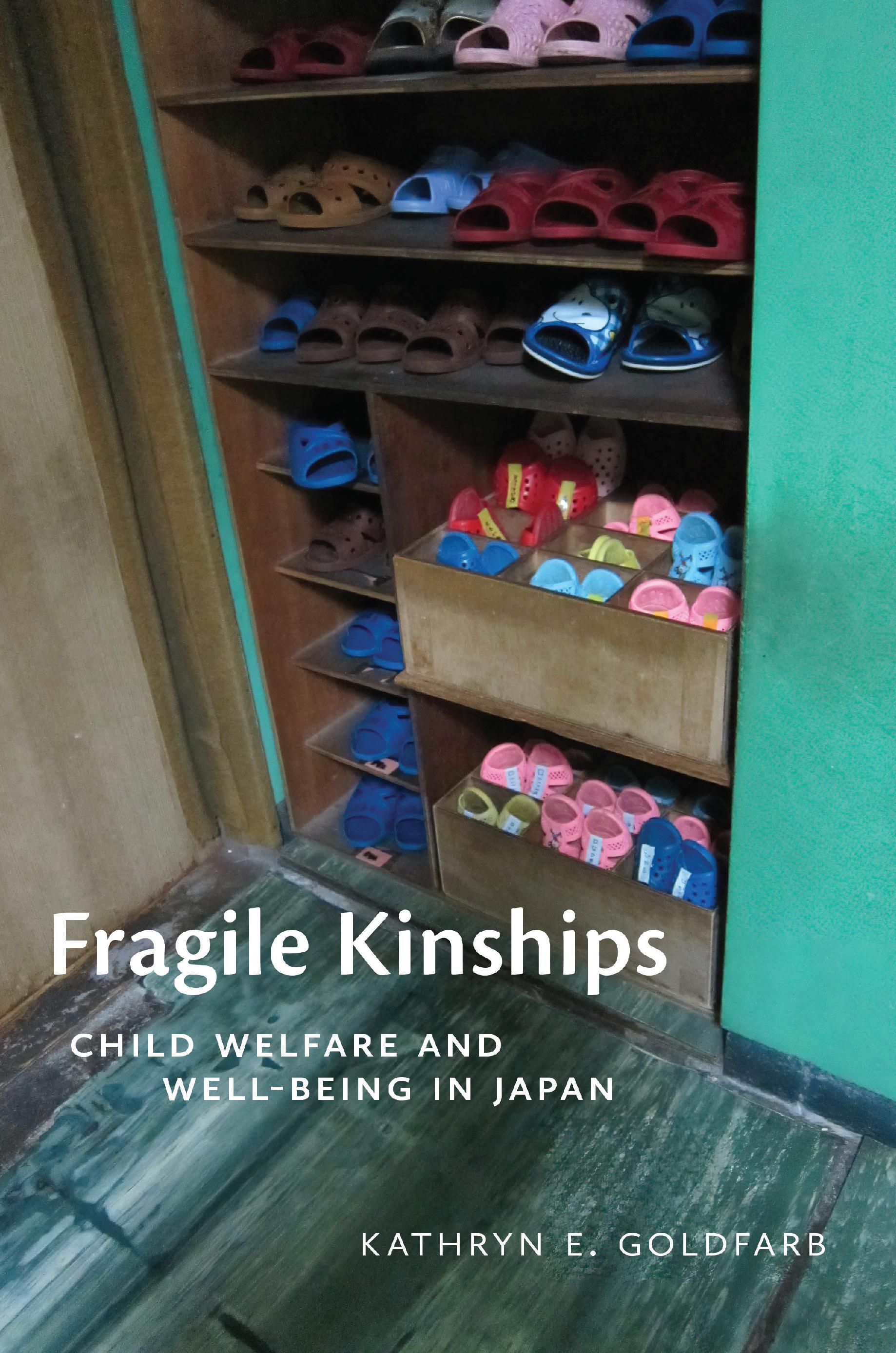
In Fragile Kinships, Kathryn E. Goldfarb shows how child welfare systems do not always generate well-being. This is true across the world, as it is in Japan. Policymakers, caregivers, and people with experience in state care endeavor to imagine—and implement—child welfare systems that are genuinely supportive. Yet despite these efforts, social welfare systems too often produce people who are alone. By centering relationality in theorizing social forms of care, Fragile Kinships offers key insights into embodied and socioemotional well-being. Goldfarb analyzes both the feelings and effects of lacking kin, and the transformative energy people invest in creating new forms of kinship and relatedness.
Fragile Kinships demonstrates why welfare systems must support relational well-being. In her contributions to anthropological theories of kinship, embodiment, and the field of Japanese studies, Goldfarb also speaks to academics, practitioners, and policymakers in Japan and globally with ethnographically grounded perspectives suggesting ways that child welfare systems might truly achieve wellbeing.
Pay easily by card, Klarna, Apple Pay or Google Pay. Not happy? You always have a 14-day money-back guarantee. Read more in our terms. If you have any questions, email us at hello@memmo.org.
Memmo makes studying easier – wherever you are in the world. We bring your course books and smart study tools together in one place: summaries, quizzes, podcasts and flashcards. Plus Ted, your study buddy who answers anything you wonder. Over 50,000 students already study here – built to help you learn faster and stress less.