
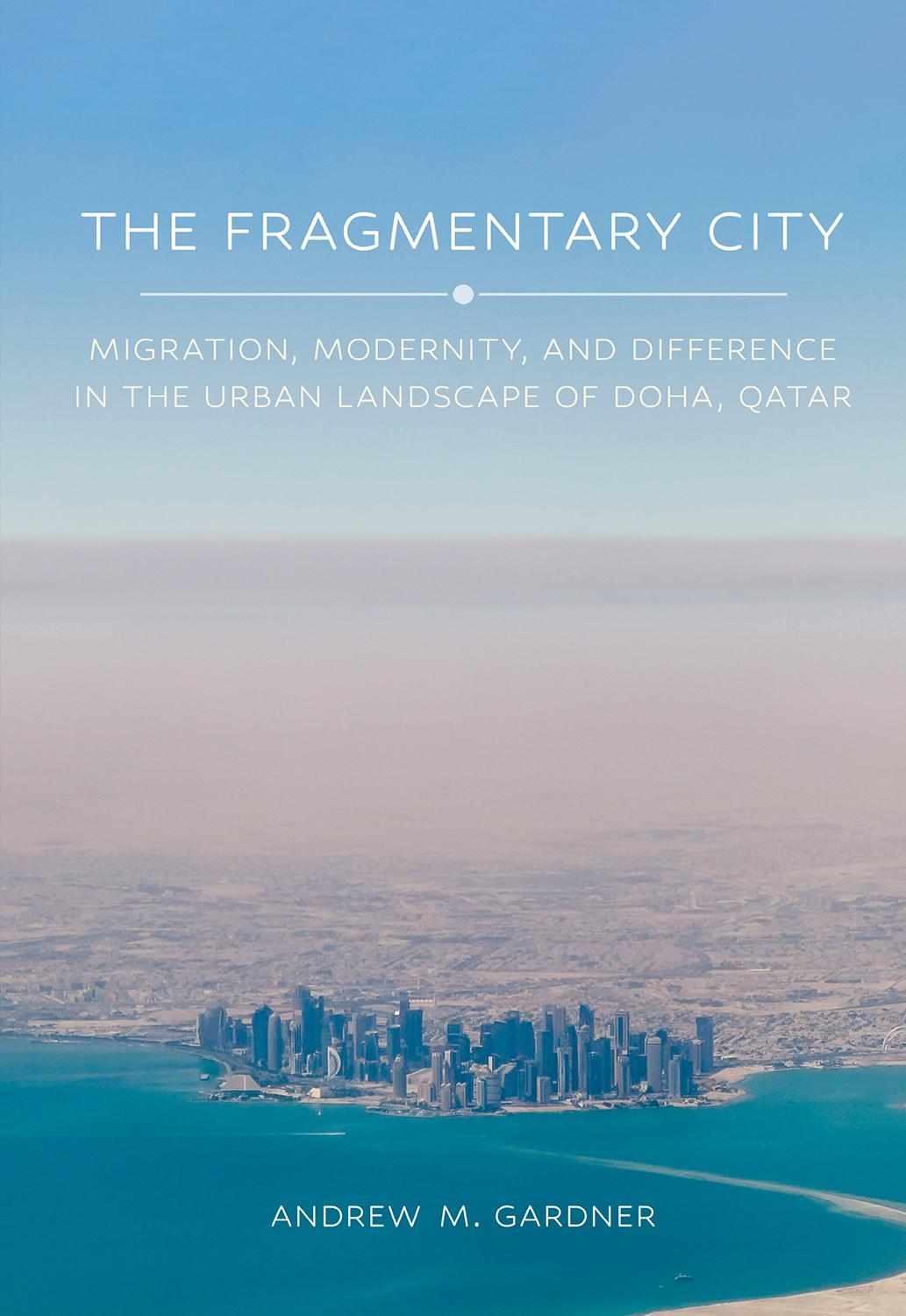
As Andrew M. Gardner explains in The Fragmentary City, in Qatar and elsewhere on the Arabian Peninsula, nearly nine out of every ten residents are foreign noncitizens. Many of these foreigners reside in the cities that have arisen in Qatar and neighboring states. The book provides an overview of the gulf migration system with its diverse migrant experiences. Gardner focuses on the ways that demography and global mobility have shaped the city of Doha and the urban characteristics of the Arabian Peninsula in general. Building on those migrant experiences, the book turns to the spatial politics of the modern Arabian city, exploring who is placed where in the city and how this social landscape came into historical existence. The author reflects on what we might learn from these cities and the societies that inhabit them.
In The Fragmentary City, Andrew M. Gardner frames the contemporary cities of the Arabian Peninsula not as poor imitations of Western urban modernity, but instead as cities on the frontiers of a global, neoliberal, and increasingly urban future.
Pay easily by card, Klarna, Apple Pay or Google Pay. Not happy? You always have a 14-day money-back guarantee. Read more in our terms. If you have any questions, email us at hello@memmo.org.
Memmo makes studying easier – wherever you are in the world. We bring your course books and smart study tools together in one place: summaries, quizzes, podcasts and flashcards. Plus Ted, your study buddy who answers anything you wonder. Over 75,000 students already study here – built to help you learn faster and stress less.