
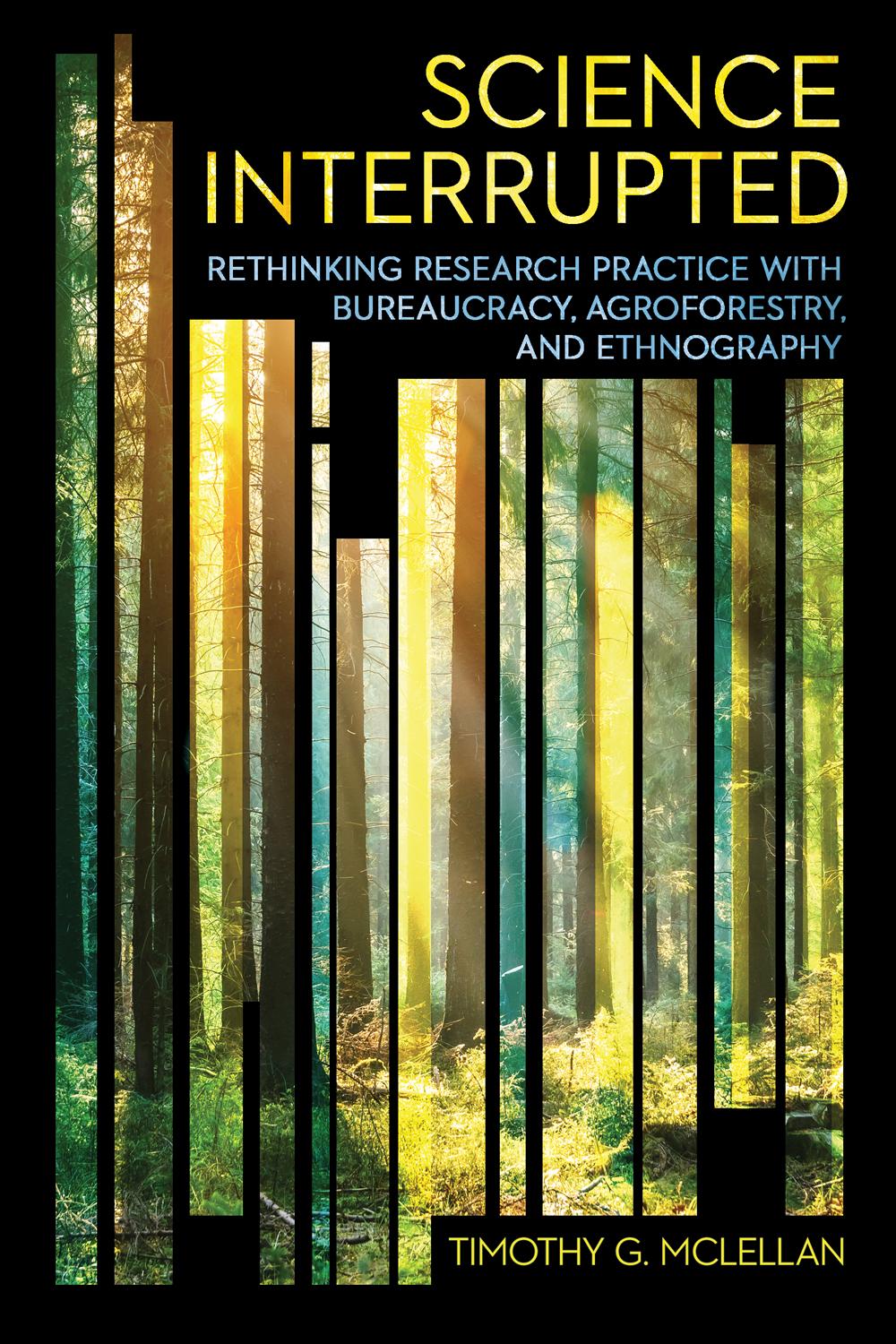
Science Interrupted examines how scientists in China pursue environmental sustainability within the constraints of domestic and international bureaucracies. Timothy G. McLellan offers a theoretical framework for analyzing the formal procedural work of Chinese bureaucracy—work that is overlooked when China scholars restrict their gaze to the informal and interpersonal channels through which bureaucracy is often navigated.
Homing in on an agroforestry research organization in southwest China, the author takes the experiences of the organization's staff in navigating diverse international funding regimes and authoritarian state institutions as entry points for understanding the pervasiveness of bureaucracy in contemporary science. He asks: What if we take the tools, sensibilities, and practices of bureaucracies seriously not only as objects of critique but as resources for re-thinking scientific practice?
Extending a mode of anthropological research in which ethnography serves as source of theory as well as source of data, Science Interrupted thinks with, and not only against, bureaucracy. McLellan shows that ethnographic engagement with bureaucracy enables us to imagine more democratic and more collaborative modes of scientific practice.
Pay easily by card, Klarna, Apple Pay or Google Pay. Not happy? You always have a 14-day money-back guarantee. Read more in our terms. If you have any questions, email us at hello@memmo.org.
Memmo makes studying easier – wherever you are in the world. We bring your course books and smart study tools together in one place: summaries, quizzes, podcasts and flashcards. Plus Ted, your study buddy who answers anything you wonder. Over 50,000 students already study here – built to help you learn faster and stress less.