
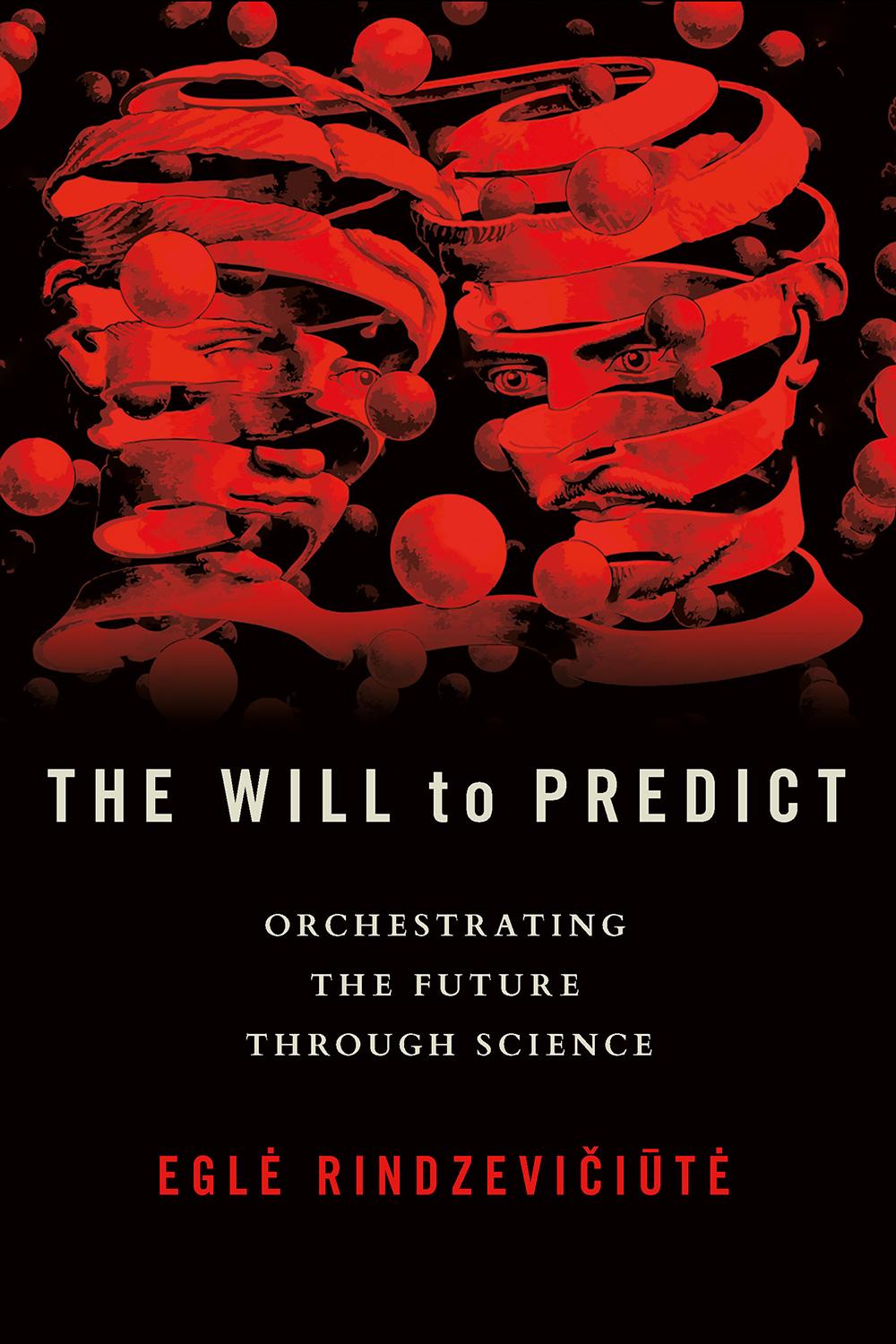
In The Will to Predict, Eglė Rindzevičiūtė demonstrates how the logic of scientific expertise cannot be properly understood without knowing the conceptual and institutional history of scientific prediction. She notes that predictions of future population, economic growth, environmental change, and scientific and technological innovation have shaped much of twentieth and twenty-first-century politics and social life, as well as government policies. Today, such predictions are more necessary than ever as the world undergoes dramatic environmental, political, and technological change. But, she asks, what does it mean to predict scientifically? What are the limits of scientific prediction and what are its effects on governance, institutions, and society?
Her intellectual and political history of scientific prediction takes as its example twentieth-century USSR. By outlining the role of prediction in a range of governmental contexts, from economic and social planning to military strategy, she shows that the history of scientific prediction is a transnational one, part of the history of modern science and technology as well as governance. Going beyond the Soviet case, Rindzevičiūtė argues that scientific predictions are central for organizing uncertainty through the orchestration of knowledge and action. Bridging the fields of political sociology, organization studies, and history, The Will to Predict considers what makes knowledge scientific and how such knowledge has impacted late modern governance.
Pay easily by card, Klarna, Apple Pay or Google Pay. Not happy? You always have a 14-day money-back guarantee. Read more in our terms. If you have any questions, email us at hello@memmo.org.
Memmo makes studying easier – wherever you are in the world. We bring your course books and smart study tools together in one place: summaries, quizzes, podcasts and flashcards. Plus Ted, your study buddy who answers anything you wonder. Over 50,000 students already study here – built to help you learn faster and stress less.