
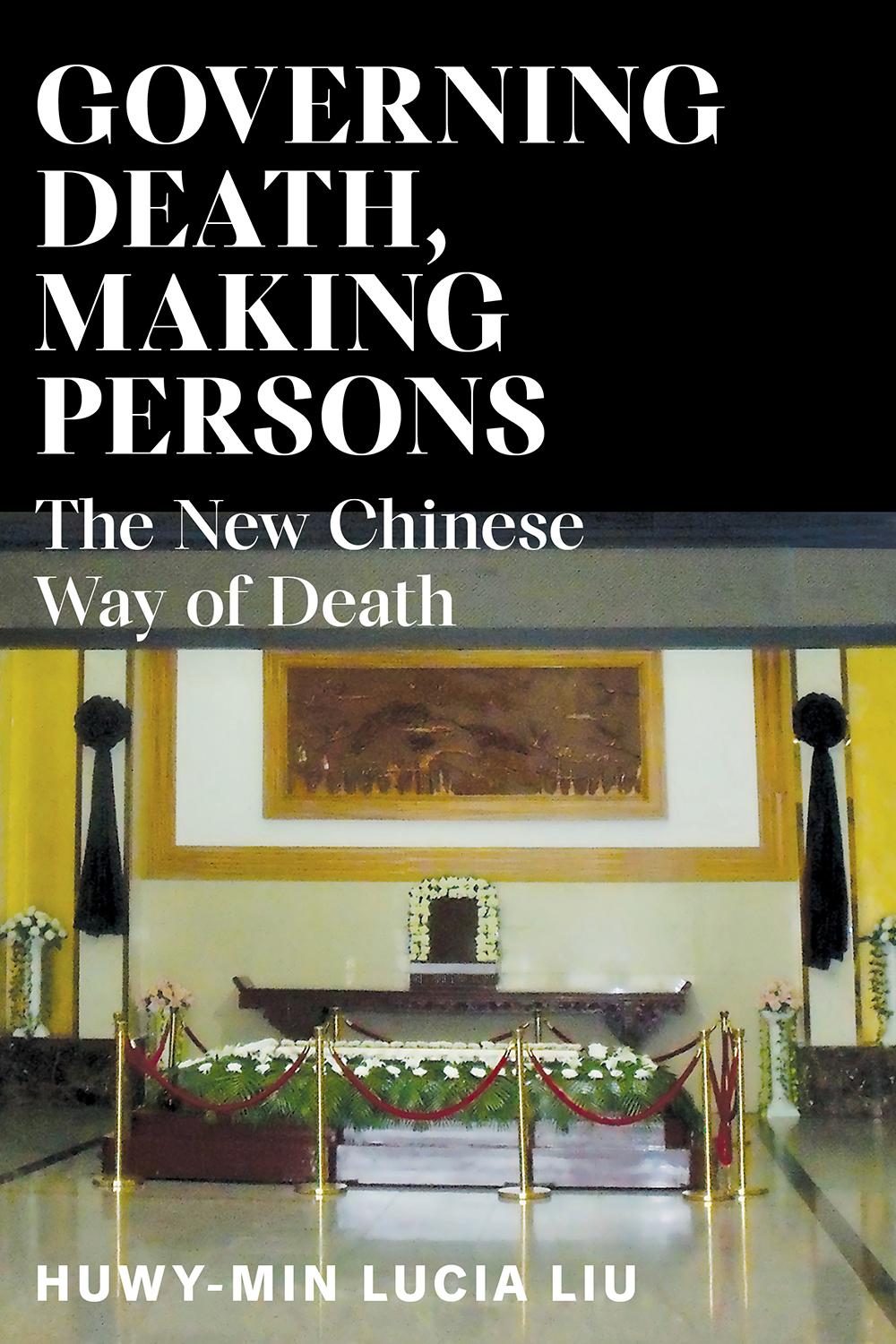
Governing Death, Making Persons tells the story of how economic reforms and changes in the management of death in China have affected the governance of persons. The Chinese Communist Party has sought to channel the funeral industry and death rituals into vehicles for reshaping people into "modern" citizens and subjects. Since the Reform and Opening period and the marketization of state funeral parlors, the Party has promoted personalized funerals in the hope of promoting a market-oriented and individualistic ethos. However, things have not gone as planned.
Huwy-min Lucia Liu writes about the funerals she witnessed and the life stories of two kinds of funeral workers: state workers who are quasi-government officials and semilegal private funeral brokers. She shows that end-of-life commemoration in urban China today is characterized by the resilience of social conventions and not a shift toward market economy individualization. Rather than seeing a rise of individualism and the decline of a socialist self, Liu sees the durability of socialist, religious, communal, and relational ideas of self, woven together through creative ritual framings in spite of their contradictions.
Pay easily by card, Klarna, Apple Pay or Google Pay. Not happy? You always have a 14-day money-back guarantee. Read more in our terms. If you have any questions, email us at hello@memmo.org.
Memmo makes studying easier – wherever you are in the world. We bring your course books and smart study tools together in one place: summaries, quizzes, podcasts and flashcards. Plus Ted, your study buddy who answers anything you wonder. Over 50,000 students already study here – built to help you learn faster and stress less.