
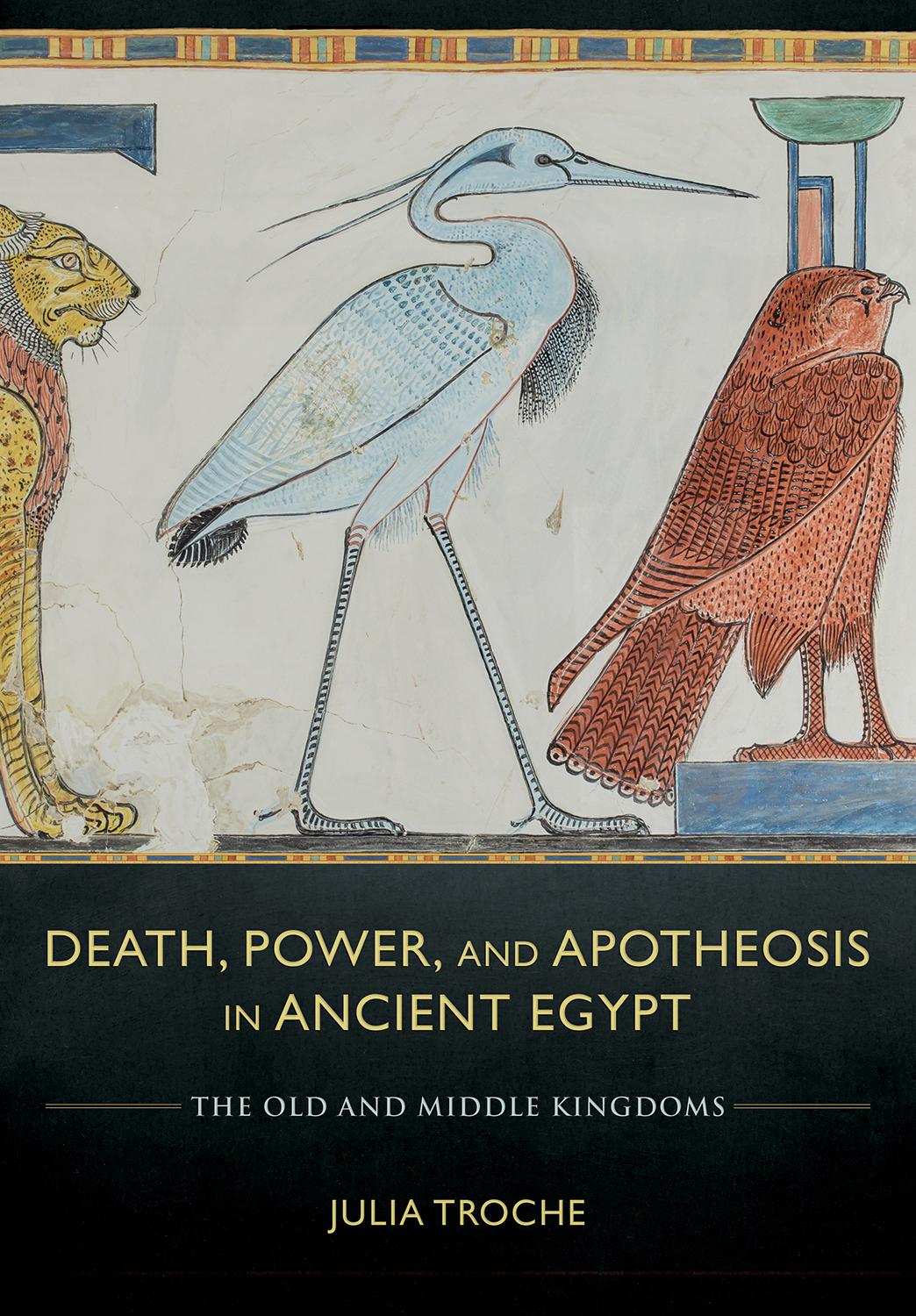
Death, Power, and Apotheosis in Ancient Egypt uniquely considers how power was constructed, maintained, and challenged in ancient Egypt through mortuary culture and apotheosis, or how certain dead in ancient Egypt became gods. Rather than focus on the imagined afterlife and its preparation, Julia Troche provides a novel treatment of mortuary culture exploring how the dead were mobilized to negotiate social, religious, and political capital in ancient Egypt before the New Kingdom.
Troche explores the perceived agency of esteemed dead in ancient Egyptian social, political, and religious life during the Old and Middle Kingdoms (c. 2700–1650 BCE) by utilizing a wide range of evidence, from epigraphic and literary sources to visual and material artifacts. As a result, Death, Power, and Apotheosis in Ancient Egypt is an important contribution to current scholarship in its collection and presentation of data, the framework it establishes for identifying distinguished and deified dead, and its novel argumentation, which adds to the larger academic conversation about power negotiation and the perceived agency of the dead in ancient Egypt.
Pay easily by card, Klarna, Apple Pay or Google Pay. Not happy? You always have a 14-day money-back guarantee. Read more in our terms. If you have any questions, email us at hello@memmo.org.
Memmo makes studying easier – wherever you are in the world. We bring your course books and smart study tools together in one place: summaries, quizzes, podcasts and flashcards. Plus Ted, your study buddy who answers anything you wonder. Over 75,000 students already study here – built to help you learn faster and stress less.