
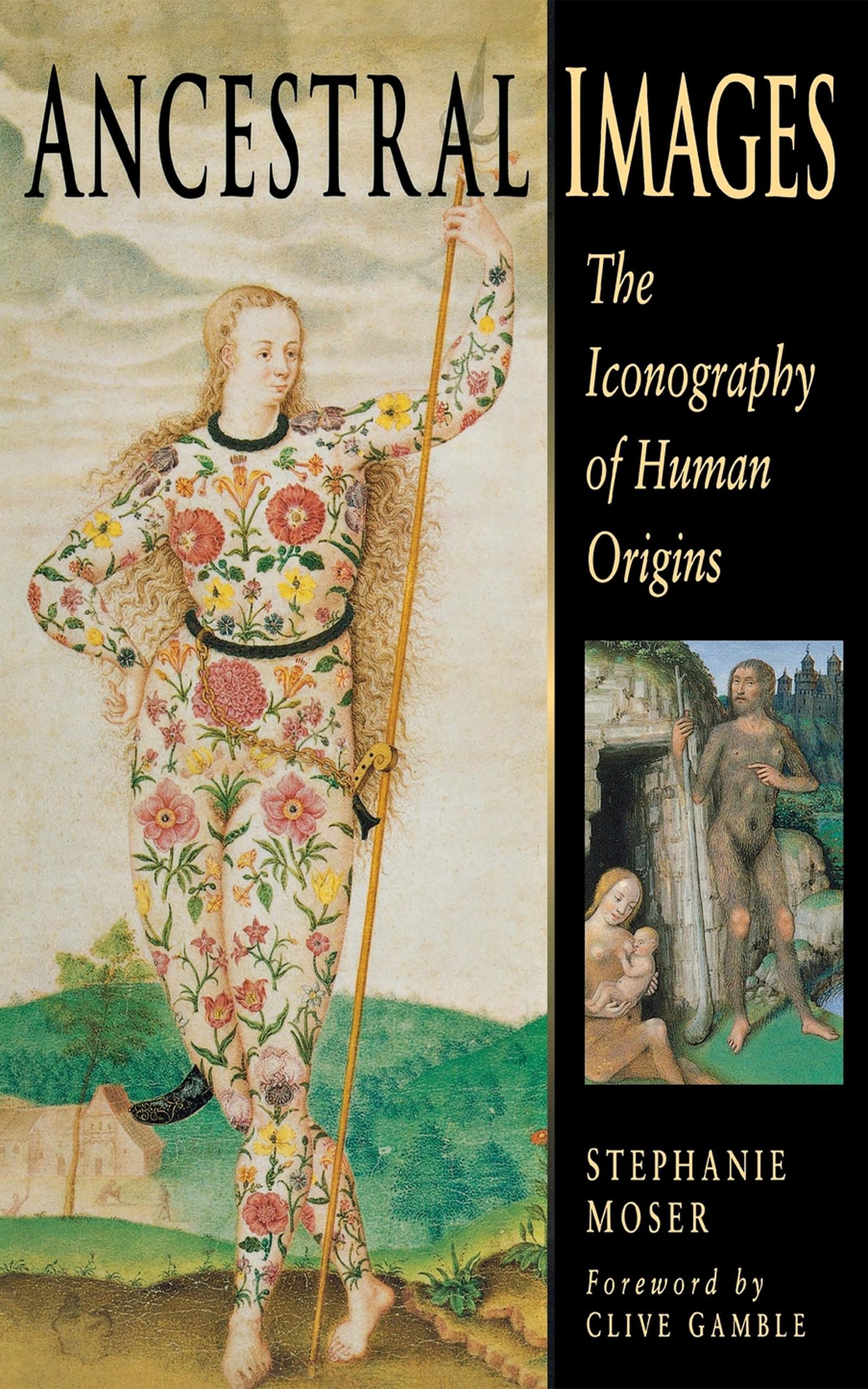
Pictorial reconstructions of ancient human ancestors have twin purposes: to make sense of shared ancestry and to bring prehistory to life. Stephanie Moser analyzes the close relationship between representations of the past and theories about human evolution, showing how this relationship existed even before a scientific understanding of human origins developed. How did mythological, religious, and historically inspired visions of the past, in existence for centuries, shape this understanding? Moser treats images as primary documents, and her book is lavishly illustrated with engravings, paintings, photographs, and reconstructions.
In surveying the iconography of prehistory, Moser explores visions of human creation from their origins in classical, early Christian, and medieval periods through traditions of representation initiated in the Renaissance. She looks closely at the first scientific reconstructions of the nineteenth century, which dramatized and made comprehensible the Darwinian theory of human descent from apes. She considers, as well, the impact of reconstructions on popular literature in Europe and North America, showing that early visualizations of prehistory retained a firm hold on the imagination—a hold that archaeologists and anthropologists have found difficult to shake.
Pay easily by card, Klarna, Apple Pay or Google Pay. Not happy? You always have a 14-day money-back guarantee. Read more in our terms. If you have any questions, email us at hello@memmo.org.
Memmo makes studying easier – wherever you are in the world. We bring your course books and smart study tools together in one place: summaries, quizzes, podcasts and flashcards. Plus Ted, your study buddy who answers anything you wonder. Over 75,000 students already study here – built to help you learn faster and stress less.