
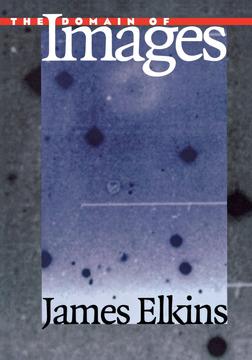
In the domain of visual images, those of fine art form a tiny minority. This original and brilliant book calls upon art historians to look beyond their traditional subjects—painting, drawing, photography, and printmaking—to the vast array of "nonart" images, including those from science, technology, commerce, medicine, music, and archaeology. Such images, James Elkins asserts, can be as rich and expressive as any canonical painting. Using scores of illustrations as examples, he proposes a radically new way of thinking about visual analysis, one that relies on an object's own internal sense of organization.
Elkins begins by demonstrating the arbitrariness of current criteria used by art historians for selecting images for study. He urges scholars to adopt, instead, the far broader criteria of the young field of image studies. After analyzing the philosophic underpinnings of this interdisciplinary field, he surveys the entire range of images, from calligraphy to mathematical graphs and abstract painting. Throughout, Elkins blends philosophic analysis with historical detail to produce a startling new sense of such basic terms as pictures, writing, and notation.
Pay easily by card, Klarna, Apple Pay or Google Pay. Not happy? You always have a 14-day money-back guarantee. Read more in our terms. If you have any questions, email us at hello@memmo.org.
Memmo makes studying easier – wherever you are in the world. We bring your course books and smart study tools together in one place: summaries, quizzes, podcasts and flashcards. Plus Ted, your study buddy who answers anything you wonder. Over 50,000 students already study here – built to help you learn faster and stress less.