
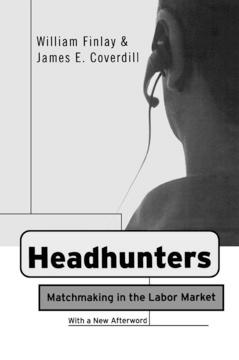
Headhunters are third-party agents paid a fee by companies for locating job candidates perform a unique sales role. The product they sell is people, matching candidates with jobs and companies with candidates. Headhunters affect the professional lives of thousands of employees every day, and their work has a profound, though hidden, effect on the employment picture in the United States. William Finlay and James E. Coverdill draw on interviews with and observations of headhunters and on analysis of headhunting training seminars, lectures, industry newsletters, and a mail survey of headhunting firms. The result is a frank and sometimes unsettling portrait of the aims, attitudes, and tactics of practitioners.
The payment of fees has shifted from candidates to employers, and recruiters now find people to fit jobs rather than the other way around. Finlay and Coverdill address what they feel is a serious lack of research about the work headhunters do and how they do it. Their book is built around three major questions: What advantages do employers derive from using third-party agents to handle candidate search and recruitment? How are headhunters able to accomplish the double sale ('selling' candidates to employers and employers to candidates)? What criteria do headhunters use for selecting candidates? In the process, Finlay and Coverdill link their findings to larger issues of institutional and historical context, revealing the economic and political reasons clients use headhunters, demonstrating how headhunters manipulate clients and candidates, and assessing the impact of headhunters' actions on hiring decisions.
Pay easily by card, Klarna, Apple Pay or Google Pay. Not happy? You always have a 14-day money-back guarantee. Read more in our terms. If you have any questions, email us at hello@memmo.org.
Memmo makes studying easier – wherever you are in the world. We bring your course books and smart study tools together in one place: summaries, quizzes, podcasts and flashcards. Plus Ted, your study buddy who answers anything you wonder. Over 50,000 students already study here – built to help you learn faster and stress less.