
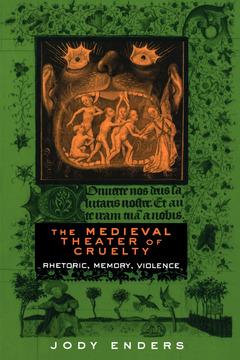
Why did medieval dramatists weave so many scenes of torture into their plays? Exploring the cultural connections among rhetoric, law, drama, literary creation, and violence, Jody Enders addresses an issue that has long troubled students of the Middle Ages. Theories of rhetoric and law of the time reveal, she points out, that the ideology of torture was a widely accepted means for exploiting such essential elements of the stage and stagecraft as dramatic verisimilitude, pity, fear, and catharsis to fabricate truth.
Analyzing the consequences of torture for the history of aesthetics in general and of drama in particular, Enders shows that if the violence embedded in the history of rhetoric is acknowledged, we are better able to understand not only the enduring "theater of cruelty" identified by theorists from Isidore of Seville to Antonin Artaud, but also the continuing modern devotion to the spectacle of pain.
Pay easily by card, Klarna, Apple Pay or Google Pay. Not happy? You always have a 14-day money-back guarantee. Read more in our terms. If you have any questions, email us at hello@memmo.org.
Memmo makes studying easier – wherever you are in the world. We bring your course books and smart study tools together in one place: summaries, quizzes, podcasts and flashcards. Plus Ted, your study buddy who answers anything you wonder. Over 75,000 students already study here – built to help you learn faster and stress less.