
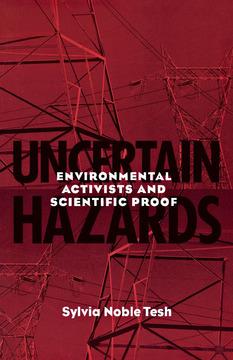
Ordinary citizens frequently organize around environmental issues on which little scientific evidence exists to back activists' claims. Should we then dismiss such claims as spurious? Or should we side with citizens against the polluters?
Uncertain Hazards takes neither path. In exploring the all-too-common problem of scientific uncertainty about links between pollution and public health, Sylvia Noble Tesh shows that much of the problem can be traced to the newness of the environmental movement. The inability of scientists to find data corroborating citizens' claims stems partly from the "pre-environmentalist" assumptions still influencing the environmental health sciences, Tesh says. On the other hand, the conviction of activists that industrial pollutants threaten their health results from the environmental movement's success in promoting new ideas about nature.
Tesh points to ways that environmentalist ideas have begun to affect science, thus making more likely the discovery of links between exposure to industrial pollutants and a community's health problems. Those ways include the expansion of diseases construed as environmental in cause, the study of society's most vulnerable citizens in determining safe levels of pollution, and a new focus on the effects of exposure to chemical mixtures.
Using community activists' own words and experiences, Tesh argues against the familiar charge that activists are naive about science. It is inaccurate, she says, to characterize debates over the hazardous nature of pollution as debates between laypeople and experts Instead, they are debates between two groups of experts. It is also inaccurate, however, to see the conflict over environmental pollution only in scientific terms. The conflict has culturally important moral dimensions, and community activists draw heavily, although often unconsciously, on the lessons taught by environmentalism.
Pay easily by card, Klarna, Apple Pay or Google Pay. Not happy? You always have a 14-day money-back guarantee. Read more in our terms. If you have any questions, email us at hello@memmo.org.
Memmo makes studying easier – wherever you are in the world. We bring your course books and smart study tools together in one place: summaries, quizzes, podcasts and flashcards. Plus Ted, your study buddy who answers anything you wonder. Over 50,000 students already study here – built to help you learn faster and stress less.