
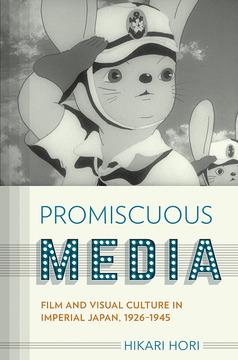
In Promiscuous Media, Hikari Hori makes a compelling case that the visual culture of Showa-era Japan articulated urgent issues of modernity rather than serving as a simple expression of nationalism. Hori makes clear that the Japanese cinema of the time was in fact almost wholly built on a foundation of Russian and British film theory as well as American film genres and techniques. Hori provides a range of examples that illustrate how maternal melodrama and animated features, akin to those popularized by Disney, were adopted wholesale by Japanese filmmakers.
Emperor Hirohito's image, Hori argues, was inseparable from the development of mass media; he was the first emperor whose public appearances were covered by media ranging from postcards to radio broadcasts. Worship of the emperor through viewing his image, Hori shows, taught the Japanese people how to look at images and primed their enjoyment of early animation and documentary films alike. Promiscuous Media links the political and the cultural closely in a way that illuminates the nature of twentieth-century Japanese society.
Pay easily by card, Klarna, Apple Pay or Google Pay. Not happy? You always have a 14-day money-back guarantee. Read more in our terms. If you have any questions, email us at hello@memmo.org.
Memmo makes studying easier – wherever you are in the world. We bring your course books and smart study tools together in one place: summaries, quizzes, podcasts and flashcards. Plus Ted, your study buddy who answers anything you wonder. Over 50,000 students already study here – built to help you learn faster and stress less.