
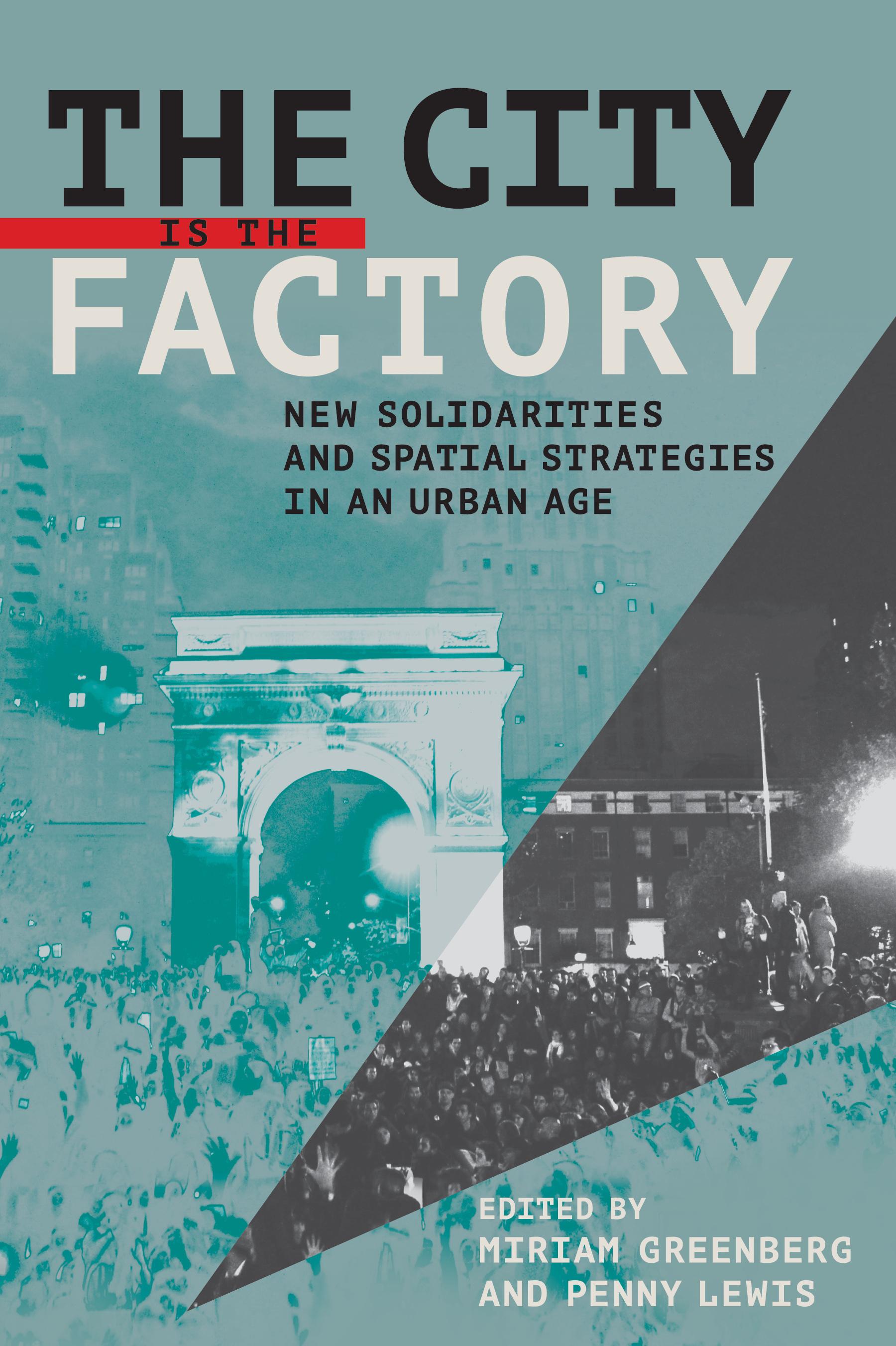
Urban public spaces, from the streets and squares of Buenos Aires to Zuccotti Park in New York City, have become the emblematic sites of contentious politics in the twenty-first century. As the contributors to The City Is the Factory argue, this resurgent politics of the square is itself part of a broader shift in the primary locations and targets of popular protest from the workplace to the city. This shift is due to an array of intersecting developments: the concentration of people, profit, and social inequality in growing urban areas; the attacks on and precarity faced by unions and workers' movements; and the sense of possibility and actual leverage afforded by local politics and the tactical use of urban space. Thus, "the city"—from the town square to the banlieu—is becoming like the factory of old: a site of production and profit-making as well as new forms of solidarity, resistance, and social reimagining.We see examples of the city as factory in new place-based political alliances, as workers and the unemployed find common cause with "right to the city" struggles. Demands for jobs with justice are linked with demands for the urban commons—from affordable housing to a healthy environment, from immigrant rights to "urban citizenship" and the right to streets free from both violence and racially biased policing. The case studies and essays in The City Is the Factory provide descriptions and analysis of the form, substance, limits, and possibilities of these timely struggles.
Contributors
Melissa Checker, Queens College and the Graduate Center of the City University of New York; Daniel Aldana Cohen, University of Pennsylvania; Els de Graauw, Baruch College, City University of New York; Kathleen Dunn, Loyola University Chicago
Shannon Gleeson, Cornell University; Miriam Greenberg, University of California, Santa Cruz; Alejandro Grimson, Universidad de San Martín (Argentina); Andrew Herod, University of Georgia; Penny Lewis, Joseph S. Murphy Institute for Worker Education and Labor Studies, City University of New York; Stephanie Luce, Joseph S. Murphy Institute for Worker Education and Labor Studies, City University of New York; Lize Mogel, artist and coeditor of An Atlas of Radical Cartography; Gretchen Purser, Maxwell School of Citizenship and Public Affairs, Syracuse University
Pay easily by card, Klarna, Apple Pay or Google Pay. Not happy? You always have a 14-day money-back guarantee. Read more in our terms. If you have any questions, email us at hello@memmo.org.
Memmo makes studying easier – wherever you are in the world. We bring your course books and smart study tools together in one place: summaries, quizzes, podcasts and flashcards. Plus Ted, your study buddy who answers anything you wonder. Over 50,000 students already study here – built to help you learn faster and stress less.