
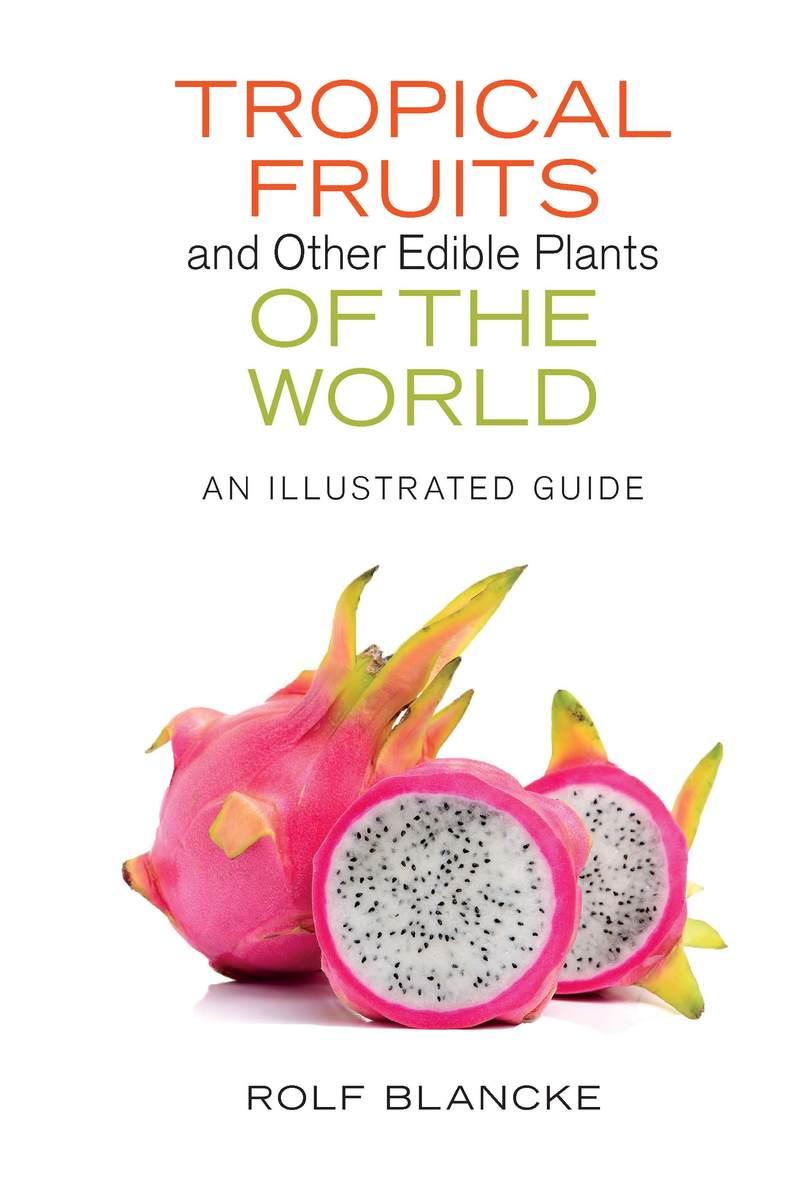
Tropical fruits such as banana, mango, papaya, and pineapple are familiar and treasured staples of our diets, and consequently of great commercial importance, but there are many other interesting species that are little known to inhabitants of temperate regions. What delicacies are best known only by locals? The tropical regions are home to a vast variety of edible fruits, tubers, and spices. Of the more than two thousand species that are commonly used as food in the tropics, only about forty to fifty species are well known internationally. Illustrated with high-quality photographs taken on location in the plants' natural environment, this field guide describes more than three hundred species of tropical and subtropical species of fruits, tubers, and spices.
In Tropical Fruits and Other Edible Plants of the World, Rolf Blancke includes all the common species and features many lesser known species, including mangosteen and maca, as well as many rare species such as engkala, sundrop, and the mango plum. Some of these rare species will always remain of little importance because they need an acquired taste to enjoy them, they have too little pulp and too many seeds, or they are difficult to package and ship. Blancke highlights some fruits—the araza (Eugenia stipitata) and the nutritious peach palm (Bactris gasipaes) from the Amazon lowlands, the Brunei olive (Canarium odontophyllum) from Indonesia, and the remarkably tasty soursop (Annona muricata) from Central America—that deserve much more attention and have the potential to become commercially important in the near future.
Tropical Fruits and Other Edible Plants of the World also features tropical plants used to produce spices, and many tropical tubers, including cassava, yam, and oca. These tubers play a vital role in human nutrition and are often foundational to the foodways of their local cultures, but they sometimes require complex preparation and are often overlooked or poorly understood distant from their home context.
Pay easily by card, Klarna, Apple Pay or Google Pay. Not happy? You always have a 14-day money-back guarantee. Read more in our terms. If you have any questions, email us at hello@memmo.org.
Memmo makes studying easier – wherever you are in the world. We bring your course books and smart study tools together in one place: summaries, quizzes, podcasts and flashcards. Plus Ted, your study buddy who answers anything you wonder. Over 50,000 students already study here – built to help you learn faster and stress less.