
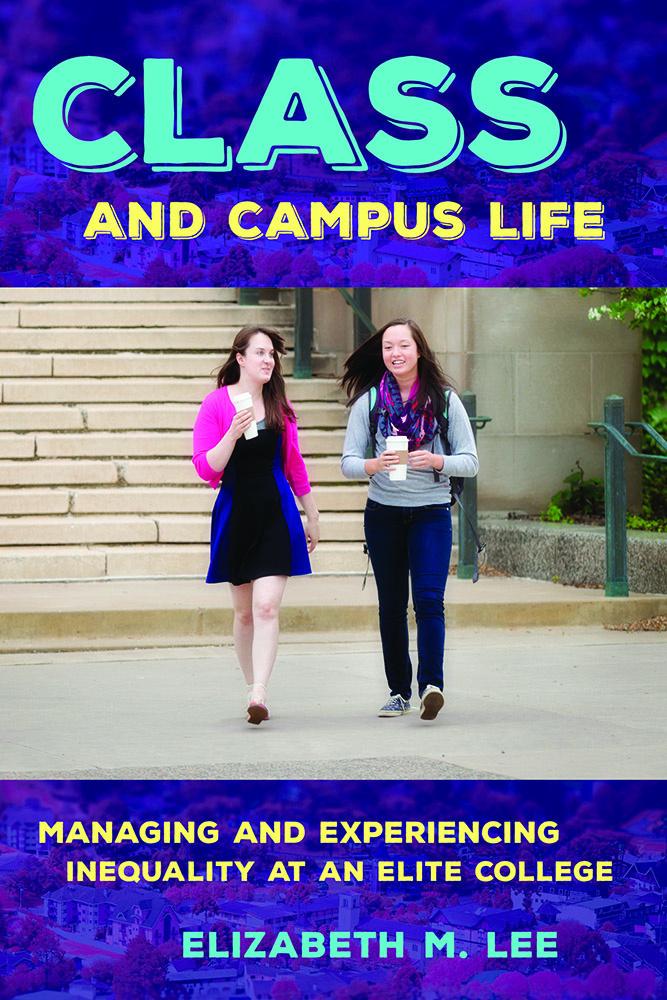
In 2015, the New York Times reported, "The bright children of janitors and nail salon workers, bus drivers and fast-food cooks may not have grown up with the edifying vacations, museum excursions, daily doses of NPR and prep schools that groom Ivy applicants, but they are coveted candidates for elite campuses." What happens to academically talented but economically challenged "first-gen" students when they arrive on campus? Class markers aren't always visible from a distance, but socioeconomic differences permeate campus life—and the inner experiences of students—in real and sometimes unexpected ways. In Class and Campus Life, Elizabeth M. Lee shows how class differences are enacted and negotiated by students, faculty, and administrators at an elite liberal arts college for women located in the Northeast.
Using material from two years of fieldwork and more than 140 interviews with students, faculty, administrators, and alumnae at the pseudonymous Linden College, Lee adds depth to our understanding of inequality in higher education. An essential part of her analysis is to illuminate the ways in which the students' and the college's practices interact, rather than evaluating them separately, as seemingly unrelated spheres. She also analyzes underlying moral judgments brought to light through cultural connotations of merit, hard work by individuals, and making it on your own that permeate American higher education. Using students' own descriptions and understandings of their experiences to illustrate the complexity of these issues, Lee shows how the lived experience of socioeconomic difference is often defined in moral, as well as economic, terms, and that tensions, often unspoken, undermine students' senses of belonging.
Pay easily by card, Klarna, Apple Pay or Google Pay. Not happy? You always have a 14-day money-back guarantee. Read more in our terms. If you have any questions, email us at hello@memmo.org.
Memmo makes studying easier – wherever you are in the world. We bring your course books and smart study tools together in one place: summaries, quizzes, podcasts and flashcards. Plus Ted, your study buddy who answers anything you wonder. Over 50,000 students already study here – built to help you learn faster and stress less.