
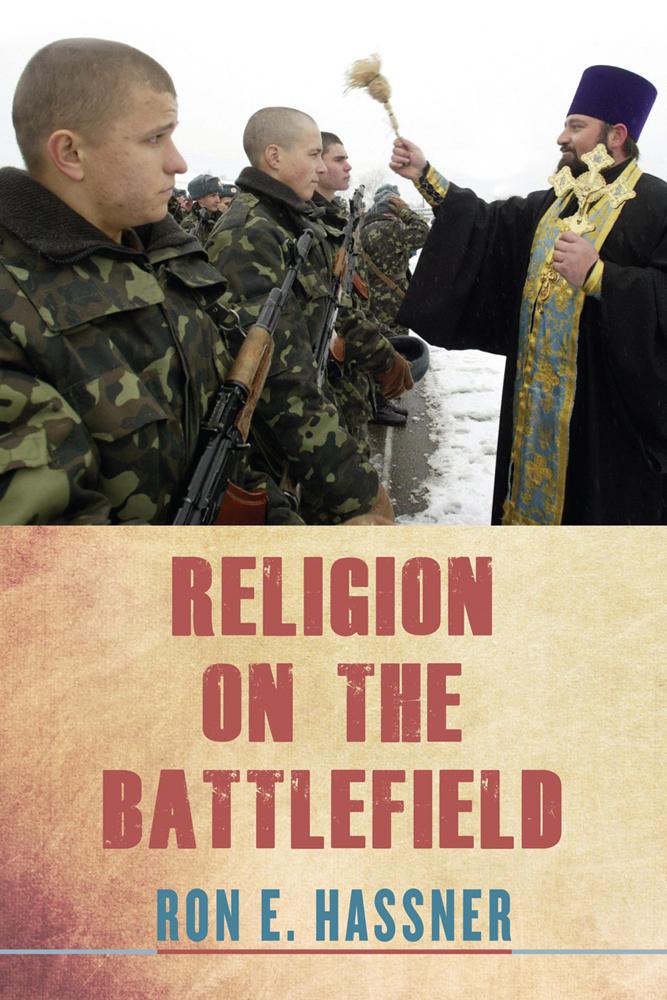
How does religion shape the modern battlefield? Ron E. Hassner proposes that religion acts as a force multiplier, both enabling and constraining military operations. This is true not only for religiously radicalized fighters but also for professional soldiers. In the last century, religion has influenced modern militaries in the timing of attacks, the selection of targets for assault, the zeal with which units execute their mission, and the ability of individual soldiers to face the challenge of war. Religious ideas have not provided the reasons why conventional militaries fight, but religious practices have influenced their ability to do so effectively.
In Religion on the Battlefield, Hassner focuses on the everyday practice of religion in a military context: the prayers, rituals, fasts, and feasts of the religious practitioners who make up the bulk of the adversaries, bystanders, and observers during armed conflicts. To show that religious practices have influenced battlefield decision making, Hassner draws most of his examples from major wars involving Western militaries. They include British soldiers in the trenches of World War I, U.S. pilots in World War II, and U.S. Marines in Iraq and Afghanistan. Hassner shows that even modern, rational, and bureaucratized military organizations have taken—and must take—religious practice into account in the conduct of war.
Pay easily by card, Klarna, Apple Pay or Google Pay. Not happy? You always have a 14-day money-back guarantee. Read more in our terms. If you have any questions, email us at hello@memmo.org.
Memmo makes studying easier – wherever you are in the world. We bring your course books and smart study tools together in one place: summaries, quizzes, podcasts and flashcards. Plus Ted, your study buddy who answers anything you wonder. Over 50,000 students already study here – built to help you learn faster and stress less.