
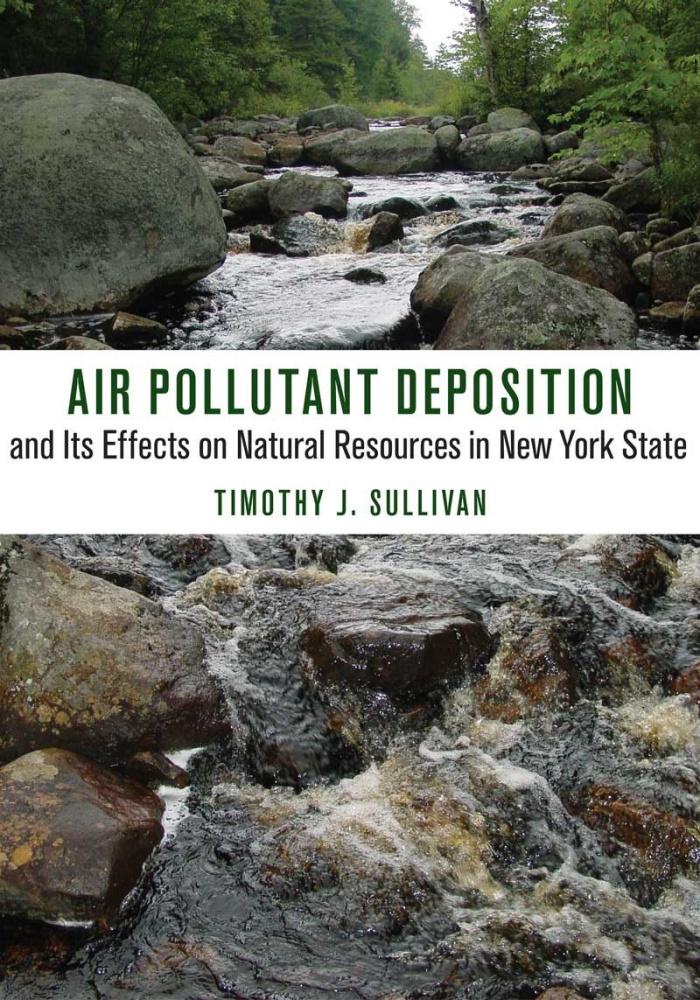
Ecosystem effects from air pollution in the Adirondacks, Catskills, and elsewhere in New York have been substantial. Efforts to characterize and quantify these impacts, and to examine more recent recovery, have focused largely on surface waters, soils, and forests. Lakes, streams, and soils have acidified. Estuaries have become more eutrophic. Nutrient cycles have been disrupted. Mercury has bioaccumulated to toxic levels. Plant species composition has changed. Some surface waters show signs of partial chemical recovery in response to emissions control programs, but available data suggest that soil chemistry may continue to deteriorate under expected future emissions and deposition. Resource managers, policymakers, and scientists now need to know the extent to which current and projected future emissions reductions will lead to ecosystem recovery.
In this book, Timothy J. Sullivan provides a comprehensive synthesis of past, current, and potential future conditions regarding atmospheric sulfur, nitrogen oxides, ammonium, and mercury deposition; surface water chemistry; soil chemistry; forests; and aquatic biota in New York, providing much needed information to help set emissions reduction goals, evaluate incremental improvements, conduct cost/benefit analyses, and prioritize research needs. He draws upon a wealth of research conducted over the past thirty years that has categorized, quantified, and advanced understanding of ecosystem processes related to atmospheric deposition of strong acids, nutrients, and mercury and associated ecosystem effects. An important component of this volume is the new interest in the management and mitigation of ecosystem damage from air pollution stress, which builds on the "critical loads" approach pioneered in Europe and now gaining interest in the United States.
This book will inform scientists, resource managers, and policy analysts regarding the state of scientific knowledge on these complex topics and their policy relevance and will help to guide public policy assessment work in New York, the Northeast, and nationally.
Pay easily by card, Klarna, Apple Pay or Google Pay. Not happy? You always have a 14-day money-back guarantee. Read more in our terms. If you have any questions, email us at hello@memmo.org.
Memmo makes studying easier – wherever you are in the world. We bring your course books and smart study tools together in one place: summaries, quizzes, podcasts and flashcards. Plus Ted, your study buddy who answers anything you wonder. Over 50,000 students already study here – built to help you learn faster and stress less.