
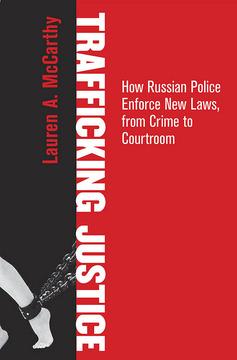
In response to a growing human trafficking problem and domestic and international pressure, human trafficking and the use of slave labor were first criminalized in Russia in 2003. In Trafficking Justice, Lauren A. McCarthy explains why Russian police, prosecutors, and judges have largely ignored this new weapon in their legal arsenal, despite the fact that the law was intended to make it easier to pursue trafficking cases.
Using a combination of interview data, participant observation, and an original dataset of more than 5,500 Russian news media articles on human trafficking cases, McCarthy explores how trafficking cases make their way through the criminal justice system, covering multiple forms of the crime—sexual, labor, and child trafficking—over the period 2003–2013. She argues that to understand how law enforcement agencies have dealt with trafficking, it is critical to understand how their "institutional machinery"—the incentives, culture, and structure of their organizations—channels decision-making on human trafficking cases toward a familiar set of routines and practices and away from using the new law. As a result, law enforcement often chooses to charge and prosecute traffickers with related crimes, such as kidnapping or recruitment into prostitution, rather than under the 2003 trafficking law because these other charges are more familiar and easier to bring to a successful resolution. In other words, after ten years of practice, Russian law enforcement has settled on a policy of prosecuting traffickers, not trafficking.
Pay easily by card, Klarna, Apple Pay or Google Pay. Not happy? You always have a 14-day money-back guarantee. Read more in our terms. If you have any questions, email us at hello@memmo.org.
Memmo makes studying easier – wherever you are in the world. We bring your course books and smart study tools together in one place: summaries, quizzes, podcasts and flashcards. Plus Ted, your study buddy who answers anything you wonder. Over 50,000 students already study here – built to help you learn faster and stress less.