
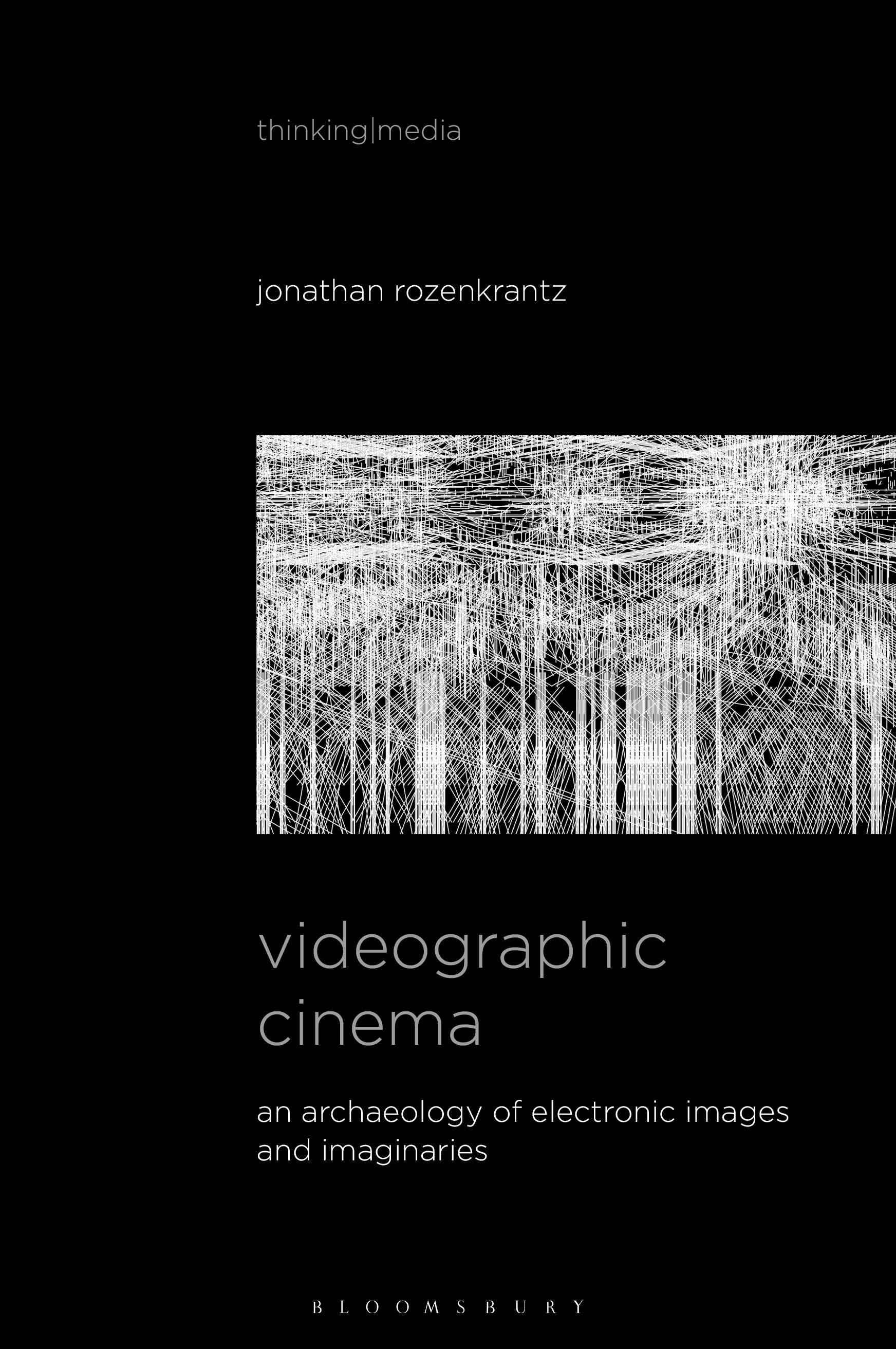
In 1957, A Face in the Crowd incorporated live video images to warn about the future of broadcast TV. In 2015, Kung Fury was infused with analogue noise to evoke the nostalgic feeling of watching an old VHS tape. Between the two films, numerous ones would incorporate video images to imagine the implications of video practices. Drawing on media archaeology, Videographic Cinema shows how such images and imaginaries have emerged, changed and remained over time according to their shifting technical, historical and institutional conditions.
Rediscovering forgotten films like Anti-Clock (1979) and reassessing ones like Lost Highway (1997), Jonathan Rozenkrantz charts neglected chapters of video history, including self-confrontation techniques in psychiatry, their complex relation with surveillance, and the invention/discovery of the “videographic psyche” by artists, therapists and filmmakers. Spanning six decades, Videographic Cinema discovers an epistemic shift from prospective imaginaries of surveillance and control conditioned on video as a medium for live transmission, to retrospective ones concerned with videotape as a recording memory. It ends by considering videographic filmmaking itself as a form of archaeology in the age of analogue obsolescence.
Rediscovering forgotten films like Anti-Clock (1979) and reassessing ones like Lost Highway (1997), Jonathan Rozenkrantz charts neglected chapters of video history, including self-confrontation techniques in psychiatry, their complex relation with surveillance, and the invention/discovery of the “videographic psyche” by artists, therapists and filmmakers. Spanning six decades, Videographic Cinema discovers an epistemic shift from prospective imaginaries of surveillance and control conditioned on video as a medium for live transmission, to retrospective ones concerned with videotape as a recording memory. It ends by considering videographic filmmaking itself as a form of archaeology in the age of analogue obsolescence.
Pay easily by card, Klarna, Apple Pay or Google Pay. Not happy? You always have a 14-day money-back guarantee. Read more in our terms. If you have any questions, email us at hello@memmo.org.
Memmo makes studying easier – wherever you are in the world. We bring your course books and smart study tools together in one place: summaries, quizzes, podcasts and flashcards. Plus Ted, your study buddy who answers anything you wonder. Over 50,000 students already study here – built to help you learn faster and stress less.