
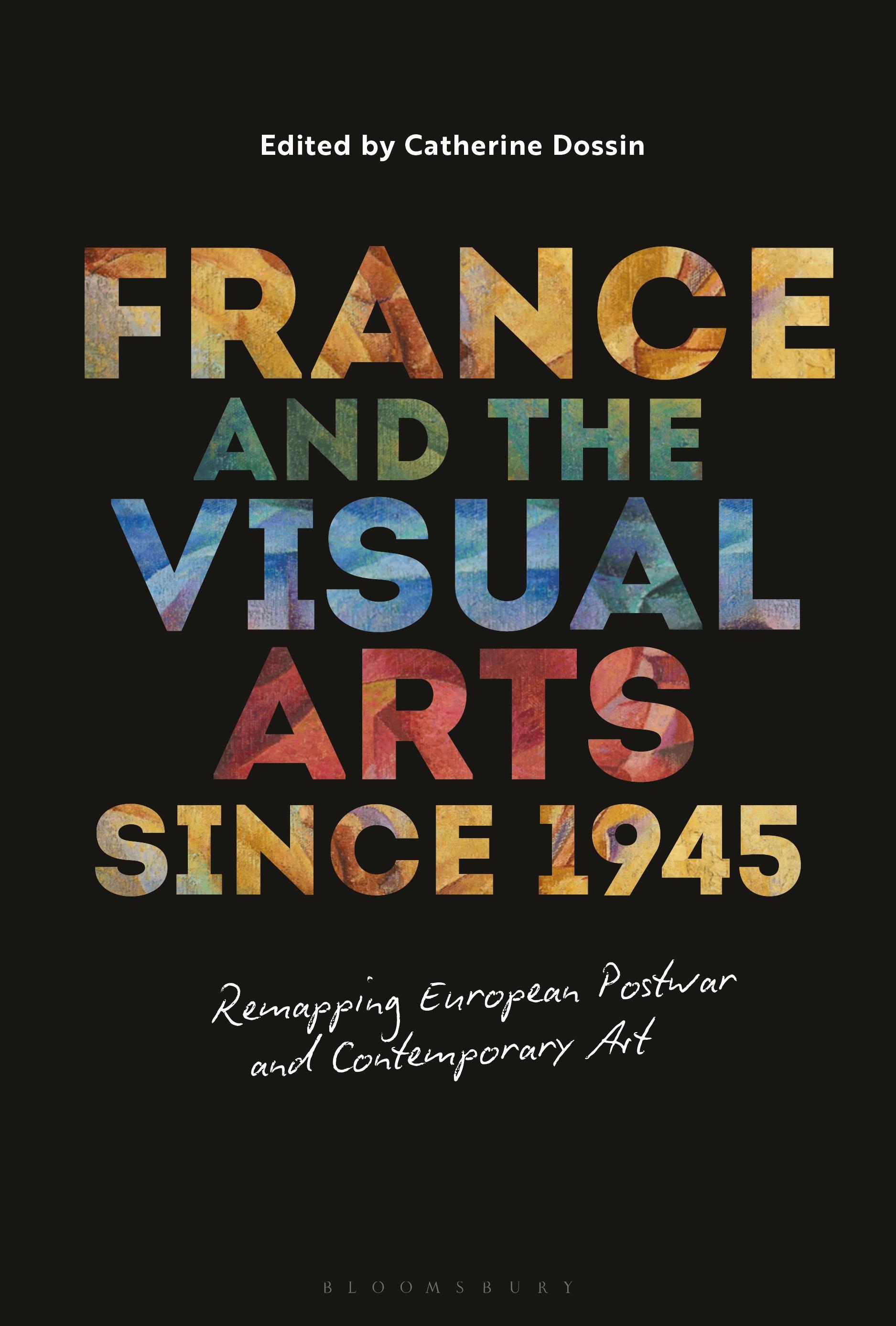
Taking on the myth of France's creative exhaustion following World War II, this collection of essays brings together an international team of scholars, whose research offers English readers a rich and complex overview of the place of France and French artists in the visual arts since 1945.
Addressing a wide range of artistic practices, spanning over seven decades, and using different methodologies, their contributions cover ground charted and unknown. They introduce greater depth and specificity to familiar artists and movements, such as Lettrism, Situationist International or Nouveau Réalisme, while bringing to the fore lesser known artists and groups, including GRAPUS, the Sociological Art Collective, and Nicolas Schöffer.
Collectively, they stress the political dimensions and social ambitions of the art produced in France at the time, deconstruct the traditional geography of the French art world, and highlight the multiculturalism of the French art scene that resulted from its colonial past and the constant flux of artistic travels and migrations.
Ultimately, the book contributes to a story of postwar art in which France can be inscribed not as a main or sub chapter, but rather as a vector in the wider constellation of modern and contemporary art.
Addressing a wide range of artistic practices, spanning over seven decades, and using different methodologies, their contributions cover ground charted and unknown. They introduce greater depth and specificity to familiar artists and movements, such as Lettrism, Situationist International or Nouveau Réalisme, while bringing to the fore lesser known artists and groups, including GRAPUS, the Sociological Art Collective, and Nicolas Schöffer.
Collectively, they stress the political dimensions and social ambitions of the art produced in France at the time, deconstruct the traditional geography of the French art world, and highlight the multiculturalism of the French art scene that resulted from its colonial past and the constant flux of artistic travels and migrations.
Ultimately, the book contributes to a story of postwar art in which France can be inscribed not as a main or sub chapter, but rather as a vector in the wider constellation of modern and contemporary art.
Pay easily by card, Klarna, Apple Pay or Google Pay. Not happy? You always have a 14-day money-back guarantee. Read more in our terms. If you have any questions, email us at hello@memmo.org.
Memmo makes studying easier – wherever you are in the world. We bring your course books and smart study tools together in one place: summaries, quizzes, podcasts and flashcards. Plus Ted, your study buddy who answers anything you wonder. Over 50,000 students already study here – built to help you learn faster and stress less.