
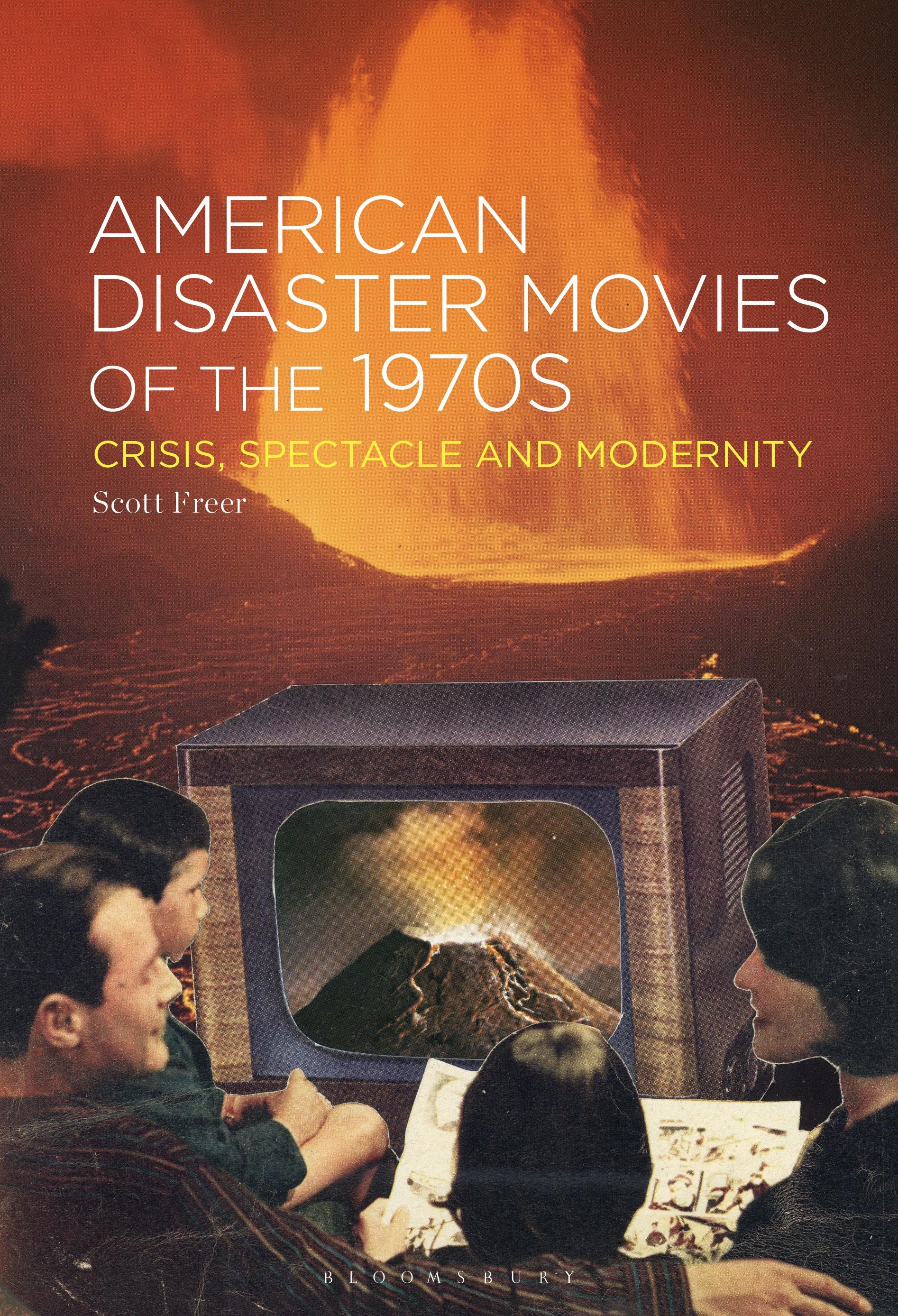
American Disaster Movies of the 1970s is the first scholarly book dedicated to the disaster cycle that dominated American cinema and television in the 1970s.
Through examining films such as Airport (1970), The Poseidon Adventure (1972), Two-Minute Warning (1976) and The Swarm (1978), alongside their historical contexts and American contemporaneous trends, the disaster cycle is treated as a time-bound phenomenon. This book further contextualises the cycle by drawing on the longer cultural history of modernist reactions to modern anxieties, including the widespread dependence on technology and corporate power.
Each chapter considers cinematic precursors, such as the 'ark movie', and contemporaneous trends, such as New Hollywood, vigilante and blaxploitation films, as well as the immediate American context: the end of the civil rights and countercultural era, the Watergate crisis, and the defeat in Vietnam.As Scott Freer argues, the disaster movie is a modern, demotic form of tragedy that satisfies a taste for the macabre. It is also an aesthetic means for processing painful truths, and many of the dramatized themes anticipate present-day monstrosities of modernity.
Through examining films such as Airport (1970), The Poseidon Adventure (1972), Two-Minute Warning (1976) and The Swarm (1978), alongside their historical contexts and American contemporaneous trends, the disaster cycle is treated as a time-bound phenomenon. This book further contextualises the cycle by drawing on the longer cultural history of modernist reactions to modern anxieties, including the widespread dependence on technology and corporate power.
Each chapter considers cinematic precursors, such as the 'ark movie', and contemporaneous trends, such as New Hollywood, vigilante and blaxploitation films, as well as the immediate American context: the end of the civil rights and countercultural era, the Watergate crisis, and the defeat in Vietnam.As Scott Freer argues, the disaster movie is a modern, demotic form of tragedy that satisfies a taste for the macabre. It is also an aesthetic means for processing painful truths, and many of the dramatized themes anticipate present-day monstrosities of modernity.
Pay easily by card, Klarna, Apple Pay or Google Pay. Not happy? You always have a 14-day money-back guarantee. Read more in our terms. If you have any questions, email us at hello@memmo.org.
Memmo makes studying easier – wherever you are in the world. We bring your course books and smart study tools together in one place: summaries, quizzes, podcasts and flashcards. Plus Ted, your study buddy who answers anything you wonder. Over 50,000 students already study here – built to help you learn faster and stress less.