
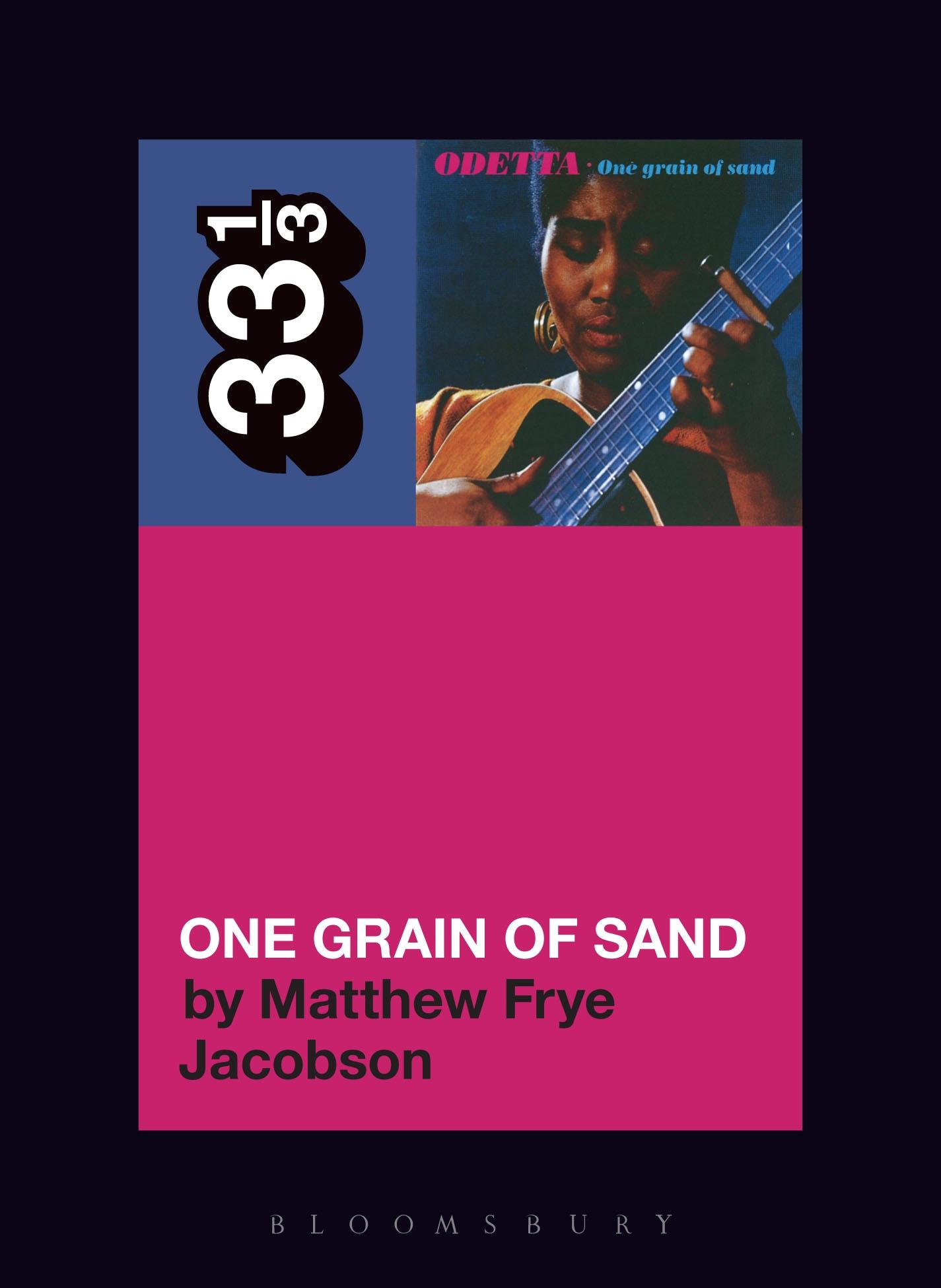
When 20-year-old Odetta Holmes-classically trained as a vocalist and poised to become “the next Marian Anderson”-veered away from both opera and musical theater in favor of performing politically charged field hollers, prison songs, work songs, and folk tunes before mixed-race audiences in 1950s coffee houses, she was making one of the most portentous decisions in the history of both American music and Civil Rights.
Released the same year as her famous rendition of “I'm on My Way” at the March on Washington, One Grain of Sand captures the social justice project that was Odetta's voice. “There was no way I could say the things I was thinking, but I could sing them,” she later remarked. In pieces like “Moses, Moses,” “Ain't No Grave,” and “Ramblin' Round Your City,” One Grain of Sand embodies Odetta's approach to the folk repertoire as both an archive of black history and a vehicle for radical expression. For many among her audience, a song like “Cotton Fields” represented a first introduction to black history at a time when there was as yet no academic discipline going by this name, and when history books themselves still peddled convenient fictions of a fundamentally “happy” plantation past. And for many among her audience, black and white, this young woman's pride in black artistry and resolve, and her open rage and her challenge to whites to recognize who they were and who they had been, too, modeled the very honesty and courage that the movement now called for.
Released the same year as her famous rendition of “I'm on My Way” at the March on Washington, One Grain of Sand captures the social justice project that was Odetta's voice. “There was no way I could say the things I was thinking, but I could sing them,” she later remarked. In pieces like “Moses, Moses,” “Ain't No Grave,” and “Ramblin' Round Your City,” One Grain of Sand embodies Odetta's approach to the folk repertoire as both an archive of black history and a vehicle for radical expression. For many among her audience, a song like “Cotton Fields” represented a first introduction to black history at a time when there was as yet no academic discipline going by this name, and when history books themselves still peddled convenient fictions of a fundamentally “happy” plantation past. And for many among her audience, black and white, this young woman's pride in black artistry and resolve, and her open rage and her challenge to whites to recognize who they were and who they had been, too, modeled the very honesty and courage that the movement now called for.
Pay easily by card, Klarna, Apple Pay or Google Pay. Not happy? You always have a 14-day money-back guarantee. Read more in our terms. If you have any questions, email us at hello@memmo.org.
Memmo makes studying easier – wherever you are in the world. We bring your course books and smart study tools together in one place: summaries, quizzes, podcasts and flashcards. Plus Ted, your study buddy who answers anything you wonder. Over 50,000 students already study here – built to help you learn faster and stress less.