
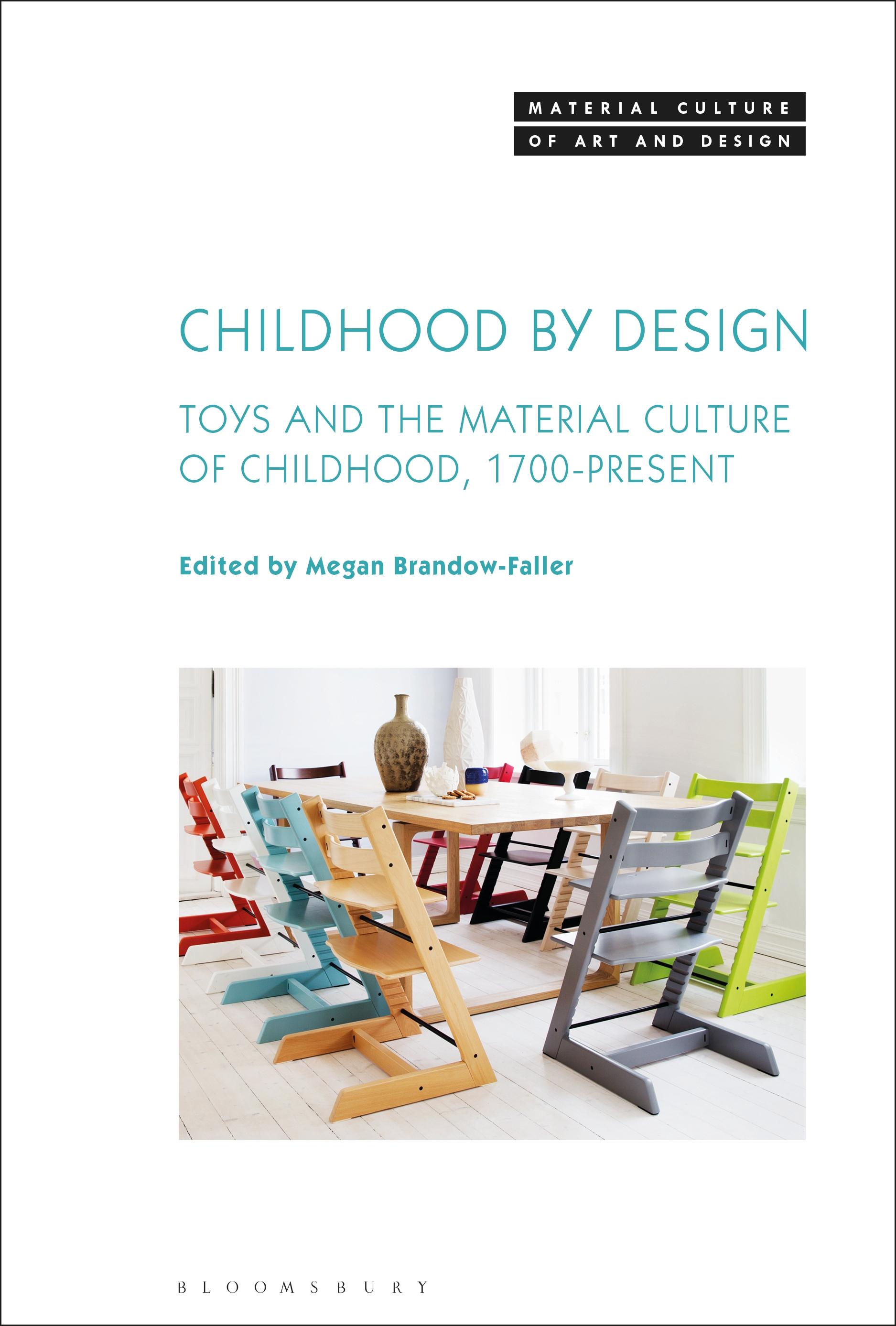
Informed by the analytical practices of the interdisciplinary 'material turn' and social historical studies of childhood, Childhood By Design: Toys and the Material Culture of Childhood offers new approaches to the material world of childhood and design culture for children. This volume situates toys and design culture for children within broader narratives on history, art, design and the decorative arts, where toy design has traditionally been viewed as an aberration from more serious pursuits. The essays included treat toys not merely as unproblematic reflections of socio-cultural constructions of childhood but consider how design culture actively shaped, commodified and materialized shifting discursive constellations surrounding childhood and children. Focusing on the new array of material objects designed in response to the modern 'invention' of childhood-what we might refer to as objects for a childhood by design-Childhood by Design explores dynamic tensions between theory and practice, discursive constructions and lived experience as embodied in the material culture of childhood. Contributions from and between a variety of disciplinary perspectives (including history, art history, material cultural studies, decorative arts, design history, and childhood studies) are represented – critically linking historical discourses of childhood with close study of material objects and design culture.
Chronologically, the volume spans the 18th century, which witnessed the invention of the toy as an educational plaything and a proliferation of new material artifacts designed expressly for children's use; through the 19th-century expansion of factory-based methods of toy production facilitating accuracy in miniaturization and a new vocabulary of design objects coinciding with the recognition of childhood innocence and physical separation within the household; towards the intersection of early 20th-century child-centered pedagogy and modernist approaches to nursery and furniture design; through the changing consumption and sales practices of the postwar period marketing directly to children through television, film and other digital media; and into the present, where the line between the material culture of childhood and adulthood is increasingly blurred.
Chronologically, the volume spans the 18th century, which witnessed the invention of the toy as an educational plaything and a proliferation of new material artifacts designed expressly for children's use; through the 19th-century expansion of factory-based methods of toy production facilitating accuracy in miniaturization and a new vocabulary of design objects coinciding with the recognition of childhood innocence and physical separation within the household; towards the intersection of early 20th-century child-centered pedagogy and modernist approaches to nursery and furniture design; through the changing consumption and sales practices of the postwar period marketing directly to children through television, film and other digital media; and into the present, where the line between the material culture of childhood and adulthood is increasingly blurred.
Pages: 352
Category: Konst, Design & Fotografi
e-ISBN: 9781501332036
Shipping weight: 1.2 kg
Ships in: 1-2 days
Pay easily by card, Klarna, Apple Pay or Google Pay. Not happy? You always have a 14-day money-back guarantee. Read more in our terms. If you have any questions, email us at hello@memmo.org.
Memmo makes studying easier – wherever you are in the world. We bring your course books and smart study tools together in one place: summaries, quizzes, podcasts and flashcards. Plus Ted, your study buddy who answers anything you wonder. Over 50,000 students already study here – built to help you learn faster and stress less.