
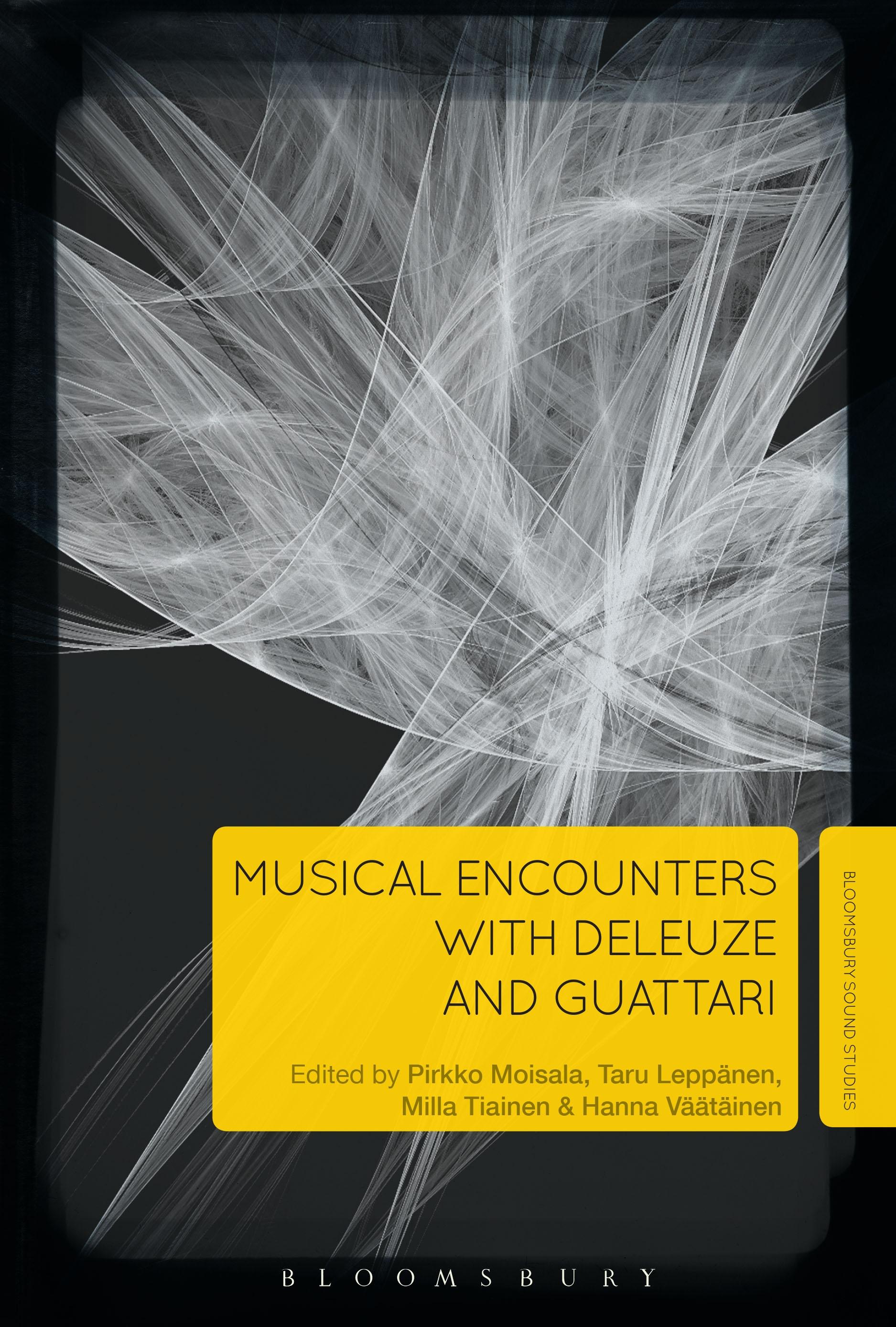
This is the first volume to mobilize encounters between the work of Gilles Deleuze and Félix Guattari and the rich developments in cultural studies of music and sound. The book takes seriously the intellectual and political challenge that the process philosophy of Deleuze and Guattari poses for previous understandings of music as permanent objects and primarily discursive texts. By elaborating on the concepts of Deleuze and Guattari in innovative ways, the chapters of the book demonstrate how musical and sonic practices and expressions can be reconsidered as instances of becoming, actors in assemblages, and actualizations of virtual tendencies. The collection pushes notions of music and sound beyond such long-term paradigms as identity thinking, the privileging of signification, and the centrality of the human subject.
The chapters of the volume bring a range of new topics and methodological approaches in contact with Deleuze and Guattari. These span from movement improvisation, jazz and western art music studies, sound and performance art and reality TV talent shows to deaf musicians and indigenous music. The book also highlights such fresh ways of doing analysis and shaping the methodological tools of music and sound studies that are enabled by Deleuze and Guattari's philosophy. Their philosophy, too, gains renewed capacities and potential when responding to ethnographic, cultural, ethnomusicological, participatory, aesthetic, new materialist, feminist and queer perspectives to music and sound.
The chapters of the volume bring a range of new topics and methodological approaches in contact with Deleuze and Guattari. These span from movement improvisation, jazz and western art music studies, sound and performance art and reality TV talent shows to deaf musicians and indigenous music. The book also highlights such fresh ways of doing analysis and shaping the methodological tools of music and sound studies that are enabled by Deleuze and Guattari's philosophy. Their philosophy, too, gains renewed capacities and potential when responding to ethnographic, cultural, ethnomusicological, participatory, aesthetic, new materialist, feminist and queer perspectives to music and sound.
Pay easily by card, Klarna, Apple Pay or Google Pay. Not happy? You always have a 14-day money-back guarantee. Read more in our terms. If you have any questions, email us at hello@memmo.org.
Memmo makes studying easier – wherever you are in the world. We bring your course books and smart study tools together in one place: summaries, quizzes, podcasts and flashcards. Plus Ted, your study buddy who answers anything you wonder. Over 50,000 students already study here – built to help you learn faster and stress less.