
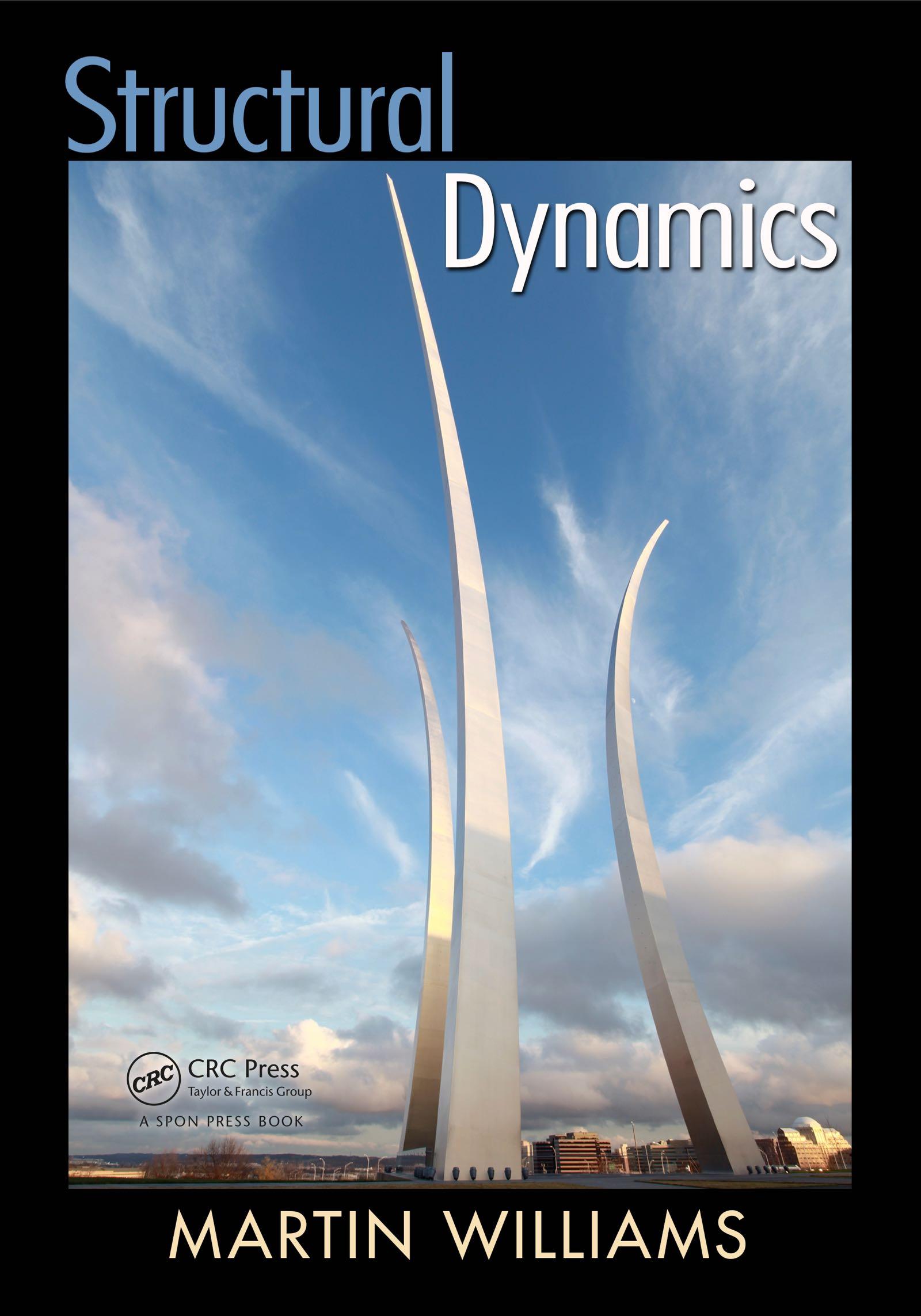
Dynamics is increasingly being identified by consulting engineers as one of the key skills which needs to be taught in civil engineering degree programs. This is driven by the trend towards lighter, more vibration-prone structures, the growth of business in earthquake regions, the identification of new threats such as terrorist attack and the increased availability of sophisticated dynamic analysis tools.
Martin Williams presents this short, accessible introduction to the area of structural dynamics. He begins by describing dynamic systems and their representation for analytical purposes. The two main chapters deal with linear analysis of single (SDOF) and multi-degree-of-freedom (MDOF) systems, under free vibration and in response to a variety of forcing functions. Hand analysis of continuous systems is covered briefly to illustrate the key principles. Methods of calculation of non-linear dynamic response is also discussed. Lastly, the key principles of random vibration analysis are presented – this approach is crucial for wind engineering and is increasingly important for other load cases.
An appendix briefly summarizes relevant mathematical techniques. Extensive use is made of worked examples, mostly drawn from civil engineering (though not exclusively – there is considerable benefit to be gained from emphasizing the commonality with other branches of engineering). This introductory dynamics textbook is aimed at upper level civil engineering undergraduates and those starting an M.Sc. course in the area.
Pay easily by card, Klarna, Apple Pay or Google Pay. Not happy? You always have a 14-day money-back guarantee. Read more in our terms. If you have any questions, email us at hello@memmo.org.
Memmo makes studying easier – wherever you are in the world. We bring your course books and smart study tools together in one place: summaries, quizzes, podcasts and flashcards. Plus Ted, your study buddy who answers anything you wonder. Over 50,000 students already study here – built to help you learn faster and stress less.