
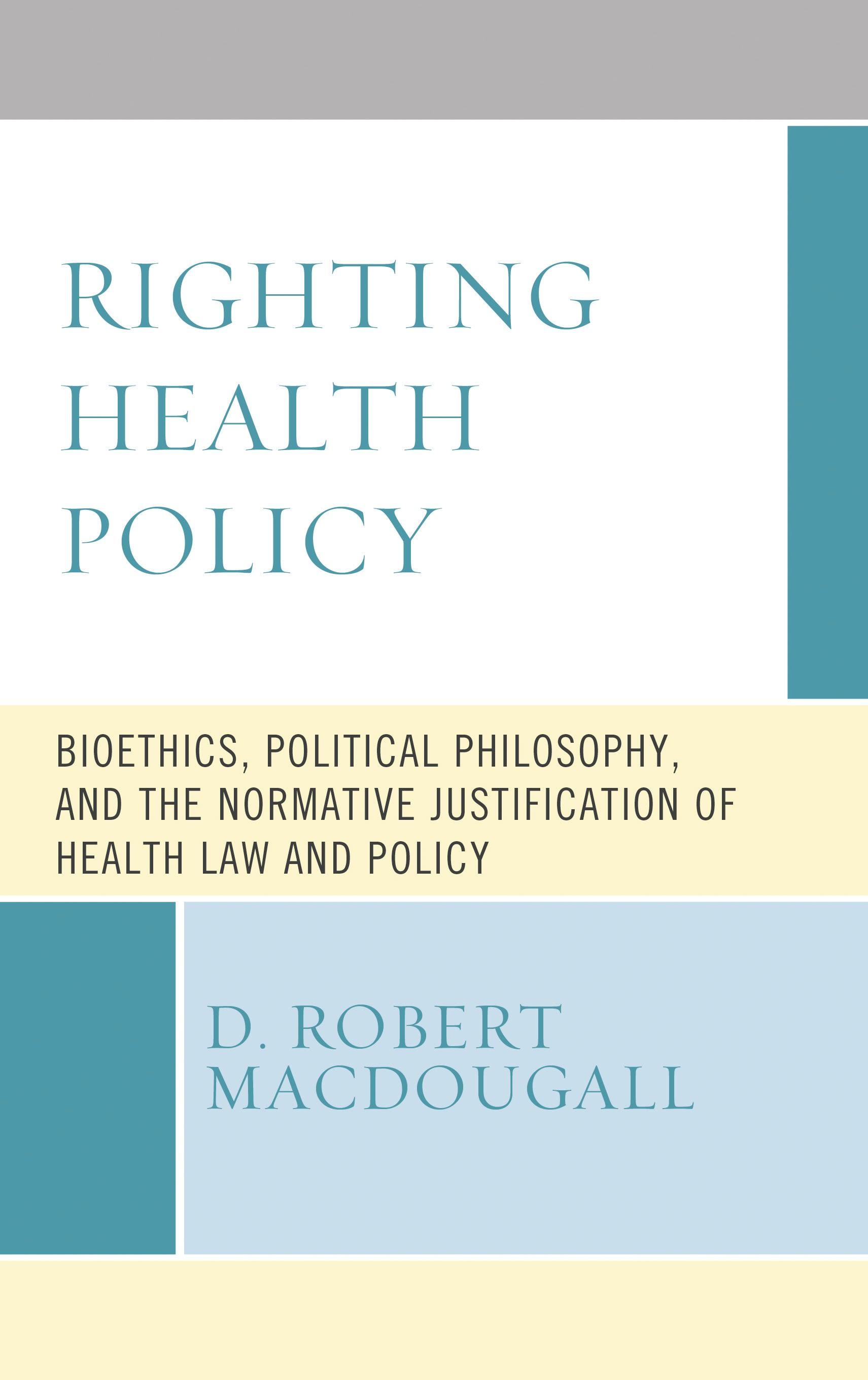
In Righting Health Policy, D. Robert MacDougall argues that bioethics needs but does not have adequate tools for justifying law and policy. Bioethics’ tools are mostly theories about what we owe each other. But justifying laws and policies requires more; at a minimum, it requires tools for explaining the legitimacy of actions intended to control or influence others. It consequently requires political, rather than moral, philosophy. After showing how bioethicists have consistently failed to use tools suitable for achieving their political aims, MacDougall develops an interpretation of Kant’s political philosophy. On this account, the legitimacy of health laws does not derive from the morality of the behaviors they require but derives instead from their role in securing our equal freedom from each other. MacDougall uses this Kantian account to show the importance of political philosophy for bioethics. First, he shows how evaluating kidney markets in terms of the legitimacy of prohibiting sales rather than the morality of selling kidneys reverses the widely accepted view that Kantian philosophy supports legally prohibiting markets. Second, MacDougall argues that an account of political authority is necessary for settling longstanding bioethics debates about the legal and even moral standards that should govern informed consent.
Pay easily by card, Klarna, Apple Pay or Google Pay. Not happy? You always have a 14-day money-back guarantee. Read more in our terms. If you have any questions, email us at hello@memmo.org.
Memmo makes studying easier – wherever you are in the world. We bring your course books and smart study tools together in one place: summaries, quizzes, podcasts and flashcards. Plus Ted, your study buddy who answers anything you wonder. Over 50,000 students already study here – built to help you learn faster and stress less.