
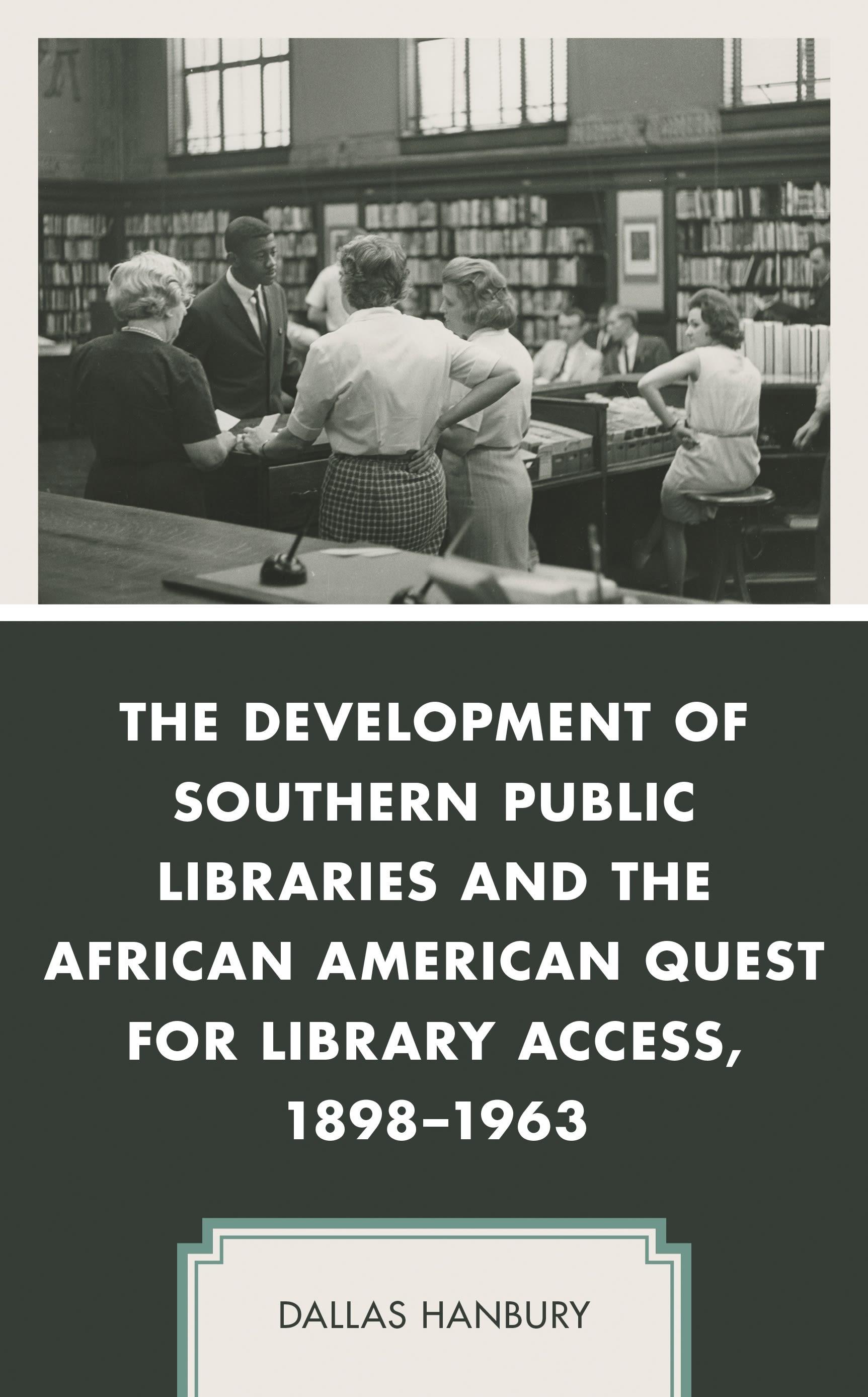
Using the Atlanta, Birmingham, and Nashville Public Libraries as case studies, The Development of Southern Public Libraries and the African American Quest for Library Access, 1898-1963 argues that public libraries played an integral role in Southern cities’ economic and cultural boosterism efforts during the New South and Progressive Eras. First, Southern public libraries helped institutionalize segregation during the early twentieth century by refusing to serve African Americans, or only to a limited degree. Yet, the Progressive Era’s emphasis on self-improvement and moral uplift influenced Southern public libraries to the extent that not all embraced total segregation. It even caused Southern public libraries to remain open to the idea of slowly expanding library service to African Americans. Later, libraries’ social mission and imperfect commitment to segregation made them prime targets for breaking down the barriers of segregation in the post- World War II era. In this study, Dallas Hanbury concludes that dealing with the complicated and unexpected outcomes of having practiced segregation constituted a difficult and lengthy process for Southern public libraries.
Pay easily by card, Klarna, Apple Pay or Google Pay. Not happy? You always have a 14-day money-back guarantee. Read more in our terms. If you have any questions, email us at hello@memmo.org.
Memmo makes studying easier – wherever you are in the world. We bring your course books and smart study tools together in one place: summaries, quizzes, podcasts and flashcards. Plus Ted, your study buddy who answers anything you wonder. Over 50,000 students already study here – built to help you learn faster and stress less.