
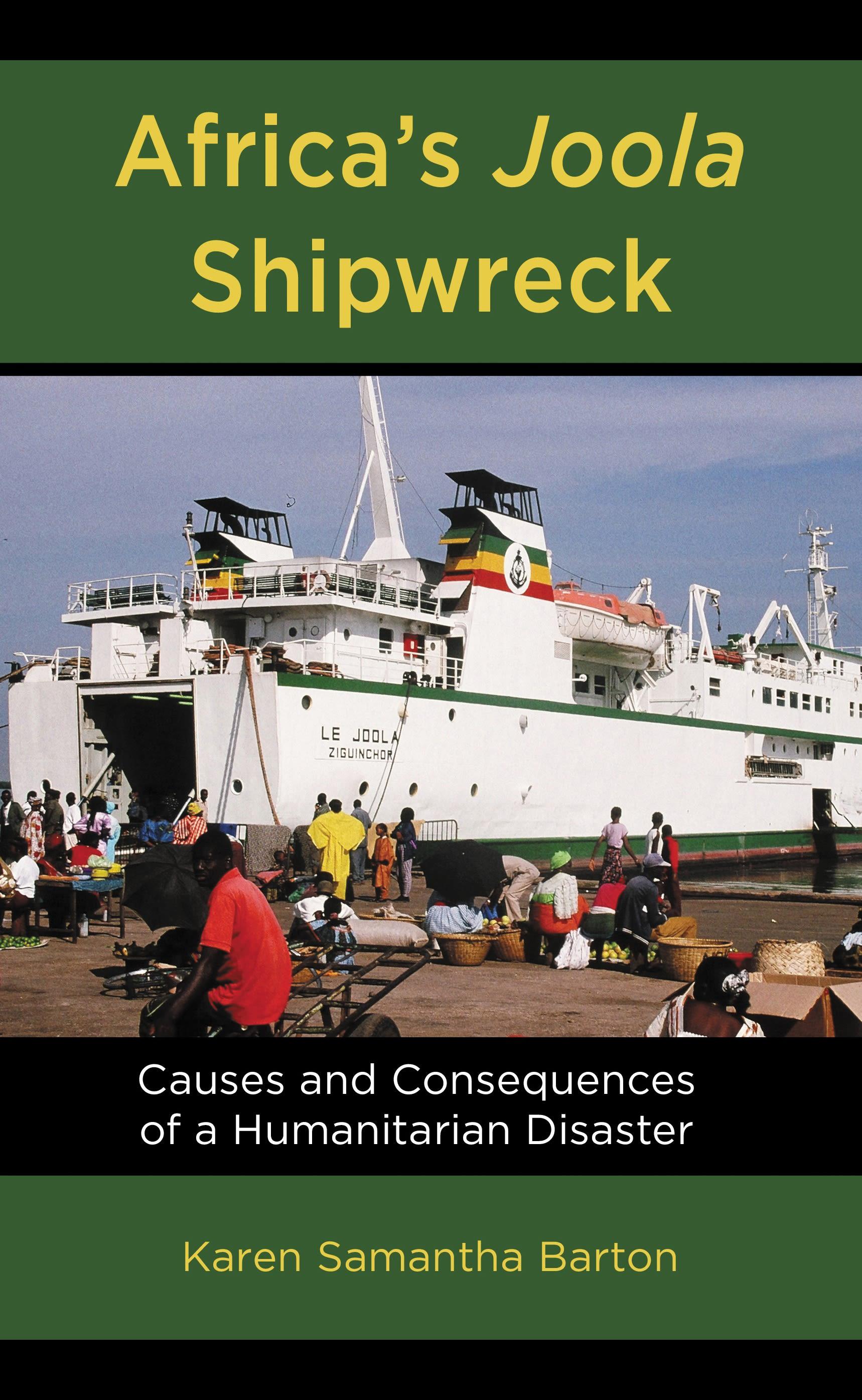
In 2002, a government-owned Senegalese ferry named the Joola capsized in a storm off the coast of The Gambia in a tragedy that killed 1,863 people and left 64 survivors, only one of them female. The Joola caused more human suffering than the Titanic yet no scholarly research to date has explored the political and environmental conditions in which this African crisis occurred. Africa’s Joola Shipwreck: Causes and Consequences of a Humanitarian Disaster investigates the roots of the Joola shipwreck and its consequences for Senegalese people, particularly those living in the rural south. Using three summers of field research in Senegal, Karen Samantha Barton unravels the geographical forces such as migration, colonial cartographies, and geographies of the sea that led to this humanitarian disaster and defined its aftermath. Barton shows how the Sufi tenet of “beautiful optimism” shaped community resilience in the wake of the shipwreck, despite the repercussions the event had on Senegalese society and space.
Pay easily by card, Klarna, Apple Pay or Google Pay. Not happy? You always have a 14-day money-back guarantee. Read more in our terms. If you have any questions, email us at hello@memmo.org.
Memmo makes studying easier – wherever you are in the world. We bring your course books and smart study tools together in one place: summaries, quizzes, podcasts and flashcards. Plus Ted, your study buddy who answers anything you wonder. Over 50,000 students already study here – built to help you learn faster and stress less.