
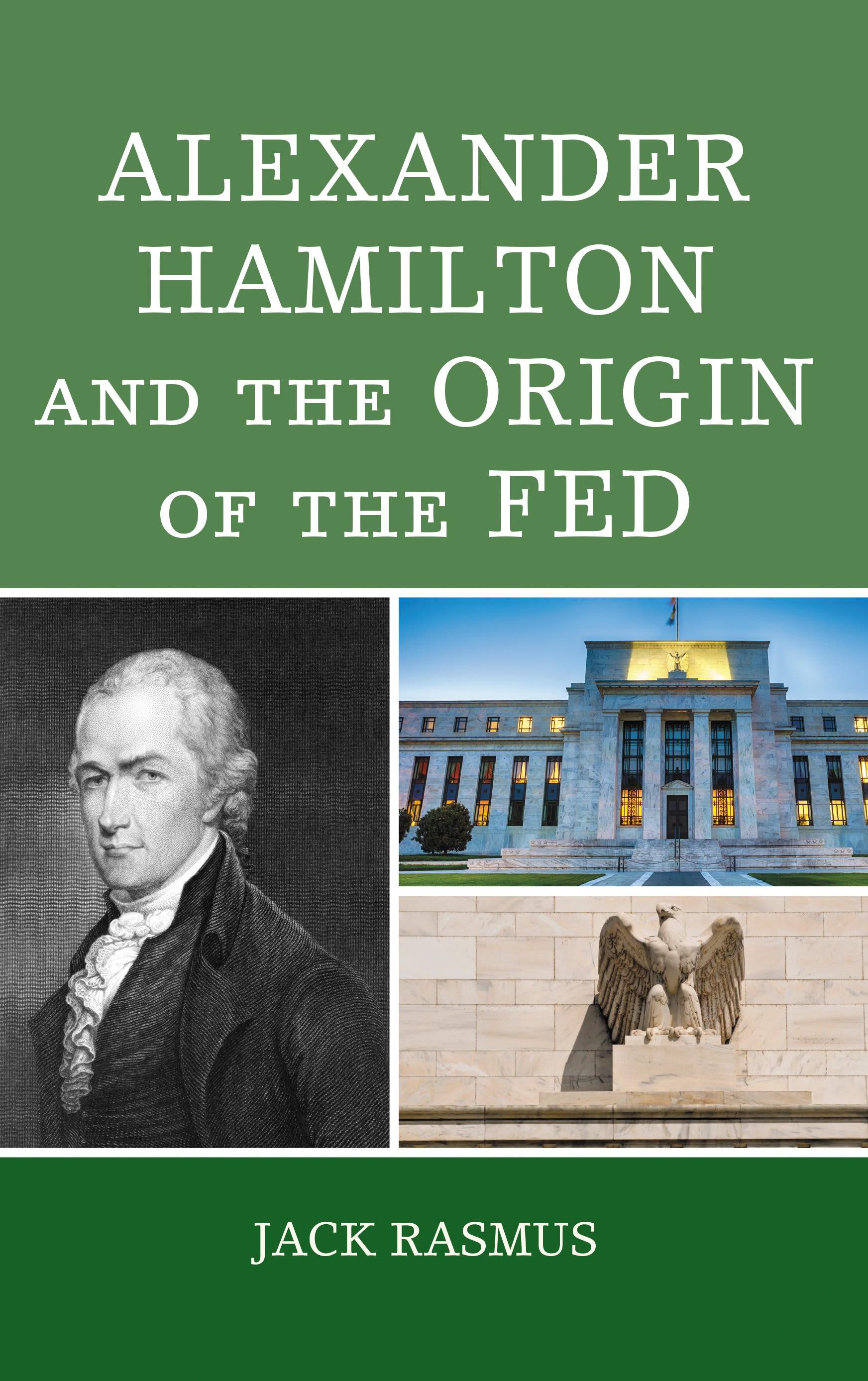
The US in 1913 was one of the last major economies to establish an institution of a central bank. The book examines, however, the history and evolution of central banking in the US from the perspective of central banking functions—i.e. aggregator of private lending to the federal government, fiscal agent for the government, regulator of money supply, monopoly over currency issuance, banking system supervision, and lender of last resort. The evolution of central banking functions is traced from earliest pre-1987 proposals, through the Constitutional Convention and Congressional debates on Hamilton’s 1st Report on Credit, the rise and fall of the 1st and 2nd Banks of the United States, through the long period of the National Banking System, 1862-1913.
The book describes how US federal governments—often in cooperation with the largest US private banks in New York, Philadelphia, and elsewhere in the northeast—attempted to expand and develop those functions, sometimes successfully sometimes not, from 1781 through the creation of the Federal Reserve Act of 1913. Other themes include how rapid US economic growth, and an expanding, geographically dispersed private banking system, created formidable resistance by banks at the state and local level to the evolution and consolidation of central banking functions at the national level. Whenever central banking functions were dismantled (1810s, 1830s) or were weakened (after 1860s), the consequences were financial instability and severe economic depressions.
The book concludes with a detailed narrative on how, from 1903 to 1913, big eastern banks—leveraging the Panic of 1907, weak economic recovery of 1909-13, and need to expand internationally—allied with Congressional supporters to prevail over state and local banking interests and created the Fed; how the structure of the 1913 Fed clearly favored New York banks while granting concessions to state and local banks to win Congressional approval; and how that compromise central bank structure doomed US monetary policy to fail after 1929.
The book describes how US federal governments—often in cooperation with the largest US private banks in New York, Philadelphia, and elsewhere in the northeast—attempted to expand and develop those functions, sometimes successfully sometimes not, from 1781 through the creation of the Federal Reserve Act of 1913. Other themes include how rapid US economic growth, and an expanding, geographically dispersed private banking system, created formidable resistance by banks at the state and local level to the evolution and consolidation of central banking functions at the national level. Whenever central banking functions were dismantled (1810s, 1830s) or were weakened (after 1860s), the consequences were financial instability and severe economic depressions.
The book concludes with a detailed narrative on how, from 1903 to 1913, big eastern banks—leveraging the Panic of 1907, weak economic recovery of 1909-13, and need to expand internationally—allied with Congressional supporters to prevail over state and local banking interests and created the Fed; how the structure of the 1913 Fed clearly favored New York banks while granting concessions to state and local banks to win Congressional approval; and how that compromise central bank structure doomed US monetary policy to fail after 1929.
Pay easily by card, Klarna, Apple Pay or Google Pay. Not happy? You always have a 14-day money-back guarantee. Read more in our terms. If you have any questions, email us at hello@memmo.org.
Memmo makes studying easier – wherever you are in the world. We bring your course books and smart study tools together in one place: summaries, quizzes, podcasts and flashcards. Plus Ted, your study buddy who answers anything you wonder. Over 50,000 students already study here – built to help you learn faster and stress less.