
**Short-listed for the Society for Army Historical Research UK's Templer Medal Best First Book Prize, 2020**
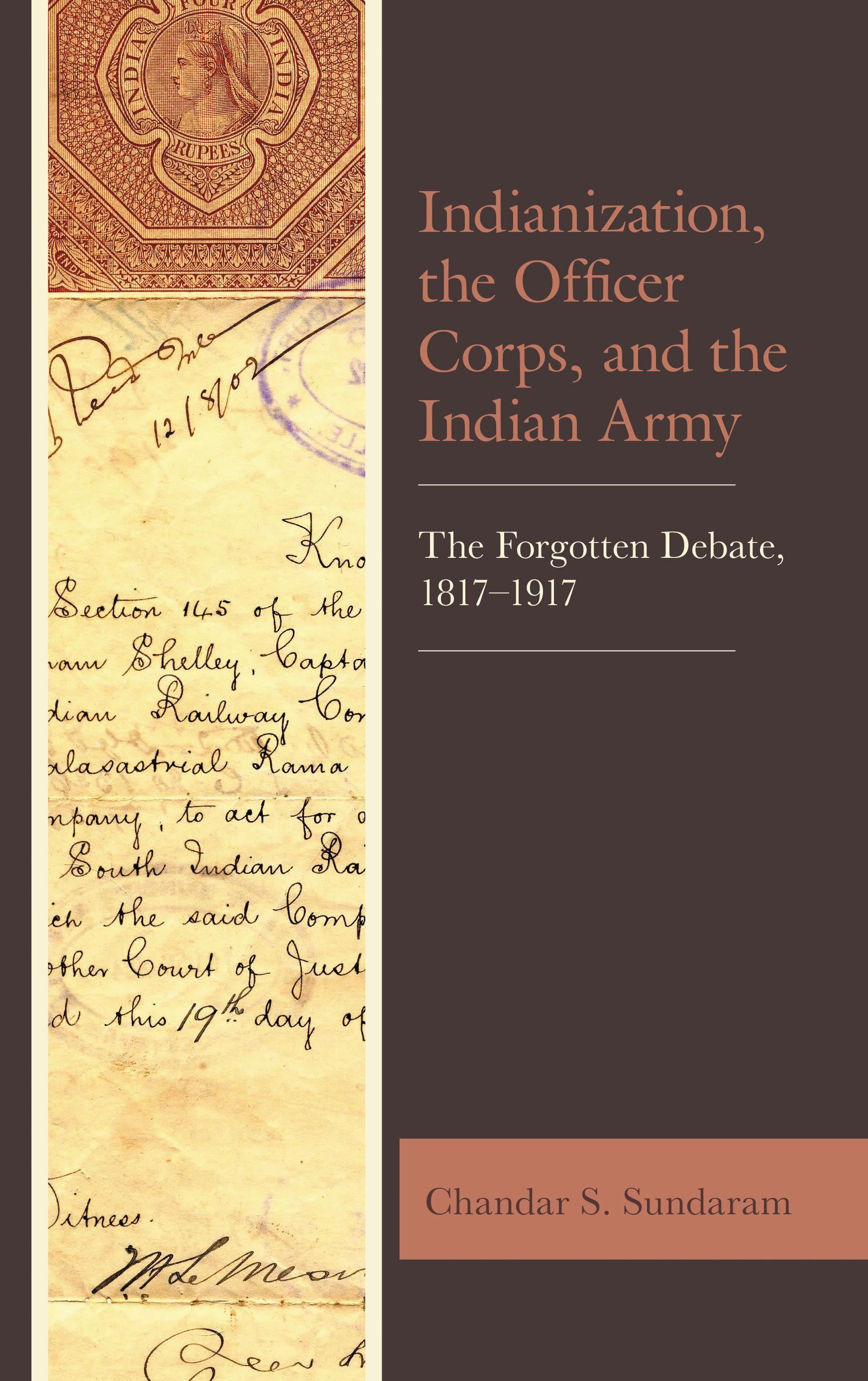
In the Indian Army of the British Raj, the officer corps was “reserved for the governing race”— in other words, the British. Only in 1917, a mere thirty years before India won its freedom, did the Raj permit Indians into the Army’s officer corps, thus slowly beginning its Indianization. Yet it is often forgotten that this decision was the culmination of a hundred-year-long debate. Based on meticulous archival research in Britain and India, Indianization, the Officer Corps, and the Indian Army breaks new ground by offering readers the first detailed account of this generally forgotten debate. It traces the myriad schemes and counter-schemes the debate generated, the complex twists and turns it took, and how it engaged both British policymakers anxious to maintain control as well as nationalist Indian leaders agitating for greater self-government. This work also offers insights into the martial races concept, the 1857 uprising, and the impact of Anglo-Indian ideology upon the Indian Army. Clearly written and carefully argued, it is an original and defining contribution to military/war and society history, the history of colonial India and its army, the history of British empire, the history of racism, and civil-military relations.
In the Indian Army of the British Raj, the officer corps was “reserved for the governing race”— in other words, the British. Only in 1917, a mere thirty years before India won its freedom, did the Raj permit Indians into the Army’s officer corps, thus slowly beginning its Indianization. Yet it is often forgotten that this decision was the culmination of a hundred-year-long debate. Based on meticulous archival research in Britain and India, Indianization, the Officer Corps, and the Indian Army breaks new ground by offering readers the first detailed account of this generally forgotten debate. It traces the myriad schemes and counter-schemes the debate generated, the complex twists and turns it took, and how it engaged both British policymakers anxious to maintain control as well as nationalist Indian leaders agitating for greater self-government. This work also offers insights into the martial races concept, the 1857 uprising, and the impact of Anglo-Indian ideology upon the Indian Army. Clearly written and carefully argued, it is an original and defining contribution to military/war and society history, the history of colonial India and its army, the history of British empire, the history of racism, and civil-military relations.
Pay easily by card, Klarna, Apple Pay or Google Pay. Not happy? You always have a 14-day money-back guarantee. Read more in our terms. If you have any questions, email us at hello@memmo.org.
Memmo makes studying easier – wherever you are in the world. We bring your course books and smart study tools together in one place: summaries, quizzes, podcasts and flashcards. Plus Ted, your study buddy who answers anything you wonder. Over 50,000 students already study here – built to help you learn faster and stress less.