
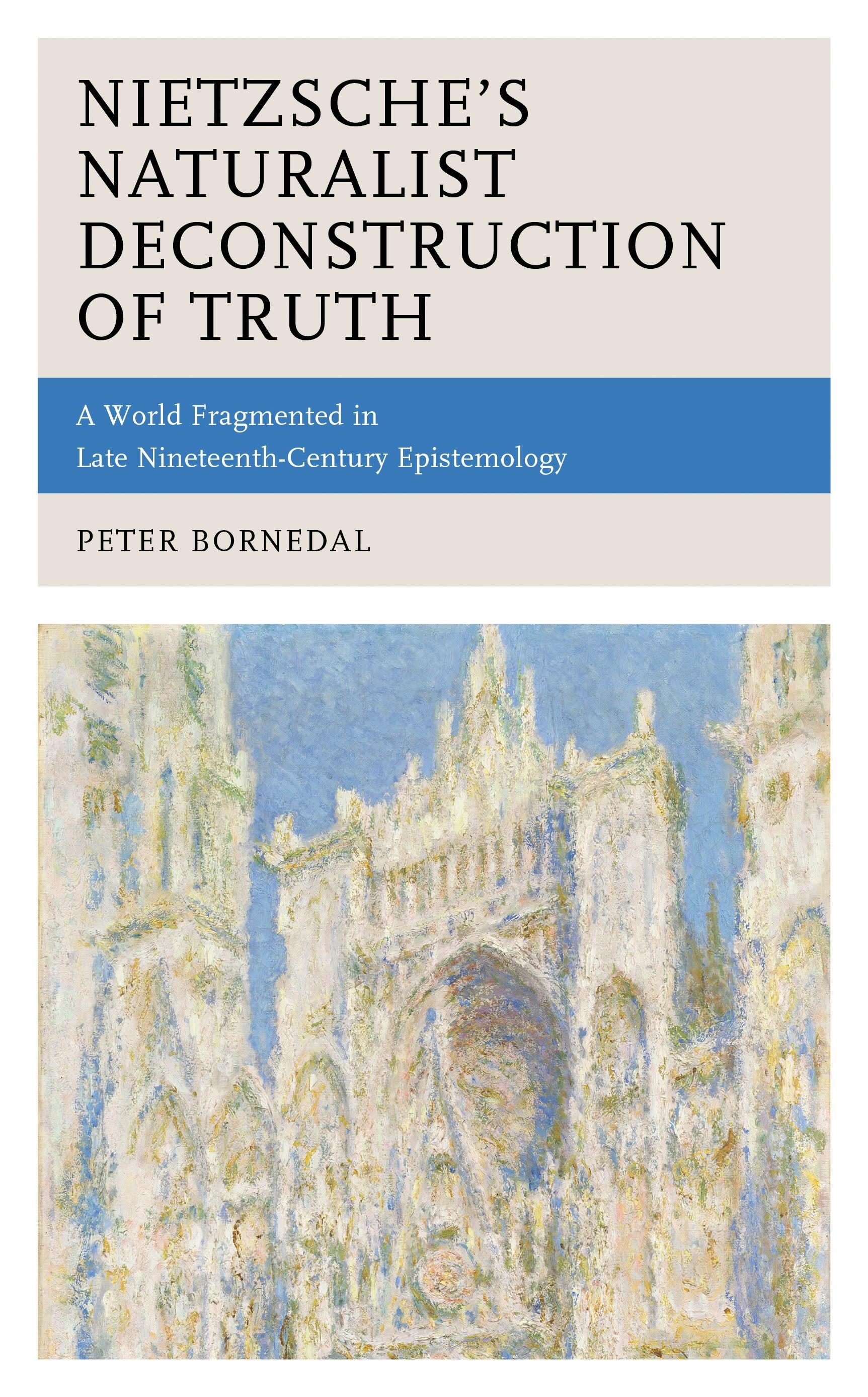
Nietzsche’s Naturalist Deconstruction of Truth: A World Fragmented in Late Nineteenth-Century Epistemology offers a new interpretation of Nietzsche’s discussions of truth and knowledge, covering the period from his early essay “On Truth and Lies in an Extra-Moral Sense” to his late notebooks. It places these discussions in the context of the neo-Kantian, Naturalist, Positivist, and Pragmatic schools influential in Nietzsche’s late nineteenth-century Europe. Peter Bornedal argues for a view of Nietzsche’s epistemological thought as an elaboration of this paradigm: proposing ideas that are anti-metaphysical and anti-theological in their polemic orientation, and in general promoting new scientific naturalist ideals in the discussions of knowledge. Bornedal suggests that the rational pursuit of these new ideals to the unencumbered mind logically leads to Nihilism in its most profound epistemological sense. Nietzsche’s “critique of metaphysics” is thus seen as having sprung from sources different from and, at times, in patent opposition to more recent postmodern and deconstructionist critiques. This book contextualizes Nietzsche in relation to a number of philosophical peers and juxtaposes him to contemporary thinkers in a way that resolves some of the difficulties that have plagued recent Nietzsche scholarship.
Pay easily by card, Klarna, Apple Pay or Google Pay. Not happy? You always have a 14-day money-back guarantee. Read more in our terms. If you have any questions, email us at hello@memmo.org.
Memmo makes studying easier – wherever you are in the world. We bring your course books and smart study tools together in one place: summaries, quizzes, podcasts and flashcards. Plus Ted, your study buddy who answers anything you wonder. Over 50,000 students already study here – built to help you learn faster and stress less.