
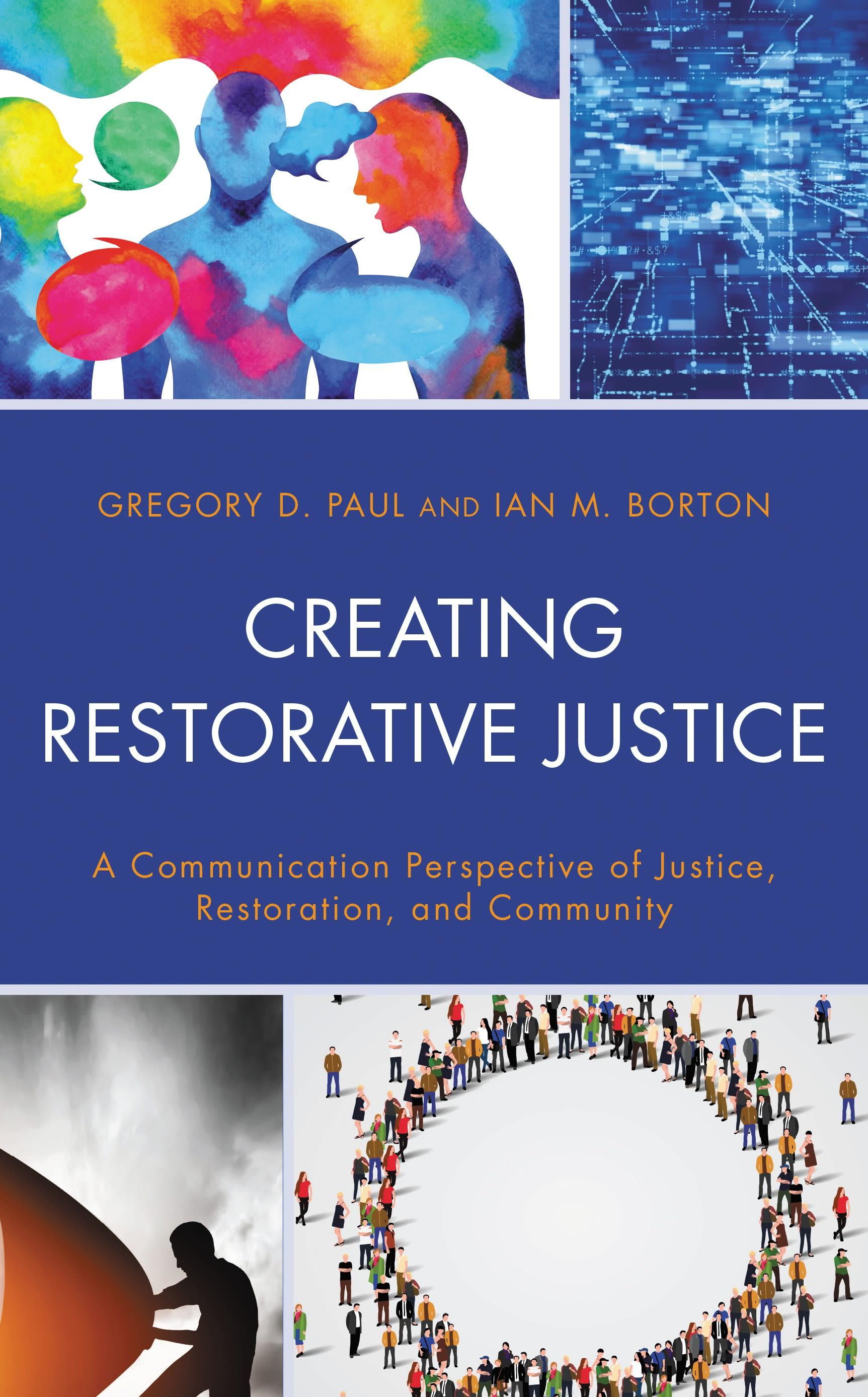
Discussion of the histories, meanings, and assumptions of restorative justice have enriched the development of its theory, research, and practices. While some of this work has addressed the role of communication, the treatment of communication within restorative justice remains rather under-developed. Communication plays a central role in processes of restoration and justice and a constitutive role in making restorative justice what it is. In Creating Restorative Justice: A Communication Perspective of Justice, Restoration, and Community, Gregory D. PaulandIan M. Borton argue that by centering communication in restorative justice as it occurs in various contexts (from families, to schools, to communities), we can simultaneously deepen our understanding, enrich our practice, and amplify our study of restoration and justice. From a communication perspective, restorative contexts both use and are created by the communication present. Any outcomes from restorative processes are thus the product of the communication both within and between restorative practices’ participants. As the world addresses the challenges presented by injustice, inequality, and insecurity, it is incumbent we expand our understanding of restorative processes to account for the vital role of communication.
Pay easily by card, Klarna, Apple Pay or Google Pay. Not happy? You always have a 14-day money-back guarantee. Read more in our terms. If you have any questions, email us at hello@memmo.org.
Memmo makes studying easier – wherever you are in the world. We bring your course books and smart study tools together in one place: summaries, quizzes, podcasts and flashcards. Plus Ted, your study buddy who answers anything you wonder. Over 50,000 students already study here – built to help you learn faster and stress less.