
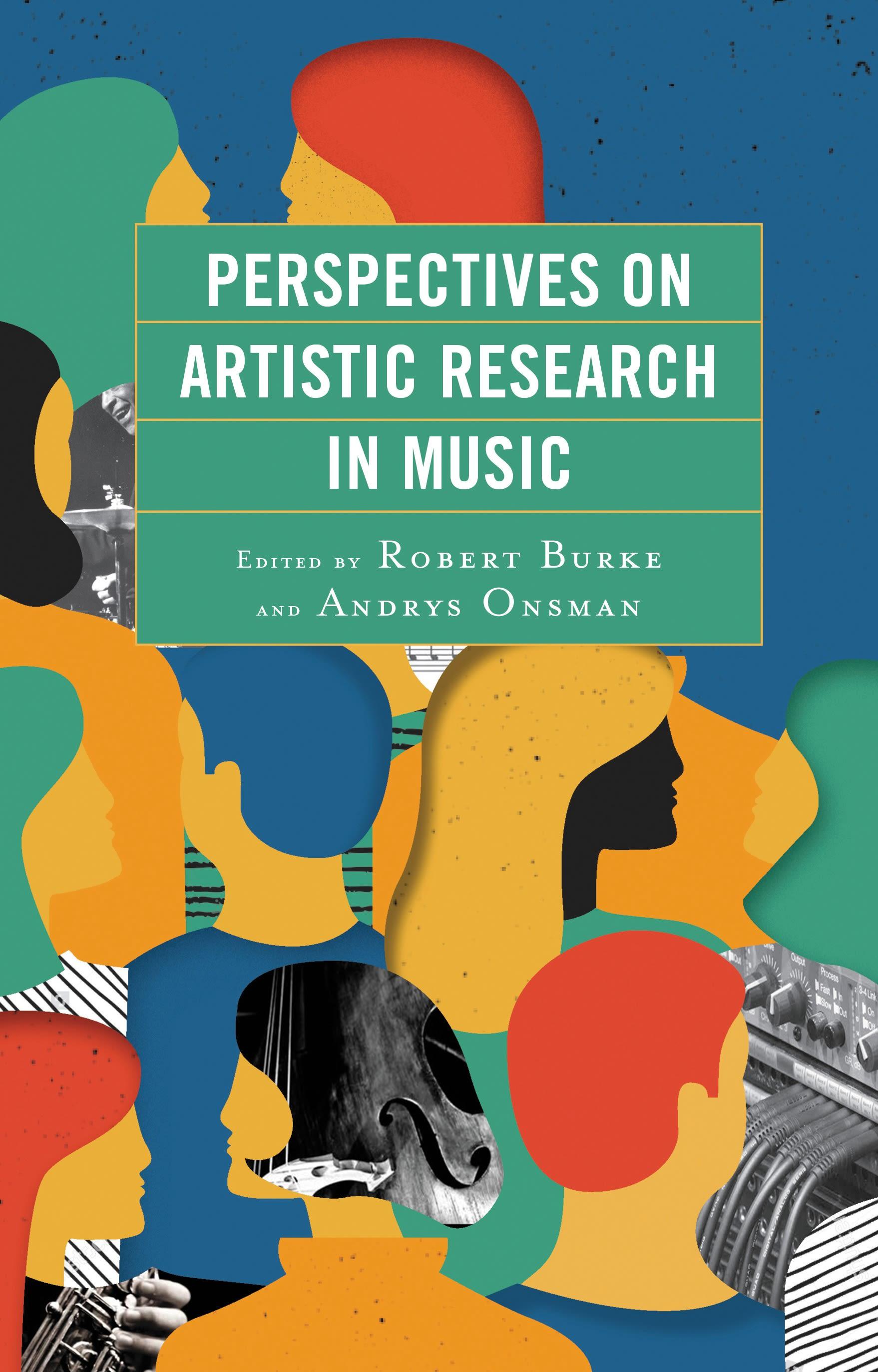
Perspectives on Artistic Research in Music
Author: Jenny Wilson, Linda Barwick, Tim Dargaville, Stephen Emmerson, Nick Haywood, Glen Hodges, Michael Hooper, Cat Hope, Zubin Kanga, Deniz Peters, Thomas Reiner, Johanna Selleck, Joseph Toltz, Robert Vincs, Robert Burke, Andrys Onsman
Publisher: Bloomsbury Publishing
Edition: 1
Published date: 2017
ISBN: 9781498544818
The increasing interest in artistic research, especially in music, is throwing open doors to exciting ideas about how we generate new musical knowledge and understanding. This book examines the wide array of factors at play in innovative practice and how by treating it as research we can make new ideas more widely accessible.
Three key ideas propel the book. First, it argues that artistic research comes from inside the practice and exists in a space that accommodates both objective and subjective observation and analyses because the researcher is the practitioner. It is a space for dialogue between apparently opposing binaries: the composer and the performer, the past and the present, the fixed and the fluid, the intellectual and the intuitive, the abstract and the embodied, the prepared and the spontaneous, the enduring and the transitory, and so on. It is not so much constructed in a logical, sequential manner in the way of the scientific method of doing research but more as a “braided” space, woven from many disparate elements.
Second, the book articulates the notion that artistic research in music has its own verification procedures that need to be brought into the academy, especially in terms of the moderation of non-traditional research outputs, including the description of the criteria for allocation of research points for the purposes of data collection, as well as real world relevance and industry engagement.
Third, by way of numerous examples of original and creative music making, it demonstrates in practical terms how exploration and experimentation functions as legitimate academic research. Many of the case studies deliberately cross boundaries that were previously assumed to be rigid and definite in order to blaze new musical trails, creating new collaborations and synergies.
Three key ideas propel the book. First, it argues that artistic research comes from inside the practice and exists in a space that accommodates both objective and subjective observation and analyses because the researcher is the practitioner. It is a space for dialogue between apparently opposing binaries: the composer and the performer, the past and the present, the fixed and the fluid, the intellectual and the intuitive, the abstract and the embodied, the prepared and the spontaneous, the enduring and the transitory, and so on. It is not so much constructed in a logical, sequential manner in the way of the scientific method of doing research but more as a “braided” space, woven from many disparate elements.
Second, the book articulates the notion that artistic research in music has its own verification procedures that need to be brought into the academy, especially in terms of the moderation of non-traditional research outputs, including the description of the criteria for allocation of research points for the purposes of data collection, as well as real world relevance and industry engagement.
Third, by way of numerous examples of original and creative music making, it demonstrates in practical terms how exploration and experimentation functions as legitimate academic research. Many of the case studies deliberately cross boundaries that were previously assumed to be rigid and definite in order to blaze new musical trails, creating new collaborations and synergies.
Pay easily by card, Klarna, Apple Pay or Google Pay. Not happy? You always have a 14-day money-back guarantee. Read more in our terms. If you have any questions, email us at hello@memmo.org.
Memmo makes studying easier – wherever you are in the world. We bring your course books and smart study tools together in one place: summaries, quizzes, podcasts and flashcards. Plus Ted, your study buddy who answers anything you wonder. Over 50,000 students already study here – built to help you learn faster and stress less.